


In 2025, India celebrates 150 years of its national song, “Vande Mataram” — a composition that transcended literature to become a rallying cry for independence, unity, and devotion to the motherland. Written in 1875 by Bankim Chandra Chattopadhyay, this song didn’t just shape India’s cultural consciousness; it became the heartbeat of the freedom movement.
For 150 years, “Vande Mataram” has symbolized not only patriotism but also the deep emotional connection between India’s land and her people — a melody that still gives goosebumps every time it’s sung.
The Birth of a Revolution: How “Vande Mataram” Was Born
The year was 1875. India was under British rule, and the spirit of rebellion was simmering beneath the surface. Bankim Chandra Chattopadhyay, a visionary writer and former government officer, felt the growing urge to unite Indians under one emotional and spiritual banner.
While writing his Bengali novel “Anandamath”, he penned down a few verses that personified India as a divine mother — not just a piece of land, but a living goddess. These verses became “Vande Mataram” — meaning “I bow to thee, Mother.”
Originally written in Sanskritized Bengali, the song described India’s natural beauty — her rivers, mountains, and fertile lands — and her divinity as Bharat Mata.
The Power of the Words
Every line of “Vande Mataram” was a call to awaken the national spirit.
Its opening lines are among the most iconic in Indian history:
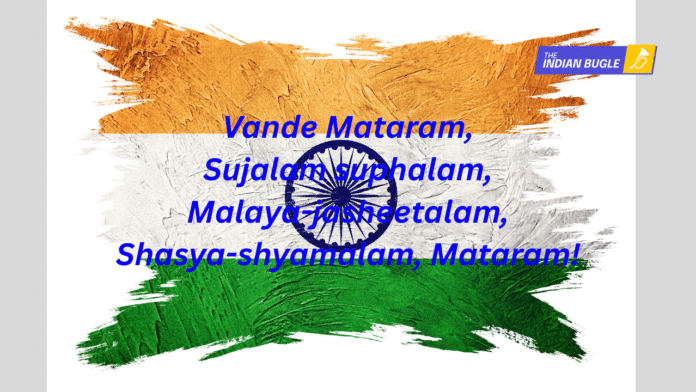
Vande Mataram,
Sujalam suphalam,
Malaya-jasheetalam,
Shasya-shyamalam, Mataram!
Translation:
“I bow to thee, Mother,
Richly watered, richly fruited,
Cool with the winds of the south,
Dark with crops of the harvest, O Mother!”
The words blended spirituality and nationalism — portraying the land as both a nurturing mother and a sacred power to be protected.
From Song to Slogan: The Freedom Movement’s Anthem
By the late 19th and early 20th centuries, “Vande Mataram” had transformed into the anthem of India’s freedom struggle.
During the 1905 Bengal Partition movement, it became a rallying cry for unity and resistance. Streets of Calcutta echoed with chants of “Vande Mataram!”, uniting Hindus and Muslims against colonial rule.
Leaders like Rabindranath Tagore, Sri Aurobindo, Bipin Chandra Pal, and Lala Lajpat Rai publicly sang or quoted the song in protests and meetings. Even Mahatma Gandhi called it “a source of inspiration to millions.”
The British, realizing their power, banned the public singing of “Vande Mataram,” which only made it spread further underground as a symbol of defiance.
When the Melody Met the Nation
In 1896, Rabindranath Tagore sang “Vande Mataram” at the Indian National Congress session in Calcutta, giving it a musical soul that electrified the crowd.
By 1905, it was officially adopted as the National Song of the Indian National Congress, long before India gained independence.
Later, in 1947, as the Constituent Assembly debated the symbols of free India, there was a passionate discussion about which song should represent the new nation. While “Jana Gana Mana” became the National Anthem, “Vande Mataram” was given equal status as the National Song — a decision meant to honor both the song’s history and its emotional importance.
The Music, The Emotion, The Legacy
The song has been performed by generations of musicians — from Hemant Kumar’s stirring version in the 1952 film Anand Math to Lata Mangeshkar’s soulful renditions that continue to inspire.
Its verses have been woven into cinema, poetry, and even modern patriotic anthems — reminding Indians of the sacred bond between soil and soul.
In modern times, “Vande Mataram” is more than just a patriotic song — it’s an identity marker, a cultural symbol, and a testament to India’s unity in diversity.
150 Years Later: Why It Still Matters
As India marks 150 years of “Vande Mataram” in 2025, the song continues to hold deep relevance:
- It reminds us of the cost of freedom. Each word echoes the sacrifices of those who shouted it fearlessly under colonial rule.
- It celebrates India’s diversity. The song personifies the land, not religion, as the nation’s soul.
- It connects generations. From independence-era rallies to school assemblies, it has been sung by millions who share a single emotion — love for the motherland.
Interesting Facts About “Vande Mataram”
- It was written in 1875, but first published in 1882 in the novel Anandamath.
- The first recorded performance was by Rabindranath Tagore in 1896.
- Only the first two stanzas are recognized as the official National Song.
- It inspired several revolutionary movements, including the Swadeshi Movement.
- The phrase “Vande Mataram” was reportedly the last cry of many Indian martyrs before facing execution.
Conclusion: The Eternal Song of Bharat Mata
“Vande Mataram” is not just a song — it’s a feeling, a prayer, and a promise.
A century and a half later, its words still remind every Indian of what unites us — not politics, not language, but the shared reverence for our motherland.
When millions voice “Vande Mataram,” they are not merely singing — they are saluting the spirit of India itself.

