


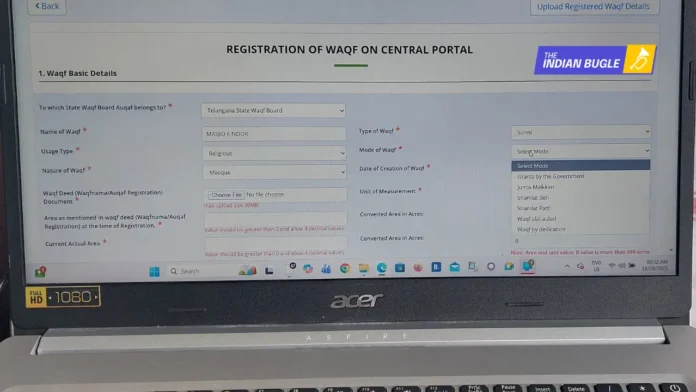
UMEED Portal: A New Digital System to Register Waqf Properties.
The Government of India has recently introduced the UMEED Portal (Unified Waqf Management, Empowerment, Efficiency & Development Portal) to digitally register and monitor Waqf properties in the country. Waqf properties include mosques, graveyards, dargahs, community buildings, donated lands and other assets meant for public welfare and charitable use, especially within the Muslim community.
This portal aims to bring transparency, accountability and proper documentation so that assets under Waqf are used for education, health, social support, and community development, rather than remaining unmonitored, encroached, or mismanaged.
What is the UMEED Portal?
UMEED is an online platform where every Waqf property in India is required to be registered, geo-tagged and documented.
It works like a digital record room where all information related to Waqf assets can be stored and accessed in one place.
Main Objectives of the Portal
- Create a centralised national database of Waqf properties
- Prevent illegal occupation, misuse, or loss of community assets
- Ensure proper management, auditing, and transparency
- Geo-tag and map properties for clear location identification
- Help revenue generated from Waqf properties reach real beneficiaries
- Support social welfare initiatives for minorities, widows, orphans, and needy families
Key Features of UMEED Portal
- Online registration and verification of all Waqf properties
- Geo-tagging and mapping using digital tools for identification
- Uploading of property details, documents, photographs, history
- Monitoring system to detect encroachments or disputes
- Data accessible for policy planning and development work
- Designed to stop corruption, favouritism or record manipulation
How Will It Help the Public?
- Encourages fair management of assets meant for welfare
- Reduces conflict over ownership through digital proof
- Helps the government track properties lying unused or encroached on
- Makes it easier for authorities to ensure funds benefit the community
- More transparency means less corruption and more accountability
Common people will now have clearer information about how Waqf assets are being used and who is responsible for them.
Why is the Opposition worried about the UMEED Portal?
While the government says this system will protect Waqf assets, the opposition and several community leaders have expressed concerns, such as:
1. Fear of Government Control
Opponents believe that centralising Waqf data might give the government too much authority over properties traditionally managed by community bodies. They fear it may weaken Waqf Boards’ independent functioning.
2. Historical Property Conflict
Many Waqf properties are centuries old, with unclear documents. Updating records digitally could lead to disputes where properties may fail verification, causing ownership controversies.
3. Short Timeframe & Technical Challenges
Uploading old records, maps and papers within a fixed time may be difficult for several states. Without proper digital access or staff, many boards fear non-compliance penalties.
4. Possibility of Misidentification
Some worry that historically donated private land might mistakenly get labelled as Waqf or vice-versa, leading to legal battles, confusion and public tension.
5. Political & Religious Sensitivity
Waqf property is linked to religion and community identity. Any change or control can quickly become politically sensitive, raising mistrust and opposition pressure.
In short, critics believe the portal is beneficial but should be implemented slowly, transparently and with community involvement to avoid conflict.
Why the Government Supports It
According to the government, the portal will:
- protect Waqf land from encroachment and misuse,
- digitise scattered records into one transparent system,
- ensure revenue generated is used for social good,
- and modernise management for future generations.
For the government, UMEED is an attempt to modernise religious trusts, similar to land records digitisation, aiming for clarity in ownership and fair use.
Is This Good or Bad for Common People?
If implemented carefully, the portal can:
✔ Prevent illegal grabbing of community property
✔ Make funds reach schools, hospitals and social causes
✔ Reduce corruption by maintaining digital proof
✔ Make it easier to check details of any Waqf property
But, lack of proper training, rushed deadlines or misidentification can create disputes rather than solve them.
Balance and transparency during implementation will be the key.
Conclusion
The UMEED Portal is an important step towards digitising Waqf property management in India. It promises transparency and better utilisation of community resources, while also raising concerns about control, verification challenges and sensitive ownership issues.
For common people, understanding how this system works is crucial — as the future welfare of many communities could depend on how effectively these assets are managed.
If executed responsibly with cooperation from Waqf Boards and the public, UMEED could bring hope — just as its name suggests.

