


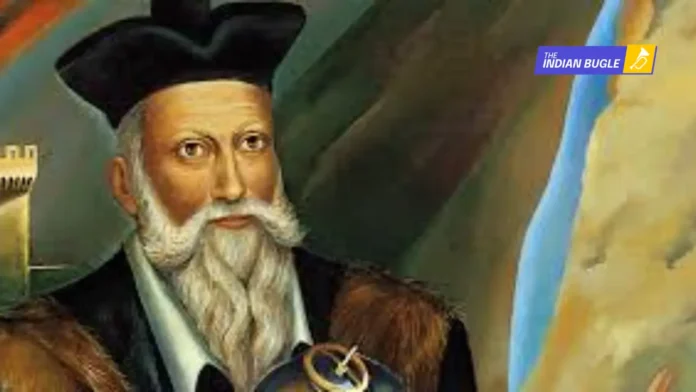
Every few years, the name Nostradamus trends again. This time, the focus is on 2026. Social media posts and articles claim he foresaw wars, disasters, and major global change in that year. However, Nostradamus never mentioned 2026 directly. What exists are symbolic verses written nearly 500 years ago. Modern readers try to connect those verses to current timelines. This article explains what his writings actually say and how the 2026 narrative emerged.
Who Nostradamus Was
Nostradamus, born Michel de Nostredame, lived in 16th-century France. He worked as a physician and astrologer. In 1555, he published Les Prophéties. The book contains hundreds of short poems known as quatrains. These verses use symbolism, coded language, and mixed languages. He wrote this way deliberately. As a result, his work stayed open to interpretation across centuries.
Did Nostradamus Predict Specific Years?
Nostradamus almost never used clear calendar years. Instead, he referred to symbols, planetary movements, or vague time frames. Therefore, claims about “predictions for 2026” come from modern interpretation, not direct statements. Readers link certain quatrain numbers or themes to the year 2026. This method remains subjective and debated.
Why 2026 Became a Focus Year
The attention on 2026 mainly comes from numerical coincidence and selective reading. Some interpreters focus on quatrains numbered 26 or references to cycles and endings. Others align his imagery with present global tensions. Because the verses are flexible, people project modern fears onto them. Consequently, 2026 becomes a convenient focal point.
Key Quatrains Commonly Linked to 2026
The “Thunderbolt” and a Powerful Figure
One frequently cited quatrain describes a great man struck suddenly, often translated as a “thunderbolt.” Interpreters claim this suggests the fall of a powerful leader. In modern narratives, this gets linked to political instability in the mid-2020s. However, the verse does not name a place, person, or year. The connection to 2026 remains speculative.
Bloodshed and Conflict Imagery
Several quatrains mention blood, battles, or violence. These images often resurface during times of global tension. Supporters argue this hints at large-scale conflict around 2026. Critics counter that such imagery appears throughout history and can fit almost any era. The text itself gives no fixed date.
Floods, Natural Forces, and Chaos
Nostradamus frequently used natural symbols like floods, fire, and storms. Some modern readers interpret these as climate disasters or societal breakdown. Since climate concerns dominate today’s discourse, these verses get linked to future years like 2026. Again, the link depends on interpretation rather than explicit prophecy.
Swarms and Mass Movements
Another symbolic image is that of swarms, often translated as insects or crowds. Some interpret this as mass movements, protests, or ideological uprisings. Because social unrest is a modern concern, readers associate these verses with the near future. The text itself stays metaphorical.
How Modern Interpretation Works
Most modern predictions follow a pattern. First, a vague quatrain is selected. Next, symbolic language gets translated loosely. Then, current global events shape the final meaning. Finally, a year like 2026 is assigned to make the claim sound precise. This process explains why interpretations change with time.
Scholarly and Critical View
Historians largely agree that Nostradamus wrote ambiguous poetry. He did not provide verifiable forecasts. Many “accurate predictions” were linked to events only after they occurred. This retrofitting creates the illusion of foresight. From an academic perspective, Nostradamus remains a cultural and literary figure, not a reliable predictor of future events.
Why Nostradamus Still Matters Today
Despite criticism, Nostradamus remains a fascinating figure. His writings reflect human anxiety about the future. They also show how societies search for meaning during uncertain times. As global uncertainty grows, interest in his prophecies naturally increases. The year 2026 fits into this pattern.
Final Verdict on Nostradamus and 2026
Nostradamus did not clearly predict 2026. No quatrain names the year or describes specific modern events. What exists are symbolic verses open to many readings. Claims about 2026 rely on interpretation, not documented prophecy. His work remains historically important, culturally influential, and endlessly debated. However, it should be read as poetic symbolism, not a fixed roadmap of the future.

