


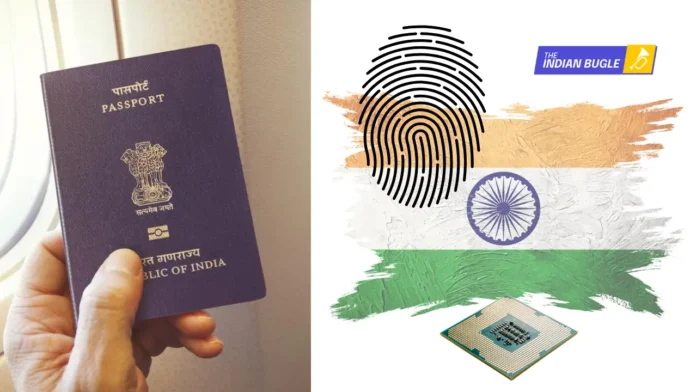
An e-Passport, or electronic passport, is an upgraded version of the regular passport. It contains a secure electronic chip embedded inside the cover. The chip stores encrypted personal and biometric data of the passport holder. It looks like a normal passport, but it works digitally at immigration points.
Why India introduced e-Passports
India introduced e-Passports to strengthen border security and reduce identity fraud. The move also aims to speed up immigration checks and align Indian travel documents with global standards set by international aviation authorities.
Who can apply for an e-Passport
Any Indian citizen applying for a fresh passport can receive an e-Passport if the service is available at their passport office. Applicants seeking passport renewal, reissue, or changes in personal details also qualify. There is no separate eligibility test based on age, profession, or travel history.
Who does not need to apply immediately
Citizens holding a valid regular passport do not need to replace it. The existing passport remains valid until expiry. The e-Passport becomes mandatory only when applying for a new passport or renewal in the future.
How to apply for an e-Passport in India
The application process remains almost the same as a regular passport. Applicants must register on the official passport portal, fill out the application form, and choose a nearby Passport Seva Kendra or Post Office Passport Seva Kendra. After booking an appointment, applicants must visit the centre for biometric capture and document verification. Once approved, the e-Passport is printed and dispatched.
Documents required
Applicants must submit proof of identity, address proof, date of birth proof, and any additional documents based on the category. For renewals, the old passport is mandatory. The document list remains unchanged from the regular passport process.
What biometric data is stored
The e-Passport chip stores a digital photograph and basic identity details. In some cases, biometric identifiers such as fingerprints may be included as per international norms. All data remains encrypted and protected against unauthorized access.
How the e-Passport works at airports
At immigration counters, officers scan the chip using a secure reader. The system matches the chip data with the printed passport details and the traveller’s face. This speeds up verification and reduces manual checks.
How to identify an e-Passport
An e-Passport carries a small gold rectangular chip symbol on the front cover. This symbol confirms the presence of an electronic chip inside the passport.
Is personal data safe
Yes. The chip uses advanced encryption and access control. Only authorized immigration systems can read the data. Random scanning or tracking is not possible. The chip remains inactive unless scanned at an approved reader.
Key benefits of an e-Passport
It improves national security by preventing tampering and duplication. It reduces waiting time at immigration counters. It increases global acceptance of Indian passports. It also supports future automated border control systems.
Does the e-Passport change visa rules
No. An e-Passport does not alter visa requirements. Travellers must still apply for visas as per the destination country’s rules. The passport only improves identity verification.
Cost of an e-Passport
The fee for an e-Passport remains the same as that of a regular passport. There is no additional charge for the electronic chip.
Countries that already use e-Passports
Most developed and developing nations already issue e-Passports. India’s adoption places it among countries with advanced travel document security systems.
Role of the issuing authority
The rollout and management of e-Passports fall under the Ministry of External Affairs, which oversees passport issuance and international travel documentation.
Common myths clarified
An e-Passport does not track movement. It does not store travel history. It does not require constant internet access. It does not expire faster than a regular passport.
What travellers should keep in mind
Avoid damaging the passport cover. Do not bend or expose it to extreme heat. Treat it like a sensitive electronic document. Normal handling, however, does not harm the chip.
Future of e-Passports in India
India plans to expand issuance nationwide in phases. In the long run, e-Passports may enable faster airport gates and smoother international travel for Indian citizens.
Bottom line
The e-Passport is a safer, smarter upgrade of India’s passport system. It keeps the process familiar while adding strong digital security. For travellers, it means faster checks, better protection, and readiness for the future of global travel.

