


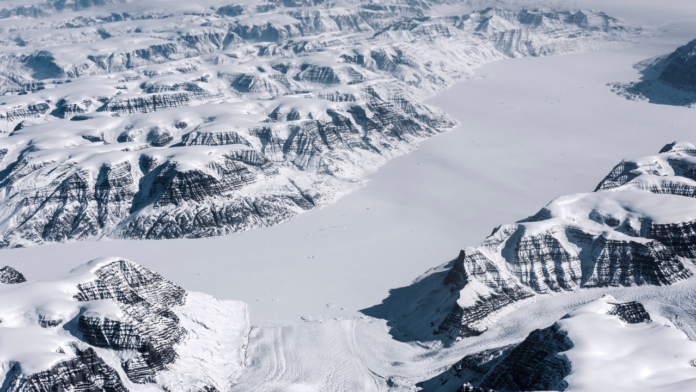
Greenland has abruptly moved from the fringes of global attention to the centre of geopolitical debate. Once viewed primarily as a vast, frozen landmass with a sparse population, it is now being discussed in the context of U.S. strategic expansion, NATO stability, Arctic militarisation, climate change, and critical minerals.
The renewed buzz has triggered a surge in public curiosity, reflected in search queries such as “Who owns Greenland?”, “Can the U.S. buy Greenland?”, and “Why is Greenland strategically important?”
This article brings together history, law, geopolitics, and emerging realities to answer those questions clearly and comprehensively.
Who Owns Greenland?
Greenland is not owned by any country, nor is it an independent country.
Legally and politically, Greenland is an autonomous territory within the Kingdom of Denmark. Its current status is the result of a long, incremental transfer of power from Copenhagen to Nuuk.
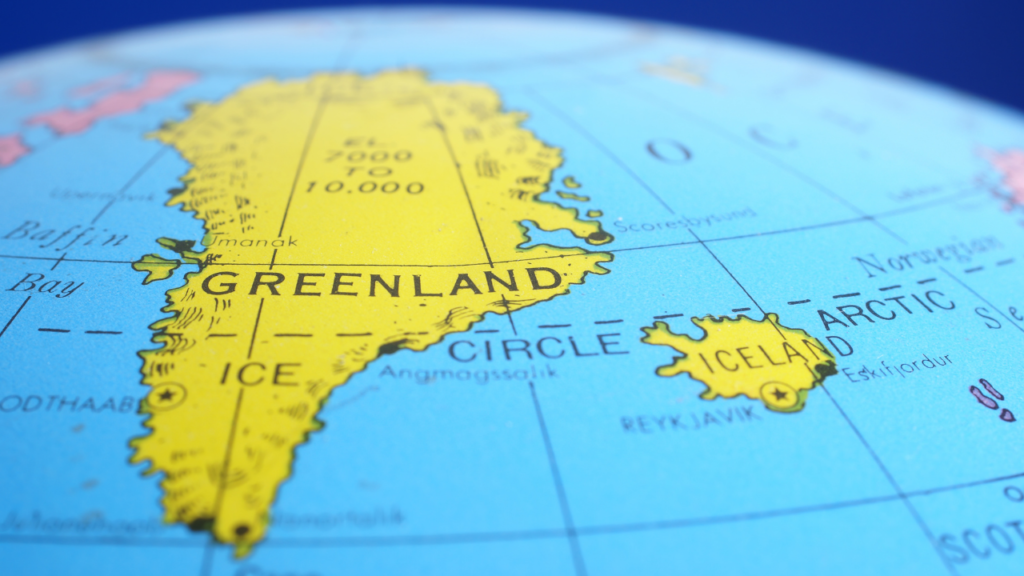
- 1953: Greenland formally ceased to be a Danish colony and became part of the Danish realm.
- 1979: Home Rule was established, granting control over domestic governance.
- 2009: The Self-Government Act significantly expanded autonomy, giving Greenland authority over natural resources, education, healthcare, policing, and environmental regulation.
Denmark continues to manage foreign affairs, defence, and currency, and provides an annual financial grant that supports Greenland’s public services.
Most importantly, under international law, Greenlanders are recognised as a people with the right to self-determination. Any change in sovereignty—including independence or association with another country—can only occur through the will of Greenland’s population.
Why Greenland Cannot Be “Bought”
The question “Can the U.S. buy Greenland?” frequently trends online, largely due to statements made in recent years.
In 2019, Donald Trump publicly suggested that the United States should explore purchasing Greenland. The proposal was swiftly and unequivocally rejected by both Denmark and Greenland’s leadership, who responded that Greenland is not for sale.
While recent discussions in Washington appear more nuanced—focusing on influence, security cooperation, and economic engagement—the core legal reality remains unchanged: territory inhabited by a self-governing people cannot be traded like real estate.
Why the United States Is So Interested in Greenland
U.S. interest in Greenland is neither sudden nor symbolic. It is grounded in four powerful and converging strategic factors.
1. A Critical Military and Security Location
Greenland sits astride the shortest air and missile routes between North America and Europe, giving it exceptional strategic value.
The U.S. already operates Pituffik Space Base in northern Greenland, a cornerstone of American and NATO defence infrastructure. The base plays a vital role in:
- Missile early-warning and ballistic missile defence
- Space surveillance and satellite tracking
- Arctic and North Atlantic security operations
As geopolitical competition intensifies in the Arctic, Greenland’s role as a forward defence platform has only grown more important.
2. The Arctic Is Rapidly Opening Up
Climate change is transforming Greenland’s geopolitical relevance.
Melting ice is:
- Opening new Arctic shipping routes that significantly shorten travel between Asia, Europe, and North America
- Increasing accessibility to offshore energy reserves and seabed resources
- Drawing heightened military and commercial activity into Arctic waters
As traditional sea lanes become congested or geopolitically risky, Arctic routes are increasingly viewed as the next frontier of global trade—and Greenland lies directly along these emerging corridors.
3. Rare Earth Minerals and Resource Security
Another major driver of U.S. interest is Greenland’s resource potential.
Greenland is believed to contain deposits of:
- Rare earth elements (critical for EVs, wind turbines, smartphones, and defence systems)
- Uranium
- Zinc, nickel, and iron ore
With global supply chains—particularly for rare earths—currently dominated by China, Western governments are actively seeking alternative, secure sources. Greenland represents one of the few politically aligned regions with untapped potential.
4. Great-Power Competition With China and Russia
Greenland’s rising importance must be viewed within the broader context of great-power rivalry.
- Russia has heavily militarised its Arctic coastline, reopening Cold War–era bases and expanding its icebreaker fleet.
- China has declared itself a “near-Arctic state” and has pursued investments in Arctic infrastructure and mining projects, including in Greenland.
For Washington, ensuring that Greenland remains firmly embedded within the Western security architecture is a strategic priority. U.S. policymakers increasingly see the island as a buffer, gateway, and strategic anchor in the Arctic.
Why Europe and NATO Are Alarmed
European leaders, particularly in Denmark, view any suggestion of U.S. control over Greenland as deeply destabilising.
Concerns include:
- Undermining Danish sovereignty
- Weakening the principle of self-determination
- Creating friction within NATO at a time of heightened global instability
This explains why European officials have been quick to reaffirm that Greenland belongs to its people, not to external powers—regardless of strategic value.
Greenland’s Own Strategic Dilemma
For Greenland itself, global attention is both an opportunity and a risk.
On one side:
- Economic dependence on Denmark remains significant
- Infrastructure and healthcare costs are high due to geography and climate
On the other:
- Strategic interest brings leverage, investment, and global visibility
- Some leaders argue for greater freedom to negotiate directly with global powers
Greenland’s challenge is to convert strategic importance into sustainable development, without sacrificing autonomy or control over its future.
Why Greenland Matters More Than Ever
Greenland’s rise in global relevance reflects a deeper shift in world affairs:
- The Arctic is no longer peripheral—it is central to security and trade
- Climate change is reshaping geopolitics as much as geography
- Natural resources and location are once again decisive factors in global power
What was once considered a distant, frozen island is now a geopolitical keystone.
Final Word
Greenland is owned by the Kingdom of Denmark, governed with extensive self-rule, and protected by international law that places its future firmly in the hands of its people. The United States’ interest is driven by security imperatives, Arctic access, resource competition, and global power dynamics, not territorial acquisition in the traditional sense.
As the Arctic continues to open and global rivalries intensify, Greenland is no longer just the world’s largest island—it is one of the most strategically consequential places on Earth.

