


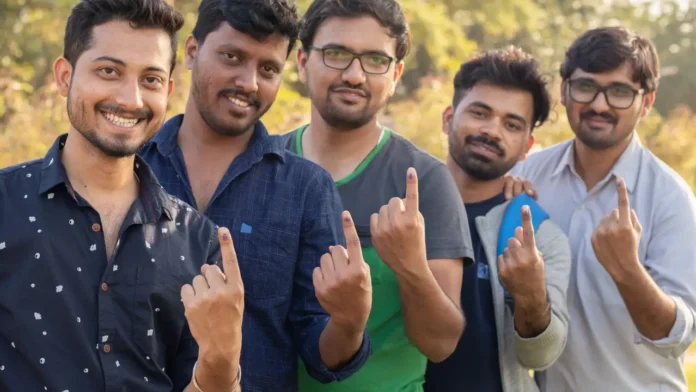
Exit polls offer an early read of voter mood. They do not replace official counts. Yet they tell us where the momentum lies. In January 2026, exit polls pointed to a strong showing for the BJP-led Mahayuti in the Brihanmumbai Municipal Corporation (BMC). The BMC has 227 seats and controls vast civic resources. Winning here matters politically and administratively.
Exit poll snapshot
Multiple pollsters projected the Mahayuti comfortably above the halfway mark. Projections ranged from roughly 119 to about 151 seats for the BJP and its allies. The reunited Thackeray bloc — Uddhav’s Shiv Sena (UBT) and Raj Thackeray’s MNS — appeared far behind in most projections. Congress showed modest gains in pockets but did not look set to challenge the leading blocs. Small parties and independents retained the chance to influence tight wards.
Seat projections — numbers that matter
Polls clustered around similar bands. One common forecast placed Mahayuti between 131 and 151 seats. Another put the alliance near 138. The Thackeray-led grouping often landed in the 58–75 range. Congress forecasts hovered around a low-double-digit tally. These ranges matter because even small shifts change control. A gap of 10–15 seats can decide mayoral power and committee control.
Why voters shifted — civic issues first
Voters put civic services at the top of their list. Roads, water, drainage, and garbage dominated conversations. Many respondents said they cared more about delivery than identity politics. Local leadership and visible problem-solving won trust. Also, alliance clarity helped the Mahayuti. Voters preferred a group they saw as organised and decisive at the booth level.
The Shiv Sena split and its effect
The 2022 split in Shiv Sena reshaped Mumbai politics. Now, two factions claim legacy and loyal voters. The election became a test of who speaks for the old Shiv Sena. The Thackeray cousins tried to reunite Marathi votes. But exit polls suggested the Marathi consolidation did not fully convert to seats. In several wards, split loyalties and tactical voting reduced their edge.
BJP’s strategy and voter base expansion
BJP emphasised governance and broadened its appeal beyond Marathi voters. Campaigns targeted non-Marathi communities, notably North Indians and Gujaratis, who make up a significant urban share. The party pushed local promises and showed high leader visibility. This focus, combined with strong ground organisation, helped it gain traction in key wards.
Congress and smaller alliances — limited but relevant
Congress chose to contest many wards independently. It also made selective local ties to smaller groups. These moves gave it presence in contested areas and kept the party relevant. However, Congress did not look poised to be a kingmaker at scale. Local alliances could still swing a few close results.
Stakes: why the BMC matters beyond Mumbai
BMC controls one of India’s largest municipal budgets. Its administration affects everyday life for millions. Politically, a win here offers a narrative advantage for future state and national battles. For the Mahayuti, control would signal urban acceptance. For the opposition, losses would force strategy rethink before larger state contests.
What the exit polls cannot guarantee
Exit polls draw from immediate voter interviews. They can miss late swings and sampling biases. Turnout patterns between wards matter. Counting dynamics and invalid votes can alter close margins. Thus, exit polls point to likely trends but do not seal the outcome.
What to watch on counting day
Watch closely with narrow margins. Track turnout differences across demographics. Note performance in long-held Shiv Sena areas. Also, observe how many wards the Mahayuti converts from traditional opposition pockets. These indicators will reveal whether polls matched reality.
Exit polls in January 2026 painted a clear picture: voters prioritised civic delivery and rewarded the alliance that looked ready to deliver. The BJP-led Mahayuti gained momentum. The Thackeray-led forces showed resilience but not dominance. Still, the final verdict would come from the counting. Until then, the polls offer a useful, human snapshot of where Mumbai’s voters stood and why they voted that way.

