


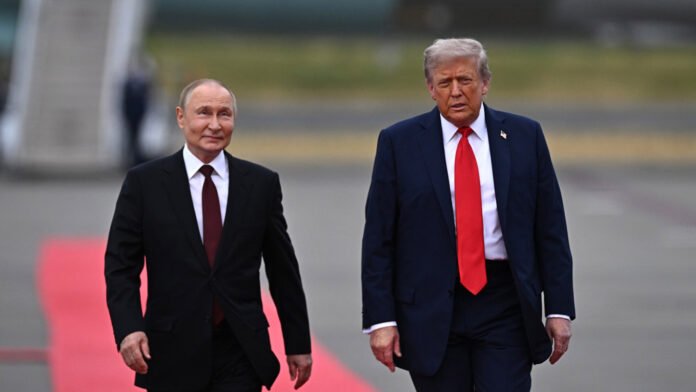
Moscow | January 19, 2026: Russian President Vladimir Putin has been invited to join U.S. President Donald Trump’s proposed “Board of Peace,” an international body aimed at resolving protracted global conflicts and overseeing governance and reconstruction efforts in Gaza, the Kremlin confirmed on Monday.
The invitation, disclosed by Kremlin spokesperson Dmitry Peskov, places Moscow among a select group of global stakeholders approached by Washington as part of Mr. Trump’s post-conflict framework for the Middle East, particularly the Gaza Strip.
Kremlin Seeks Clarity on Scope and Mandate
Addressing journalists in Moscow, Mr. Peskov said that President Putin had indeed received an invitation to join the Board but stressed that Russia was still seeking to “clarify all the nuances” of the proposal with the United States. He stopped short of confirming whether Mr. Putin was inclined to accept the offer.
The so-called Board of Peace is expected to be chaired by President Trump himself and is envisioned as a high-level forum to coordinate diplomatic mediation, post-war governance, and long-term reconstruction, particularly in Gaza following the devastating Israel–Hamas conflict.
Russia’s Shifting Middle East Calculus
For years, Moscow maintained a careful diplomatic balance in the Middle East, engaging simultaneously with Israel, the Palestinians, Iran, and Gulf Arab states. However, that equilibrium has shifted notably since the outbreak of the Israel–Hamas war and Russia’s ongoing war in Ukraine.
In recent months, Mr. Putin has moved away from Israel, strengthening ties with its regional adversaries, including Iran, while also deepening engagement with Gulf states amid increasing diplomatic and economic isolation from the West.
The war in Gaza, coupled with Russia’s assault on Ukraine, has strained Moscow’s traditionally pragmatic relationship with Israel, home to a significant Russian-speaking population.
Putin’s Praise for Trump’s Conflict Diplomacy
Despite geopolitical tensions, Mr. Putin has publicly praised Mr. Trump’s efforts to resolve long-running international crises. In October 2025, the Russian President commended the former U.S. leader’s approach to diplomacy, saying Trump was “really doing a lot to resolve these complex crises, which have lasted for years, even decades.”
Referring specifically to the Middle East, Mr. Putin added at the time: “If we succeed in achieving everything Donald has strived for… it will be a historic event.”
Gaza: Humanitarian Crisis at the Center
The humanitarian catastrophe in Gaza has been a recurring theme in Moscow’s recent foreign policy messaging. Russia has repeatedly criticised Israel’s military response following the October 7 attacks and has called for restraint and renewed negotiations.
At a meeting with Palestinian President Mahmoud Abbas last year, Mr. Putin described the situation in Gaza as “a humanitarian catastrophe in the full sense of the word,” according to Russia’s RIA Novosti news agency. He added that Russia, “as a friend of the Palestinian people,” was attempting to provide regular assistance.
A Growing Roster of Global Figures
The White House has reportedly reached out to multiple international leaders and global figures to join the Board of Peace. Among those named in related announcements is Ajay Banga, the President of the World Bank, who is expected to play a role in shaping Gaza’s economic redevelopment under the broader Trump plan.
India and Pakistan have also confirmed receiving invitations to participate, underscoring Washington’s attempt to give the initiative a broad geopolitical footprint.
Uncertain Path Ahead
While the invitation to President Putin marks a significant diplomatic overture, questions remain over the Board’s legitimacy, enforcement powers, and acceptance among key regional actors. Israel has already voiced objections to aspects of Washington’s Gaza-related announcements, highlighting the political sensitivities surrounding any post-war governance framework.
For now, Moscow’s response remains cautious. Whether President Putin ultimately joins Mr. Trump’s Board of Peace may depend less on symbolism and more on the precise authority, objectives, and geopolitical trade-offs embedded in the proposal.

