


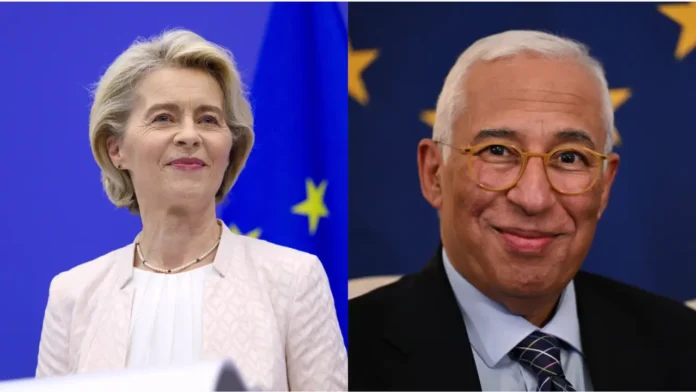
India invited two senior EU leaders — Ursula von der Leyen and António Costa — as joint chief guests for Republic Day 2026. The move underscores a push for a closer India–EU partnership across trade, tech, and climate.
Who are the guests
Ursula von der Leyen serves as President of the European Commission and leads the EU’s executive arm. António Costa serves as President of the European Council and represents EU member-state consensus. Together they symbolise both the EU’s institutional leadership and its member-state coordination.
Why did India invite both leaders
First, India seeks higher-level engagement with the entire European Union rather than with a single country.
Second, inviting both balances the EU’s two top offices — the Commission and the Council — and signals India’s desire for a structured, long-term partnership.
Third, the joint invitation strengthens negotiation leverage for an ambitious trade and strategic agenda.
What the invitation signals diplomatically
First, India views the EU as a priority partner across trade, investment, and technology. Second, the timing reflects progress toward a comprehensive India–EU trade and investment framework. Third, the gesture doubles as political recognition of the EU’s collective role in global governance and supply-chain resilience.
What to expect at the parade and state events
Expect formal parade honours on Kartavya Path and state receptions at Rashtrapati Bhavan. Expect bilateral meetings with the Indian Prime Minister and senior ministers on trade, climate cooperation, and technology governance. Expect a public diplomatic narrative focused on shared democratic values and sustainable growth.
Likely agenda topics during official talks
Trade liberalisation and an ambitious trade agreement. Green transition and clean-technology collaboration. Semiconductor and critical minerals supply security. Regulatory cooperation on digital platforms and AI. Defence logistics and maritime security dialogues.
In the short term, anticipate diplomatic momentum and joint statements outlining common priorities. Markets and businesses may focus on signals about tariff negotiation timelines and investment facilitation measures. Think clarity, not overnight deals.
Long-term implications for India and the EU
Long-term, joint high-level engagement can accelerate a structured partnership framework. It can deepen technology ties, diversify supply chains, and create new avenues for regulatory alignment. It can also raise India’s diplomatic profile in European capitals.
Having both EU leaders attend sends a clear message to domestic and international audiences. Domestically, it shows India’s diplomatic reach. Internationally, it positions India as a strategic partner capable of engaging major multilateral blocs.
Practical takeaways for observers and students of diplomacy
Watch official joint statements for precise deliverables. Track follow-up ministerial visits and working-group launches. Note any timelines for trade or tech negotiations. Also, observe the language on strategic autonomy and multilateral cooperation — wording matters.
Ceremonies matter. They create trust and shared narratives. A joint visit humanises diplomacy. It gives leaders time to build rapport. That rapport often smooths complex negotiations later.
Conclusion
Inviting Ursula von der Leyen and António Costa as joint chief guests marks a deliberate step to deepen India–EU ties. The choice pairs institutional and member-state leadership. Consequently, the visit can translate symbolic weight into practical cooperation across trade, tech, and climate. Watch the statements and the follow-ups. Those will show whether symbolism turns into measurable outcomes.

