


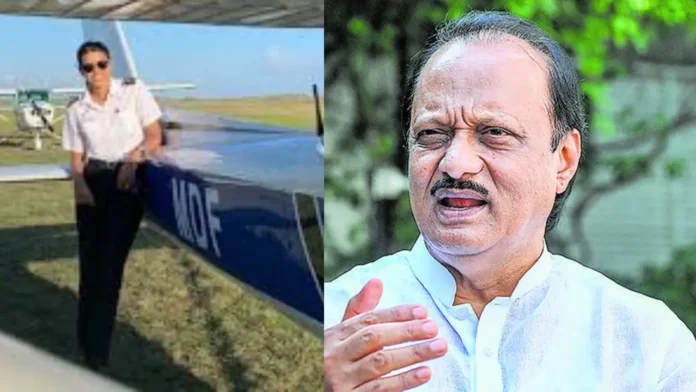
On January 28, 2026, Capt. Pathak was the first officer on the aircraft carrying Ajit Pawar, who was travelling from Mumbai to Baramati for political engagements. During the landing attempt at Baramati, the aircraft encountered trouble and crashed near the runway. The impact led to a fire, leaving the aircraft severely damaged.
A tragedy that shook the nation
The crash claimed five lives, including Ajit Pawar, the pilots, and security personnel. News of the accident sent shockwaves across Maharashtra and the country. While the focus remained on the loss of a senior political leader, the deaths of the flight crew highlighted the risks pilots face in non-scheduled and charter operations.
Capt. Shambhavi Pathak belonged to a generation that saw aviation not as glamour but as responsibility. From an early age, she showed a sharp interest in flight science and cockpit systems. Instead of taking a conventional academic route, she chose a path that demanded precision, stamina, and constant learning. Aviation became her calling, not a career choice made lightly.
Academic foundation and flight training
She pursued formal studies in aeronautics and aviation science before moving abroad for advanced pilot training. Her flying education in New Zealand exposed her to varied weather conditions, strict safety protocols, and international airspace procedures. This phase refined her situational awareness and decision-making skills. She later earned her commercial pilot licence in India after clearing rigorous regulatory checks and examinations.
Professional qualifications and cockpit skills
Capt. Pathak held a valid Commercial Pilot Licence along with a frozen Airline Transport Pilot Licence. This combination placed her on a steady path toward command roles in the future. She also qualified as a flight instructor, which reflected her strong grasp of aviation theory and practical flying. Such certification demands clarity, calmness, and the ability to guide others under pressure.
Career in charter and business aviation
She flew as a first officer on business jets, a segment that demands adaptability and high operational standards. Charter aviation differs from scheduled airline flying. Routes change frequently. Time pressures remain intense. Pilots must stay alert during every phase of flight. In this environment, Capt. Pathak built her reputation as a focused and reliable professional.
Role and responsibility as first officer
As a first officer, she worked closely with the aircraft commander. She managed checklists, monitored systems, handled communication, and supported critical decisions during flight. This role forms the backbone of cockpit safety. Her training ensured she stayed prepared for abnormal situations, especially during take-off and landing, the most sensitive phases of any flight.
A symbol of women rising in aviation
Capt. Pathak represented a growing group of Indian women entering technical and operational roles in aviation. Her presence in the cockpit challenged outdated assumptions. She earned her place through competence, not symbolism. Each flight added to her experience and strengthened the belief that aviation rewards discipline and skill above all else.
The final flight and its impact
Her untimely death in a tragic aircraft accident shocked the aviation community. Colleagues remembered her as diligent, composed, and deeply committed to flying. The loss extended beyond a single incident. It reopened conversations about safety, training, and the unseen pressures faced by pilots in non-scheduled operations.
Legacy beyond flight hours
Capt. Shambhavi Pathak’s journey stands as a reminder that aviation careers are built through years of silent effort. Her life reflected preparation, responsibility, and quiet confidence. Though her flying hours ended too soon, her story continues to inspire aspiring pilots who see the cockpit not as a destination, but as a duty.
Her life reflects the unseen discipline behind every safe landing. Capt. Shambhavi Pathak’s story is not defined only by the tragic accident. It is defined by years of training, responsibility, and dedication to aviation. Though her journey ended prematurely, her commitment continues to inspire young pilots who understand that flying is a duty carried with humility and courage.

