


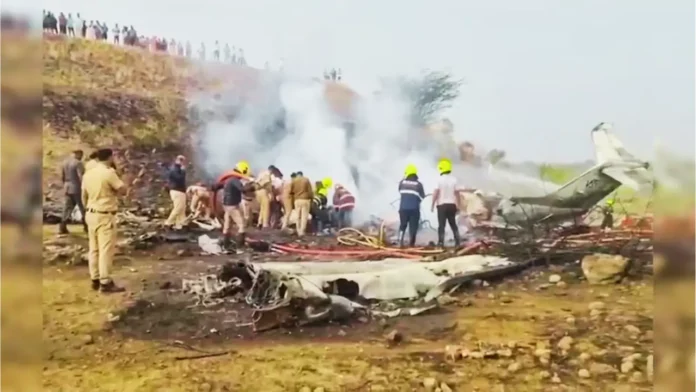
Capt. Sumit Kapoor served as the pilot-in-command of the Learjet that crashed on approach to Baramati on January 28, 2026. He died along with the co-pilot, the VIP passenger and others on board.
Early training and qualifications
Sumit Kapoor completed formal pilot training and progressed through the required licences and checks to fly business jets. He held credentials that qualified him as pilot-in-command on high-performance light jets. Moreover, he logged substantial hours across varied operations. He built experience in both routine and non-scheduled flights. As a result, operators trusted him with VIP charters.
Professional career in business aviation
Kapoor worked in the charter and business jet sectors. He flew for operators that handle time-sensitive VIP movements. These flights demand flexibility, precise planning, and quick decision-making. Over time, he acquired familiarity with different airfields and shorter runways. Consequently, he handled many approaches that larger airlines rarely attempt.
Role and responsibilities as pilot-in-command
As pilot-in-command, Kapoor bore ultimate responsibility for the aircraft and its occupants. He planned the flight, evaluated the weather, monitored fuel and systems, and coordinated with air traffic control. In the cockpit, he led the crew, made final calls, and managed abnormal events. His decisions shaped every stage of the flight, especially during critical phases like approach and landing.
The Baramati flight: facts and timeline
On January 28, 2026, the Learjet departed Mumbai bound for Baramati. The aircraft carried a senior political leader and a small crew. During the second approach to Baramati, the aircraft encountered problems and crashed near the runway. It caught fire on impact. All five people on board died. Emergency responders reached the site quickly, but they could not save the occupants.
What the immediate inquiries address
Investigators will examine flight data, cockpit voice records, radar tracks, and air traffic communications. They will also assess pilot decision-making, aircraft maintenance history, weight and balance, and runway conditions. In addition, investigators will review weather, NOTAMs, and any last-minute changes to the flight plan. Together, these elements will help reconstruct how events unfolded in the final minutes.
Broader context — risks in non-scheduled operations
Charter flights differ from scheduled airline operations. They often use smaller airfields and face tighter timing pressures. Consequently, they expose crews to a unique mix of risk factors. Experienced pilots like Kapoor mitigate these risks through training and conservative decisions. Yet accidents show that even seasoned crews can face sudden, complex challenges.
Safety lessons and likely industry response
First, investigators typically recommend procedural clarifications when human factors play a role. Second, regulators may push for enhanced approach minima, simulator training for critical scenarios, and stricter oversight of charter operators. Third, operators often review dispatch policies and decision authority during marginal conditions. The sector tends to respond quickly after high-profile accidents to restore confidence.
Peers’ recollections and professional reputation
Colleagues described Kapoor as professional and steady under pressure. They noted his familiarity with business jets and shorter runways. Many remembered him as a pilot who prepared thoroughly. His sudden death brought a sombre reminder of the risks pilots accept to serve demanding missions.
Human cost and legacy
Beyond technical analysis, the crash left grieving families and colleagues. It also raised public questions about VIP travel safety. Kapoor’s death highlights the personal stakes behind aviation safety rules. His career shows sustained commitment to flight operations. His legacy may increasingly appear in training modules and industry discussions on risk reduction.
Capt. Sumit Kapoor rose through the ranks to command business jets and to lead high-profile charters. He served as pilot-in-command on the Baramati flight that ended tragically on January 28, 2026. Investigators will compile the facts, and the aviation community will draw lessons. Meanwhile, his colleagues and loved ones remember a professional who met the cockpit’s demands with discipline and care.

