
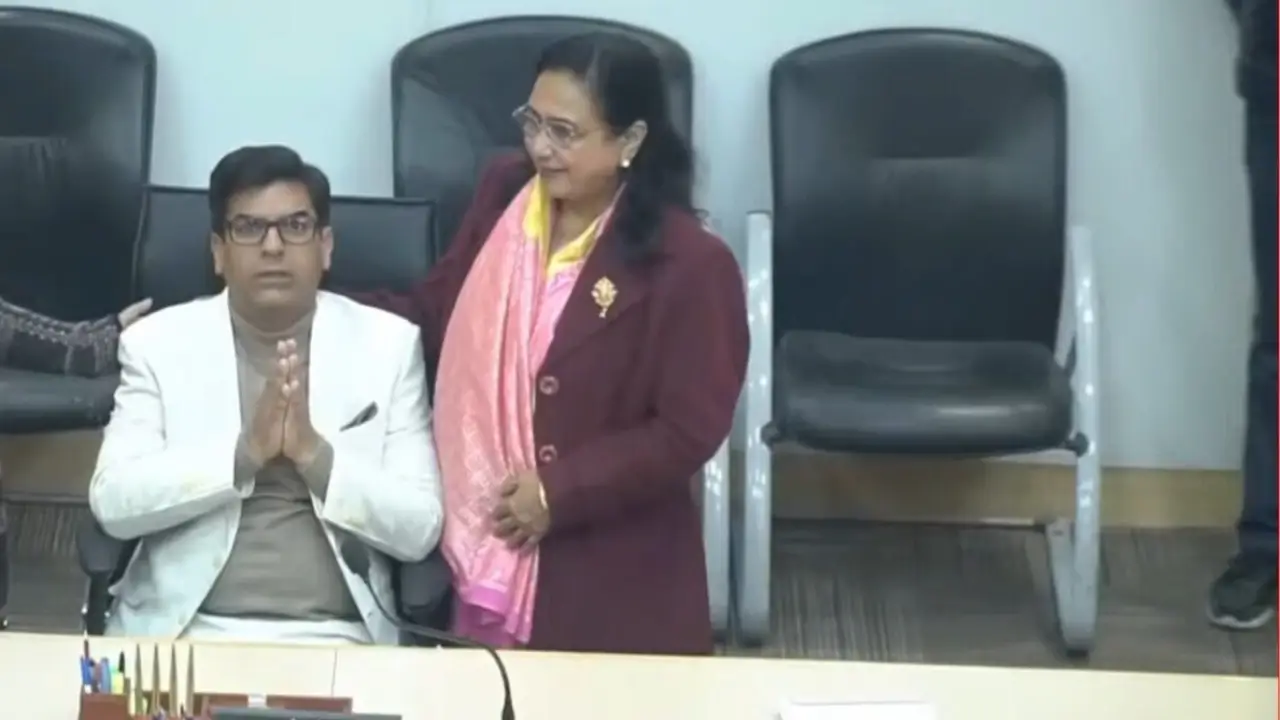
Chandigarh has a new mayor, and the outcome carries more weight than the numbers suggest. Saurabh Joshi, a BJP councillor, emerged victorious in a three-way mayoral contest. The election highlighted both party discipline and opposition disunity. More importantly, it reset expectations around civic delivery in the city.
How the numbers shaped the outcome
The mayoral election saw three parties fielding separate candidates. Joshi secured a clear lead with the majority support inside the municipal house. The result reflected tight coordination within the BJP’s councillor group. At the same time, votes split between rival parties weakened any challenge to the BJP nominee. In municipal politics, unity often matters more than rhetoric, and this election proved that point.
The man at the centre of the mandate
Saurabh Joshi is not a first-time entrant into local governance. He has built his political profile through ward-level work and organisational roles. His public image is rooted in accessibility and administrative follow-up rather than headline-driven politics. During the run-up to the mayoral election, his messaging stayed focused on everyday civic concerns. That positioning helped consolidate internal support.
What this election reveals about city politics
Chandigarh’s municipal politics operates on practical lines. Councillors are judged by service delivery, not ideology. This election showed three clear trends. First, the BJP remains structurally strong within the civic body. Second, fragmented opposition strategies reduce bargaining power. Third, mayoral authority, though limited, still matters when backed by organisational clarity.
The challenges waiting on day one
The new mayor inherits a city with persistent civic issues. Water supply remains uneven in several sectors. Waste management needs stronger segregation and processing systems. Road maintenance and pedestrian infrastructure demand regular attention. Financial planning will be critical, as municipal resources remain under pressure. Public sanitation and seasonal health risks also require constant monitoring. None of these problems are new, but expectations for faster action are rising.
Where early action can make a difference
The first few weeks will set the tone. A rapid assessment of civic services can help identify priority zones. Targeted repair drives can deliver visible results. Clear timelines for grievance redressal will improve citizen confidence. Transparent communication around budgets and tenders can reduce friction and criticism. Small but consistent wins matter more than large promises.
Understanding the limits of mayoral power
The mayor’s role is influential but not absolute. Policy execution depends on coordination with the municipal commissioner and administrative departments. The mayor can guide priorities, chair key meetings, and shape oversight committees. Success will depend on cooperation rather than confrontation. Managing this balance will test Joshi’s administrative instincts.
Political risks ahead
A working majority does not eliminate pressure. Internal expectations from party colleagues will increase. Opposition councillors may sharpen scrutiny on governance lapses. Budget constraints can slow delivery. Public patience is limited. Therefore, the mayor must manage both politics and performance with equal care.
Why this win matters beyond the city
Municipal outcomes often influence broader political narratives. Efficient civic governance strengthens party credibility at higher levels. For the BJP, this victory reinforces its organisational advantage in urban local bodies. For rival parties, the result is a reminder that divided contests often favour the strongest bloc.
What citizens should watch closely
The first two months will be critical. Service audits, ward-level action plans, and committee appointments will reveal real priorities. Budget decisions will indicate whether governance promises translate into funding. Transparency in contracts and timelines will shape public trust.
Closing perspective
Saurabh Joshi’s elevation as Chandigarh Mayor is less about symbolism and more about responsibility. The mandate is clear but measured. The city now expects stability, speed, and accountability. If the administration delivers on everyday civic needs, this mayoral term could set a benchmark for practical urban governance. If not, political equations inside the corporation may shift quickly. The spotlight is firmly on execution.