


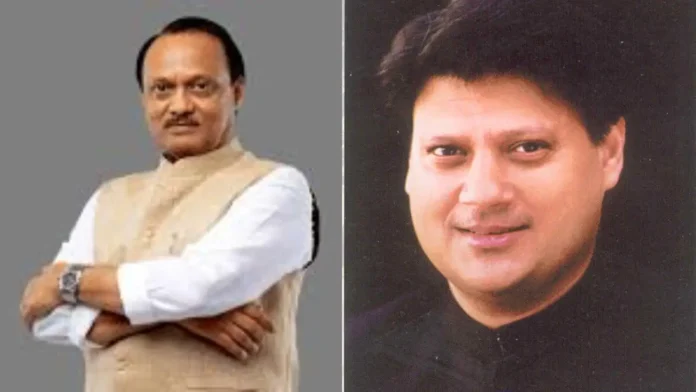
The recent death of Ajit Pawar in a tragic accident sent shockwaves through Maharashtra. Within hours, coalition arithmetic became uncertain. Succession debates resurfaced. Party workers struggled to steady the organisation. The incident once again underlined a hard truth of Indian politics. When a powerful leader dies suddenly, politics rarely pauses. Instead, it reorganises itself under pressure.
India’s political history carries many such moments. Accidents have removed sitting prime ministers, chief ministers, union ministers, and mass leaders. Each death triggered shifts in leadership, alliances, and voter behaviour. This article examines key cases and explains how these tragedies changed the dynamics of Indian politics.
Why accidental deaths cause political upheaval
Sudden deaths create immediate power vacuums. Parties rush to prevent fragmentation. Rivals sense opportunity. Sympathy waves influence voters, at least in the short term. Bureaucracy slows as political control shifts. Most importantly, leadership succession moves from planning rooms to public spectacle. In India’s personality-driven politics, this transition often determines the future of parties and states.
Lal Bahadur Shastri: A prime minister lost abroad
The death of Lal Bahadur Shastri in Tashkent after signing a peace agreement shocked a young nation. Though not an accident in the conventional sense, his sudden passing created a leadership vacuum at the highest level. The Congress party struggled to manage succession. This moment paved the way for Indira Gandhi’s rise and reshaped national leadership for decades.
Sanjay Gandhi: An accident that changed dynastic politics
The death of Sanjay Gandhi in a plane crash in 1980 abruptly ended one line of dynastic succession. His absence transformed Congress politics. It elevated Rajiv Gandhi into the political spotlight and changed the ideological direction of the party. Few accidents have had such lasting national consequences.
Madhavrao Scindia: A regional power centre collapses
The plane crash that killed Madhavrao Scindia removed a towering regional leader in central India. His death weakened Congress’s hold in Madhya Pradesh and surrounding regions. Over time, rival parties filled the vacuum. The Scindia legacy continued, but party loyalty shifted, altering regional equations.
Y.S. Rajasekhara Reddy: Andhra Pradesh after a helicopter crash
The helicopter crash that killed Y. S. Rajasekhara Reddy marked a turning point in Andhra Pradesh politics. His leadership had balanced welfare politics with strong organisational control. After his death, the Congress fractured. New parties rose. The state’s political map changed permanently, influencing national coalition politics as well.
Gopinath Munde: BJP’s Maharashtra balance disturbed
The road accident that killed Gopinath Munde removed a key mass leader within the BJP. He connected the party to rural and backward-caste voters. His death forced the party to reorganise leadership in Maharashtra. It also altered internal power centres during a crucial expansion phase.
G.M.C. Balayogi: Loss of a constitutional figure
The helicopter crash that killed G. M. C. Balayogi shook Parliament itself. As Lok Sabha Speaker, he symbolised institutional stability. His sudden death disrupted parliamentary continuity and reminded the political class that even constitutional offices are vulnerable to abrupt change.
Rajesh Pilot: A bridge between factions disappears
The road accident that killed Rajesh Pilot removed a rare consensus-builder in Congress. He balanced mass appeal with organisational skill. His absence deepened factionalism in Rajasthan and weakened Congress’s internal cohesion in the state.
Sahib Singh Verma: Delhi politics reconfigured
The death of Sahib Singh Verma in a road accident changed the BJP’s leadership trajectory in Delhi. It forced the party to elevate new faces and rethink its urban strategy. Over time, this shift influenced Delhi’s evolving political landscape.
Ajit Pawar: A contemporary shock with immediate consequences
The accident that killed Ajit Pawar triggered instant instability in Maharashtra. Alliance partners recalculated their positions. Party unity faced a strain. Discussions on leadership, reunification, and electoral strategy intensified overnight. Unlike historical cases, this tragedy unfolded in a hyper-connected political environment, making its impact faster and sharper.
Patterns that repeat after such tragedies
Across decades, patterns remain consistent. Parties first invoke unity and legacy. Then they manage succession, often through family or trusted lieutenants. Sympathy shapes short-term electoral outcomes. Long-term results depend on organisational strength. Where institutions are weak, fragmentation follows. Where leadership pipelines exist, stability returns.
How these deaths reshape Indian democracy
Accidental deaths expose how dependent Indian politics remains on individuals. They test party discipline and institutional maturity. They also remind voters that governance continuity matters as much as charisma. Each tragedy becomes a stress test for democracy itself.
Conclusion
From Lal Bahadur Shastri to Ajit Pawar, accidental deaths of Indian politicians have repeatedly altered political trajectories. Some events changed national leadership. Others redrew state politics. All of them proved one thing. In India, personal tragedy and political consequence often move together. How parties respond decides whether instability deepens or renewal begins.

