


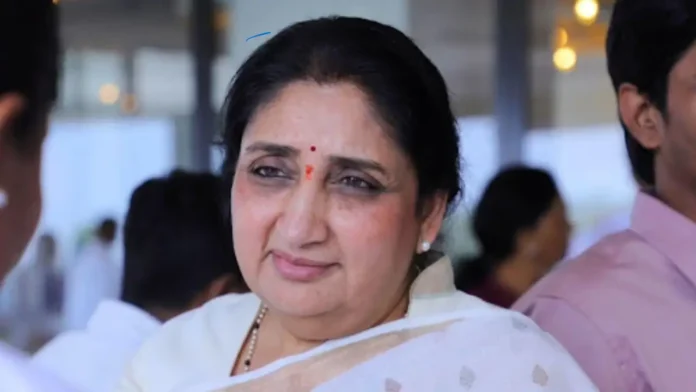
Ajit Pawar died suddenly in a plane crash, leaving a top-level vacancy. Within days, party leaders chose his spouse as a successor. She arrived in Mumbai to complete formalities. The state government and allies signalled support. The move aims for continuity and a quick transition.
Who is she, and what is her political experience?
Sunetra Pawar served as a Member of Parliament in the Rajya Sabha and worked in party circles behind the scenes. She lacks long experience in state legislature politics, but she carries the political legacy of her spouse. Her public role so far blended social outreach and party coordination. This appointment fast-tracks her into a highly visible executive role. That matters because the executive office brings administrative power and a public platform quickly.
How does someone who is not in the state legislature become deputy CM?
First, the legislative party must pick a leader. Then the chief minister recommends that person to the governor. Next, the governor administers the oath. Constitutional law allows non-legislators to serve in a state cabinet for up to six months. Therefore, she will need to win a seat in the state legislature within that timeframe or step down. In short, election to the assembly or council must follow her appointment if she wishes to stay beyond six months.
Timeline and immediate steps
Party leaders held fast consultations across the weekend. She arrived in Mumbai to accept the post and meet colleagues. The oath ceremony followed standard protocol: council of ministers reshuffle, announcement from the state secretariat, and public statements from allied parties. In parallel, party organisers will plan either a by-election or a council nomination to secure her legislative status before the six-month limit.
Political calculations and internal dynamics
Party unity matters now. The appointment aims to preserve Ajit Pawar’s power base and signal stability. Yet, some senior figures expressed surprise at the speed. Sharad Pawar, who leads another NCP faction, noted he was not consulted, which hints at intra-party friction. The ruling alliance, including the state chief minister Devendra Fadnavis, publicly backed the decision to avoid a governance crisis. This backing reduces the immediate risk of a confidence problem in the assembly. However, internal rivalries could resurface during seat selection for the required election.
Administrative and policy implications
In the short term, expect continuity on policy. Key portfolios tied to the previous deputy chief minister will likely remain aligned with past priorities to ensure smooth functioning. Over time, her political team will shape specific agendas. Watch the allocation of ministries and appointments to bureaucratic positions. Those choices will reveal whether this is symbolic continuity or a substantive power transfer.
Legal and electoral hurdles
The constitutional six-month rule creates a hard deadline. If the party cannot secure her election—either by winning a by-election or placing her in the legislative council—the office would become untenable. Election arithmetic in key districts will therefore guide strategy. Additionally, any rival claimants within the party could challenge nominations, raising the spectre of legal petitions or intra-party disputes. Practically, the party will use its organisational machinery to limit such disruptions.
Public reaction and media framing
Public sentiment mixes empathy with political curiosity. Many voters view the appointment as a compassionate continuation of Ajit Pawar’s legacy. Others question the merit and the speed of elevation. Media narratives will split along partisan lines. Independent coverage will probe her qualifications and the political trade-offs that informed the decision. Her first public statements and early administrative decisions will shape public confidence.
Significance for women’s leadership
Her appointment breaks a glass ceiling in state executive politics. Symbolically, it matters for representation. Practically, its long-term impact depends on whether she consolidates influence through policy and electoral success. If she wins a legislative seat and leads visible programs, the appointment could encourage more women to seek leadership roles in regional parties.
Risks and scenarios to watch
First, factional backlash inside the party could destabilise the coalition if not managed. Second, failure to secure a legislative seat within six months would force a leadership change. Third, contentious ministerial assignments could spark public criticism. Conversely, rapid legislative success and effective governance would cement her position and alter party dynamics in her favour.
The move prioritises continuity and immediate political stability. It also accelerates a personal political trajectory into the highest echelons of state power. The next six months will decide whether this appointment becomes a durable milestone for both the individual and for women’s political representation in the state.

