


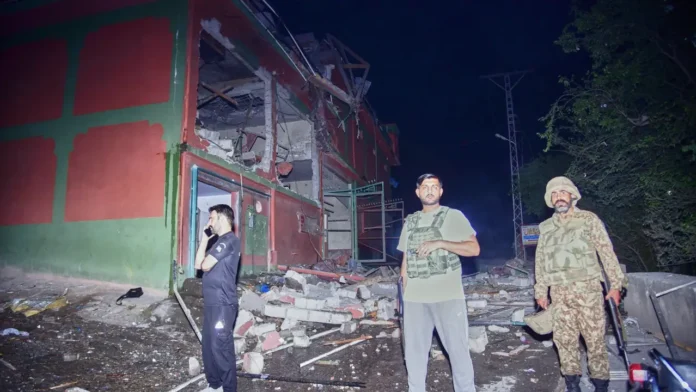
At least 69 people were killed and more than 160 were injured after a suicide bombing struck a Shia shrine in Pakistan’s capital, Islamabad, on Friday. The blast took place at Tarlai Imambargah, located in the Shehzad Town area, during afternoon hours when worshippers had gathered for prayers.
Blast at Shrine Entrance
According to Pakistani media reports and security officials, the attacker detonated explosives at the main gate of the place of worship. Preliminary information suggests that alert security guards intercepted the suicide bomber before he could enter the main hall, potentially preventing even greater loss of life.
Despite the interception, the explosion caused extensive damage to the gate and nearby structures. Windows of surrounding buildings were shattered, and debris was scattered across the road. Visuals from the site showed scenes of devastation, with several bodies lying amid the rubble.
City-Wide Emergency Declared
Following the attack, the Islamabad Inspector General of Police declared a city-wide emergency. Rescue teams, police, and emergency responders rushed to the scene as authorities feared the casualty count could rise further.
The injured were immediately shifted to major hospitals, including the Pakistan Institute of Medical Sciences (PIMS) and Polyclinic Hospital, where doctors declared an emergency to handle the influx of victims.
Pattern of Recent Attacks
The incident comes less than three months after another suicide blast outside a district and sessions court complex in Islamabad in November 2025, which had killed 12 people and injured over 30. The latest attack has renewed concerns over security in the capital despite heightened vigilance.
Pakistan PM Condemns Attack
Pakistan Prime Minister Shehbaz Sharif strongly condemned the bombing, expressing deep grief over the loss of lives. In an official statement, he described the attack as an assault on humanity and ordered authorities to ensure the best possible medical care for the injured.
Investigation Underway
Security agencies have launched a detailed investigation to identify those responsible and determine whether the attack is linked to any banned extremist groups. Additional security deployments have been made across sensitive areas of Islamabad to prevent further incidents.
Conclusion
The suicide bombing at the Islamabad shrine marks one of the deadliest attacks in the capital in recent months, once again highlighting the persistent threat posed by terrorism in Pakistan. As families mourn the victims, authorities remain on high alert amid fears of further violence.

