


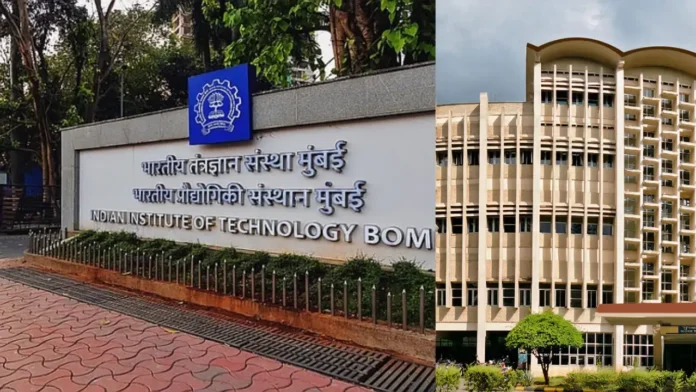
In a major boost to India’s manufacturing ambitions, IIT Bombay and Columbia University have signed a memorandum of understanding to establish the Columbia–IIT Bombay Center of AI for Manufacturing. The agreement was formalised in the presence of Union Education Minister Dharmendra Pradhan, underlining the government’s push to integrate advanced technologies into core industrial sectors.
The proposed centre will function as a joint research and translation hub, focusing on the development of robust, scalable and human-centric artificial intelligence systems tailored to real-world manufacturing needs. With this initiative, the Ministry of Education has now backed four dedicated AI centres across the country, signalling a structured national approach to AI-led industrial transformation.
According to officials, the new centre will work closely with industry partners to bridge the gap between academic research and factory-floor deployment. Several industrial stakeholders are already in talks to join the programme, which aims to modernise production systems while addressing practical challenges such as legacy machinery, noisy datasets, real-time operational constraints and multilingual work environments.
IIT Bombay Director Professor Shireesh Kedare described the collaboration as a strategic step towards strengthening India’s manufacturing ecosystem. He noted that the centre would help build open and interoperable industrial AI infrastructure, support MSMEs, encourage startup innovation and create a skilled, future-ready workforce. The broader goal, he said, is to position India as a global leader in AI-driven manufacturing.
The centre’s research agenda will span a wide range of sectors, including semiconductors, robotics, pharmaceuticals, food processing, petrochemicals, construction, infrastructure, and transport and logistics. By combining Columbia University’s strengths in foundational AI and optimisation with IIT Bombay’s expertise in manufacturing and process engineering, the initiative aims to deliver end-to-end solutions with direct industrial relevance.
Beyond applied research, the centre plans to release foundational datasets, AI models and interoperable interfaces as public goods. This approach is expected to strengthen India’s diverse manufacturing landscape, particularly benefiting MSMEs, while accelerating the adoption of artificial intelligence across the sector.

