


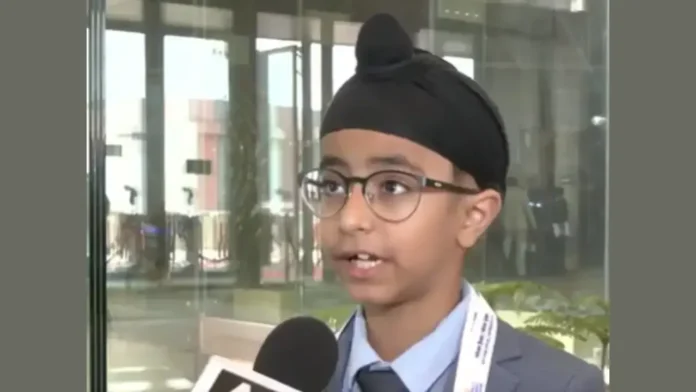
Ranvir learned to code very young and started public speaking early. He writes and speaks about responsible AI in plain language. He blends technical curiosity with moral questions. He frames AI as a tool people must design responsibly. His talks focus on learning, safety, and youth empowerment.
Why people are paying attention
First, he speaks at senior forums where few children appear. Second, he simplifies complex topics without dumbing them down. Third, he represents a generation that will live with AI its whole life. These three facts make his presence symbolic and substantive.
Key milestones (concise)
He addressed a major national AI summit as its youngest speaker. He spoke at international technology gatherings and participated in global youth sessions about technology. He published a short book aimed at young readers to demystify AI. He demonstrated basic app development skills at an early age.
Core messages Ranvir advances
He stresses three linked ideas. One: learn to build, not only consume. Two: pair technical skill with ethics. Three: include young people in policy conversations that affect their future. He explains these ideas with examples kids can understand, like rule-based games and everyday apps.
What he actually did on stage — practical takeaways
Ranvir used simple metaphors to explain AI behaviour. He pointed out specific risks such as bias and over-reliance on automated outputs. He suggested concrete steps: include ethics in school curricula, create mentorship programs for young creators, and run child-friendly AI literacy workshops. He also recommended that forums invite youth representatives to policy tables.
Evidence of technical credibility
Ranvir presented basic projects and learning achievements that show hands-on experience. He completed age-appropriate programming courses and participated in developer events where he demonstrated small AI-informed apps. Those accomplishments matter because they let him speak from practice, not only opinion.
How institutions should respond — five practical actions
- Add age-appropriate AI modules in school curricula so students learn concepts and responsibilities early.
- Fund youth-led tech clubs that produce simple, supervised projects.
- Include youth delegates in advisory panels for technology policy.
- Launch short mentorship programs pairing students with AI practitioners.
- Create public-facing explainers and translations so non-technical caregivers can evaluate tools children use.
Concerns and limits to note
Children on public stages face attention and scrutiny. Organizers must protect their privacy and well-being. Additionally, youthful enthusiasm should not replace rigorous expertise when making technical policy. Young voices should complement—not substitute—expert review.
Broader significance
His visibility signals a cultural shift: technology conversations now acknowledge youth as stakeholders. This shift matters because it changes how education, product design, and regulation account for future users.
Practical checklist for educators and policymakers
- Start an “AI fundamentals” week in middle school.
- Require project prompts that pair coding with an ethics reflection.
- Sponsor local youth showcases where students present supervised projects.
- Draft simple consent and privacy guidelines for minor presenters.
- Measure outcomes by students’ ability to explain an AI idea in plain words.
Conclusion
Ranvir Sachdeva’s role is both symbolic and tactical. Symbolically, he shows that youth can join high-level debates. Tactically, his talks include repeatable actions for educators and organizers. If institutions adopt a few of his recommendations, they can improve technology literacy and make policy more inclusive.

