


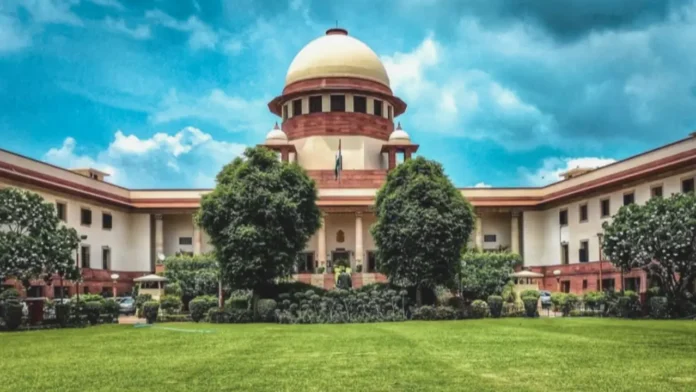
A major controversy has emerged over a new Class 8 Social Science textbook published by NCERT. The chapter discussed “corruption in the judiciary” as one of the challenges faced by the judicial system.
The issue reached the Supreme Court after senior lawyers raised objections. The Chief Justice of India expressed serious concern and indicated that the Court may take suo motu action.
The debate has now turned into a national discussion on education, judicial dignity, and constitutional values.
What the NCERT Book Says
The controversial content appears in a chapter titled “The Role of the Judiciary in Our Society.”
The chapter describes several challenges faced by the Indian judicial system:
- Corruption at different levels
- Massive backlog of cases
- Shortage of judges
- Complex procedures
- Poor infrastructure
The book also explains that judges follow a strict code of conduct both inside and outside the courtroom.
It further mentions that complaints against judges can be filed through official grievance systems. Serious cases may lead to removal through parliamentary impeachment.
The chapter states that corruption can reduce access to justice, especially for poor citizens. It also highlights ongoing reforms such as transparency measures and digitalisation.
Data on Pending Cases
The textbook provides numerical data to explain the burden on courts.
Approximate pending cases include:
- Supreme Court: About 81,000 cases
- High Courts: About 62.4 lakh cases
- District Courts: About 4.7 crore cases
These figures aim to explain why cases take years to resolve.
Earlier textbooks mentioned delays but did not refer to corruption as a challenge.
This change became the main source of controversy.
Supreme Court’s Strong Reaction
The matter came before the Supreme Court when senior advocates raised objections in open court.
The Chief Justice expressed strong displeasure and called the reference to corruption a “calculated attempt” to damage the institution.
He said both judges and lawyers felt disturbed by the content. Many High Court judges reportedly contacted him about the issue.
He made it clear that he would not allow the judiciary to be defamed.
The Court indicated that it may take suo motu cognisance, meaning the Court could start proceedings on its own.
This shows the seriousness of the issue.
Arguments Raised by Senior Lawyers
Senior lawyers argued that the textbook singled out the judiciary unfairly.
They questioned why corruption in other institutions was not discussed.
According to them, the selective reference created a misleading impression for young students.
They suggested that the content appeared deliberate rather than academic.
This argument strengthened the demand for judicial intervention.
Constitutional Concerns
The issue goes beyond textbook content.
Judges observed that the chapter may affect constitutional balance.
Separation of Powers
India’s Constitution divides power among three branches:
- Legislature
- Executive
- Judiciary
This system prevents concentration of power.
Some judges felt that the textbook language weakened respect for the judiciary.
They suggested that such content could disturb the constitutional balance.
Basic Structure Doctrine
The independence of the judiciary forms part of the Basic Structure Doctrine.
This doctrine protects core constitutional principles.
Courts cannot allow laws or actions that damage these principles.
Judicial independence is considered essential for democracy.
Because of this, the Court treated the issue seriously.
Why the Chapter Was Introduced
NCERT has been revising textbooks under:
- National Education Policy 2020
- National Curriculum Framework
The goal is to modernise education and make textbooks more realistic.
New textbooks for Classes 1 to 8 have already been released.
The Class 8 Social Science book forms part of this reform.
The intention appears to be to explain real-world challenges.
However, the wording created controversy.
Reference to Judicial Accountability
The chapter includes mechanisms designed to maintain judicial integrity.
Code of Conduct
Judges must follow ethical standards.
These rules apply both professionally and personally.
Complaint Mechanism
Citizens can file complaints through official systems.
Thousands of complaints have been recorded in past years.
Impeachment Process
Parliament can remove a judge after an investigation.
This process ensures accountability while protecting independence.
The textbook tried to present these safeguards.
Still, the mention of corruption triggered strong reactions.
Examples Used in the Textbook
The chapter includes case-based learning.
Students are asked to analyse major court decisions.
Electoral Bonds Case
Students learn how the Supreme Court protected voters’ right to know political funding sources.
Internet Speech Case
Students study how the Court protected freedom of speech by striking down a controversial legal provision.
These examples aim to show how courts protect citizens’ rights.
Government’s Response
Government sources later indicated that the controversial section may be removed.
Officials suggested that school textbooks should focus on inspiring content for children.
They also questioned the inclusion of statements made by a former Chief Justice.
The signals suggest that revisions are likely.
Why NCERT Textbooks Matter
NCERT textbooks influence millions of students across India.
Many state boards also follow NCERT content.
Therefore, even small changes have large impact.
Textbooks shape how young citizens understand institutions.
This explains why the controversy became so significant.
Larger Debate: Reality vs Respect
The controversy reflects a deeper debate.
Argument for Realism
Some educators believe students should learn real challenges.
Understanding problems helps improve institutions.
Transparency builds trust.
Argument for Institutional Respect
Others argue that young students need confidence in institutions.
Negative messaging may weaken trust.
Balance becomes important.
The current controversy shows how difficult that balance can be.
What Happens Next
Several developments may follow:
- Possible Supreme Court suo motu case
- NCERT revisions
- Government review
- Academic debate
The final decision will determine how institutions are discussed in school education.
The NCERT Class 8 textbook controversy shows how sensitive the subject of the judiciary remains in India.
The chapter attempted to describe challenges such as backlog and corruption. However, the wording triggered strong objections from the judiciary.
The Supreme Court’s reaction shows the importance of judicial dignity and constitutional balance.
At the same time, the debate raises important questions about how students should learn about public institutions.
The final outcome will shape future textbooks and influence how the next generation understands the Indian judicial system.

