


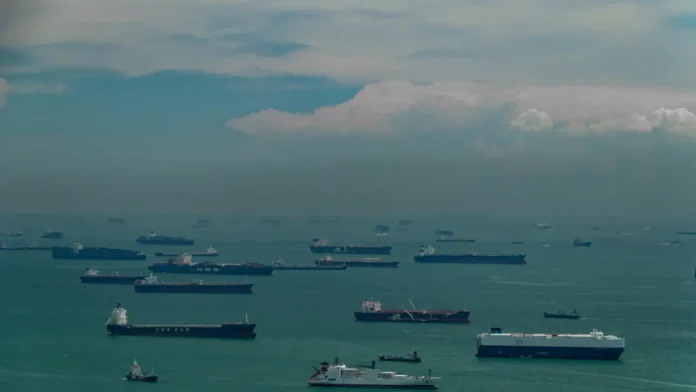
The Bab el-Mandeb Strait has always held strategic value. Yet in 2026, it has moved sharply into global focus.
A narrow passage now sits at the crossroads of conflict, energy supply, and global trade. As tensions rise in the Middle East, this route has become a pressure point for the world economy.
The Immediate Trigger: Rising Regional Conflict
The ongoing tensions involving major powers in the Middle East have changed the situation around the Strait.
More importantly, armed groups operating from Yemen have become more active in the region.
This development matters because the Strait lies very close to their area of influence.
As a result, what was once a regional conflict now threatens an international shipping route.
Threats to Shipping and Possible Disruption
The biggest concern today is the threat to commercial vessels.
There have been warnings about targeting ships passing through the strait.
In recent years, incidents involving drones and missiles have already raised alarm.
Even limited attacks can force shipping companies to rethink routes.
A Second Global Chokepoint Under Pressure
The global risk increases when viewed alongside other vulnerable routes.
The Strait of Hormuz already faces instability.
Now, Bab el-Mandeb is emerging as another critical chokepoint under stress.
This creates a fragile situation for global energy supply chains.
Why This Strait Matters So Much
A Critical Trade Corridor
This route connects the Red Sea to the Indian Ocean and links Europe with Asia.
A significant share of global trade flows through this narrow passage.
When movement slows here, supply chains across continents feel the impact.
A Lifeline for Oil Transport
Large volumes of crude oil and fuel shipments pass through this strait daily.
If disruption occurs, energy supplies to Europe and beyond can tighten quickly.
This often leads to sudden spikes in oil prices.
Limited Alternatives Increase Risk
Ships can avoid the strait by taking a longer route around Africa.
However, that option increases travel time, fuel costs, and freight charges.
Because of this, even a partial disruption can create global economic strain.
Fear Alone Can Disrupt the System
Interestingly, the strait does not need to be fully blocked to cause damage.
Even the possibility of attacks creates uncertainty.
Shipping companies may reroute vessels as a precaution.
This leads to delays, higher insurance costs, and increased prices for goods.
Lessons From Recent Years
The region has seen similar disruptions in the past.
Previous attacks on ships created temporary shocks in global trade.
Because of this history, markets react quickly to any new threat.
Confidence in the safety of this route remains sensitive.
A Strategic Lever in Modern Geopolitics
The Bab el-Mandeb Strait is more than a trade route. It is a strategic asset.
Control or disruption of such chokepoints can influence global economics.
Countries and non-state actors understand this power.
That is why the Strait often becomes a focal point during conflicts.
Global Ripple Effects
Impact on Oil Prices
Any instability in the region can push oil prices upward.
Energy markets react fast to risks in key transit routes.
Supply Chain Disruptions
Goods moving between Asia and Europe may face delays.
This affects industries, businesses, and consumers worldwide.
Impact on India
India depends heavily on this route for oil imports and trade.
If disruptions continue, fuel prices may rise.
This can increase inflation and affect economic stability.
Final Takeaway
The Bab el-Mandeb Strait is making headlines because it sits at a critical intersection of risk and necessity.
Conflict has reached its doorstep. Shipping routes face uncertainty. Global trade depends on its stability.
In simple terms, when this narrow passage becomes unstable, its impact spreads far beyond the region.

