


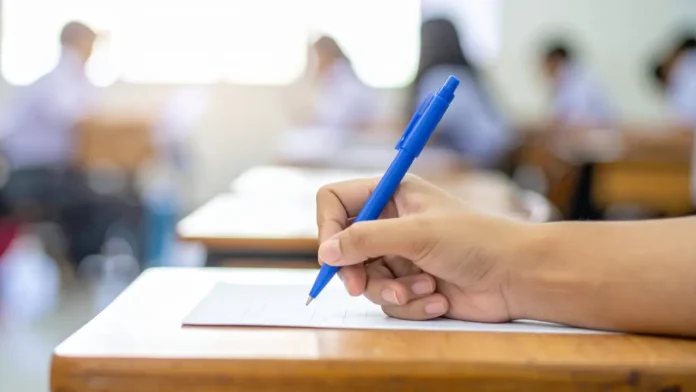
The Central Board of Secondary Education has issued strict exam-day instructions for the 2026 board examinations. The most important rule is clear. No candidate will be allowed to enter the examination centre after 10:00 AM. The rule applies to both Class 10 and Class 12 students and will be enforced uniformly across centres.
Reporting time and entry window
CBSE exam centres open their gates at 9:00 AM. Students must complete entry, frisking, and seating formalities before 10:00 AM. After this cut-off, centres will close gates. Latecomers will not be permitted under normal circumstances.
Students should aim to reach the centre by 9:00–9:15 AM to avoid queues and last-minute stress.
Exam start time and reading period
Most theory papers begin at 10:30 AM. CBSE provides a 15-minute reading time before writing starts. During this period, students may read the question paper but must not write anything on the answer sheet.
Always follow the exact timing printed on the admit card, as it remains the final authority.
Why CBSE enforces the 10 AM rule
CBSE applies this rule to maintain discipline and fairness. Early closure allows time for security checks, identity verification, and proper seating. It also prevents disturbance once the instructions and the question paper distribution begin.
What students must carry
Students should bring only essential items. These include the printed admit card, a valid photo ID, and stationery in a transparent pouch. Pens, pencils, erasers, and rulers are permitted. Drinking water is allowed in a transparent bottle.
Students must avoid carrying any extra items to reduce delays during frisking.
Items strictly prohibited
Mobile phones, smart watches, Bluetooth devices, calculators (unless specifically allowed), written notes, paper chits, and electronic gadgets are banned. Jewellery, metal accessories, and heavy footwear may also delay entry.
Possession of prohibited items can lead to action under Unfair Means rules.
Security and frisking at exam centres
Exam centres follow strict security protocols. These include frisking and metal detector checks. CCTV surveillance remains active in many centres. Students with medical implants or health-related devices should inform centre staff immediately and carry supporting documents.
Dress code and appearance
Regular students should wear their school uniform as instructed. Private candidates should wear simple clothing without metal parts. Light footwear is recommended. Avoid belts, bangles, chains, or accessories that may slow down security checks.
What happens in case of delay or emergency
CBSE allows very limited flexibility only in exceptional cases, such as medical emergencies or unavoidable incidents. Any decision rests with the centre superintendent and requires valid proof. Students should not depend on exceptions and must plan to arrive early.
Rules related to unfair means
If a student is found carrying banned material or indulging in unfair practices, the centre will report the case. Penalties may include cancellation of the paper or further disciplinary action, depending on the severity of the violation.
Practicals and internal assessments
Practical exams and internal assessments are conducted before theory papers as per CBSE timelines. Schools upload marks within the prescribed schedule. Students should keep practical attendance records safe until the results are declared.
Exam-day checklist for students
Check the admit card details the night before. Pack permitted stationery only. Plan the travel route and buffer time. Sleep well and eat light. Reach the centre early. Follow invigilator’s instructions calmly.
Key takeaways
Entry closes at 10:00 AM sharp.
Reporting early reduces stress.
Carry only allowed items.
Follow dress and security rules.
Late entry is rarely permitted.
Board exams test preparation, but exam day tests planning. Reaching early, staying calm, and following rules can make a big difference. Prepare once, plan well, and walk into the centre with confidence.

