


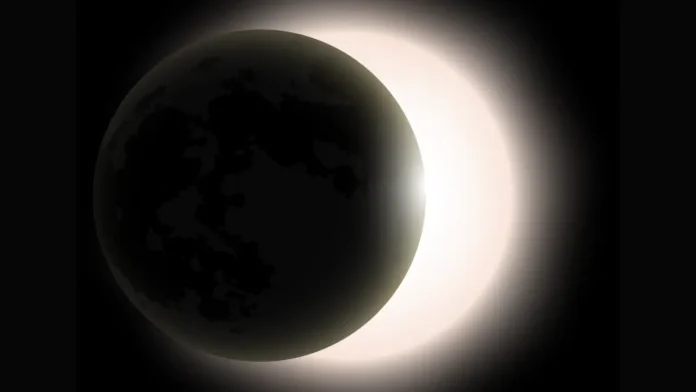
The first Chandra Grahan of 2026 will occur on 3 March 2026 (Tuesday) on Phalguna Purnima, the same period when Holika Dahan and Holi celebrations take place. This makes the eclipse both spiritually and astronomically significant.
This will be a Total Lunar Eclipse globally, while in India, it will appear mainly as a partial lunar eclipse after moonrise. The event will be visible across many regions of the world, including Asia, Europe, Australia, and the Americas.
The eclipse holds special importance in Hindu tradition. People observe fasting, avoid auspicious activities, and focus on spiritual practices during this period.
Chandra Grahan 2026 Date and Time
Date: 3 March 2026 (Tuesday)
Tithi: Phalguna Purnima
Eclipse Timings (Indian Standard Time)
- Penumbral eclipse begins: 3:20 PM
- Partial eclipse begins: 3:30 PM
- Total eclipse begins: 4:34 PM
- Maximum eclipse: 5:33 PM
- Eclipse ends (Moksha): 6:47 PM
In India, the Moon will rise while the eclipse is already in progress. Therefore, most regions will see only the final phase.
Visibility in India
The eclipse will be visible in different forms across India.
Better Visibility Areas
- Assam
- Arunachal Pradesh
- Nagaland
- Other northeastern regions
These areas may see a longer portion of the eclipse.
Other Regions
- Bihar
- Uttar Pradesh
- Delhi
- Maharashtra
- West Bengal
- Southern states
In most parts of India, the Moon will rise already eclipsed. People will mainly see the final stage of the eclipse.
Sutak Kaal of Chandra Grahan
According to Hindu tradition, Sutak Kaal begins about nine hours before the eclipse.
Sutak Timings
- Sutak begins: 3 March 2026 at 6:20 AM
- Sutak ends: 6:47 PM
Since the eclipse will be visible in India, Sutak rules will be followed.
During Sutak, people avoid:
- Cooking food
- Eating meals
- Religious ceremonies
- New work or investments
- Auspicious activities
Many temples remain closed during this period.
Religious Significance
Chandra Grahan is considered a spiritually sensitive period. According to traditional belief, the energy of the environment changes during the eclipse.
Because of this belief:
- Auspicious work is avoided
- People focus on prayer
- Meditation becomes important
- Charity is encouraged
Devotees often chant mantras such as:
Om Namah Shivaya
Chanting during the eclipse is believed to increase spiritual benefits.
What to Do During Chandra Grahan
Simple practices help maintain spiritual discipline.
Recommended Practices
- Wake up early and take a bath
- Offer water to the Sun or Lord Shiva
- Complete meals before Sutak begins
- Chant mantras during the eclipse
- Stay calm and positive
After the eclipse ends:
- Take a bath, preferably with Ganga water
- Clean the house
- Light a lamp
- Perform prayers
Donations After Eclipse
Donation after the eclipse is considered highly beneficial.
Recommended items include:
- Rice
- Milk
- Sugar
- White clothes
Fresh food should be prepared after the eclipse before eating.
What Not to Do During Chandra Grahan
Traditional rules advise avoiding certain activities.
Avoid These Activities
- Eating during the eclipse
- Cooking food
- Cutting hair or nails
- Using sharp objects
- Starting new work
- Fighting or arguments
These practices are followed in many Hindu households.
Why Chandra Grahan is Considered Sensitive
Traditional beliefs say that the energy of the environment becomes unstable during the eclipse.
It is believed that:
- The Moon’s rays are not pure
- Negative vibrations increase
- Sensitive people may feel discomfort
Because of this belief, people avoid going outside or looking directly at the Moon unnecessarily.
Precautions for Pregnant Women
Special care is traditionally advised for pregnant women during Chandra Grahan.
Things Pregnant Women Should Avoid
- Avoid going outside unnecessarily
- Do not look directly at the Moon
- Avoid sharp objects such as knives, scissors, and needles
- Avoid stitching or embroidery
- Avoid cutting work
Traditional belief says these activities may affect the unborn child.
Recommended Precautions
- Stay indoors
- Take proper rest
- Keep positive thoughts
- Pray or chant mantras
- Remain calm and relaxed
These precautions are based on traditional customs followed for generations.
Traditional Protective Remedies
Some traditional remedies are believed to reduce the effects of the eclipse.
Common Remedy
One traditional practice suggests:
- Take a thread equal to the pregnant woman’s height
- Keep it safely inside the house during the eclipse
- After the eclipse, immerse the thread in flowing water
This remedy is believed to reduce negative effects.
Zodiac Signs That Should Be Careful
According to astrology, this eclipse occurs in Leo zodiac sign and Purva Phalguni Nakshatra.
People belonging to these signs may need extra caution:
- Leo
- Cancer
- Aquarius
People with a weak Moon in their horoscope may experience:
- Mental stress
- Anxiety
- Emotional disturbance
However, spiritual practices may bring positive results.
Scientific View
A lunar eclipse occurs when the Earth comes between the Sun and the Moon.
Important facts:
- The Moon passes through Earth’s shadow
- The Moon may appear dark or reddish
- It is safe to watch with naked eyes
Lunar eclipses are natural astronomical events.
Conclusion
The Chandra Grahan on 3 March 2026 is an important event with religious and astronomical significance. Since it falls on Phalguna Purnima during the Holi period, it becomes even more meaningful.
People observe Sutak, avoid auspicious activities, and follow traditional rules during this time. Pregnant women are advised to take extra precautions according to traditional beliefs.
By following simple practices such as prayer, discipline, and charity, devotees consider the eclipse period spiritually beneficial.

