


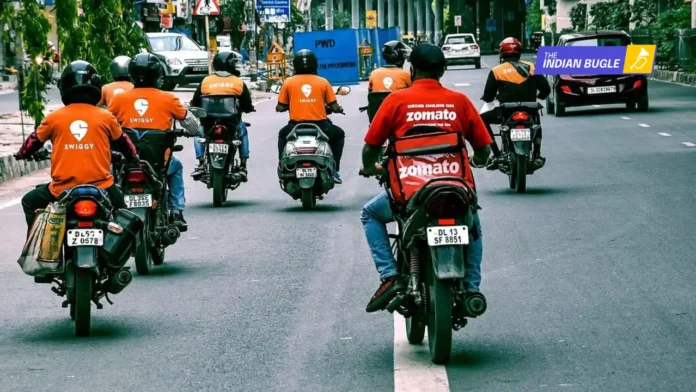
Delivery workers associated with major platform companies, including Swiggy, Zomato, Zepto, Blinkit, Amazon, and Flipkart, have announced a nationwide strike on December 25 and December 31, 2025. The strike call has been given by organised gig worker unions, with participation expected across metro cities and tier-2 towns.
Who Has Called the Strike
The strike has been jointly announced by Telangana Gig and Platform Workers Union and Indian Federation of App-based Transport Workers. These organisations represent delivery partners and app-based workers across multiple platforms and states, and have been raising concerns over working conditions in the gig economy.
Why Delivery Workers Are Protesting
The unions state that delivery workers continue to face falling earnings despite increasing workload and rising fuel and maintenance costs. Workers allege that per-order payouts have been reduced over time, while incentives have become harder to achieve. Other concerns include a lack of social security, absence of paid leave, unpredictable work hours, and sudden account deactivations without clear explanation or appeal mechanisms.
Why December 25 and December 31 Were Chosen
Christmas and New Year’s Eve are among the busiest days for food delivery, grocery delivery, and online shopping. By choosing these dates, workers aim to highlight how platform companies depend heavily on delivery partners during peak demand while failing to provide fair compensation or protections. The timing is intended to pressure companies into initiating dialogue.
Cities and Regions Likely to Be Affected
Union leaders have said participation is expected across major metros as well as tier-2 cities. Urban centres with high dependence on app-based services are likely to see the strongest impact. The actual disruption will depend on local participation levels and whether companies deploy contingency measures.
Expected Impact on Consumers
If participation is significant, users may face delayed deliveries, limited restaurant or store availability on apps, longer delivery times, or temporary service suspensions. Food orders, quick-commerce essentials, and e-commerce shipments could all be affected, particularly during evening peak hours.
Broader Issue of Gig Worker Rights
This strike reflects a larger debate around gig work in India. Delivery workers are classified as independent contractors, which excludes them from many labour protections. Unions argue that while platforms benefit from flexible labour models, workers bear the risks without income security, health coverage, or retirement benefits.
Platform Economy Under Pressure
The protest comes at a time when app-based platforms are expanding rapidly into new cities and services. As competition intensifies, workers claim the pressure to reduce costs is passed on to delivery partners through lower payouts and stricter performance algorithms.
What Workers Are Demanding
The unions are demanding minimum earnings guarantees, transparent payout structures, accident insurance, social security benefits, fair grievance redressal systems, and an end to arbitrary account suspensions. They also want formal recognition of gig workers within labour policy frameworks.
What Happens Next
Union leaders have stated that the strike could be escalated if companies do not engage in talks. The coming weeks will determine whether platforms respond with negotiations, policy changes, or operational adjustments to manage disruptions.
Conclusion
The December 25 and 31 strike call by delivery workers marks one of the most coordinated actions in India’s gig economy. As app-based services become central to urban life, the protest raises critical questions about sustainability, fairness, and the future of platform-driven employment. The outcome may shape how gig work is regulated and valued in the years ahead.

