


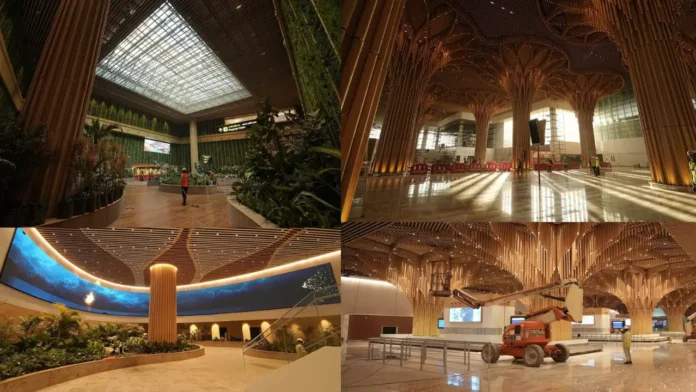
Guwahati’s Lokpriya Gopinath Bordoloi International Airport (LGBI) has opened India’s first nature-themed integrated terminal — the “Bamboo Orchids” terminal — combining regional design, upgraded aviation capacity, and sustainability features to transform connectivity for the Northeast. The project pairs a strong visual identity inspired by Assam’s flora and culture with hard infrastructure upgrades designed to handle larger passenger and cargo volumes.
Why the terminal matters
The Northeast has long faced limited air connectivity, which constrains tourism, trade, and investment. The new terminal addresses that bottleneck by increasing annual passenger capacity, modernising airside infrastructure and creating a high-quality arrival experience that markets the region’s natural and cultural assets to visitors. This is not only an architectural statement but a strategic investment in regional development.
Key specifications at a glance
The new integrated terminal covers about 1.4 lakh (140,000) sq. metres and is designed to handle roughly 1.3 crore (13 million) passengers a year when fully operational. The project’s reported cost bundles the terminal and related airfield upgrades and is in the range of ₹6,000 crore. The terminal’s signature elements include 57 orchid-inspired columns, extensive use of locally sourced bamboo (circa 140 tonnes) and large canopy structures that create a “sky-forest” ambience inside the building.
Design and sustainability features
Design choices emphasise local identity and biophilic principles. The terminal uses natural motifs (orchids, japi and rhino imagery), large daylight openings and indoor planting to reduce reliance on artificial lighting and to create a calming passenger environment. Local materials — especially bamboo — are used extensively for finishes and structural expression, supporting local supply chains and artisans. The building’s passive design strategies (daylighting, natural ventilation opportunities where feasible, and increased green cover) are intended to lower operational energy needs and improve passenger comfort.
Airside and operational upgrades
To support the higher capacity, the project includes runway, apron, and taxiway improvements plus upgraded airfield systems. These changes enable more frequent flight rotations, quicker turnaround times, and the ability to handle larger aircraft — all crucial for adding new domestic and international routes and reducing delays during peak hours. Enhanced baggage handling and modern security/immigration zones are part of the operational overhaul.
Passenger facilities and services
The terminal emphasises a streamlined, user-friendly flow: spacious check-in halls, efficient security and immigration processing, dedicated arrival and departure circulation, and panoramic waiting areas that integrate indoor landscaping. Retail and F&B offerings focus on Northeast products and cuisine to give travellers a sense of place. Improved baggage systems and passenger amenities aim to reduce dwell times and enhance the travel experience.
Benefits for the Northeastern states
Connectivity: More direct flights and better schedules will make travel faster and more convenient for passengers from Assam, Arunachal Pradesh, Manipur, Meghalaya, Mizoram, Nagaland and Tripura.
Trade and cargo: Upgraded cargo handling and faster processing will help local exporters (tea, handicrafts, perishables) reach markets more efficiently.
Tourism: A distinctive arrival terminal that showcases local identity strengthens the region’s tourism pitch and can boost leisure and MICE tourism.
Employment and local industry: Construction and ongoing operations create jobs; local sourcing (materials, artisans, retail) channels economic benefits into nearby communities.
Regional integration: Better air links typically catalyse downstream investment in hotels, logistics and services across the Northeast, improving overall competitiveness.
What travellers will notice
Arrivals and departures will feel different: a nature-inspired interior, more daylight, displays of local art and craft, and food outlets focused on regional flavours. Operationally, travellers should experience shorter queues, faster baggage processing and more flight options as airlines add routes to leverage the upgraded capacity.
Limitations and practical considerations
New terminals often require a phased ramp-up: airlines need time to add routes, and staff must be trained on new systems. Initial operations may run in parallel with the existing terminal until full migration is safe and smooth. Travel planners should expect progressive improvements rather than an instantaneous doubling of service.
Bottom line
Guwahati’s “Bamboo Orchids” terminal is significant both as a piece of architecture that showcases Assam’s identity and as a strategic infrastructure upgrade for the Northeast. By combining capacity expansion, airfield modernisation and sustainability with strong regional branding, the project aims to make travel easier, attract visitors, and accelerate trade and investment across northeastern states. For travellers and businesses alike, this is a major step toward better connectivity and a clearer spotlight on the region’s economic potential.

