


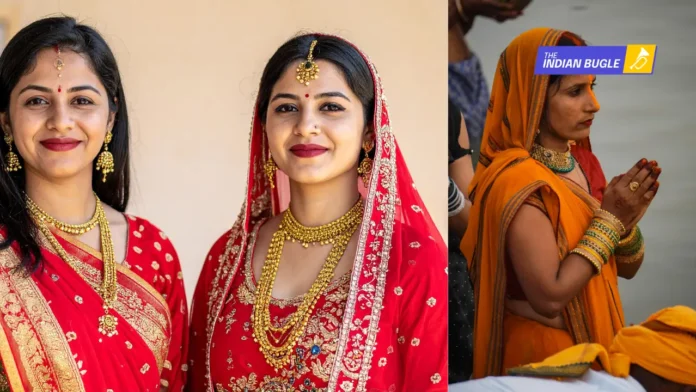
Covering the head is a deeply rooted cultural and religious practice among Indian women. Whether it is done with a saree’s pallu, a dupatta, or a traditional scarf, the act symbolizes respect, modesty, cultural pride, and spiritual purity. What makes India truly unique is how every state has its own name, method, and meaning behind its head covering. From the colourful Thipu of Himachal to the elegant Aanchaal of Bengal, each tradition reflects the beauty of India’s diversity.
Below is a comprehensive state-wise guide to what head coverings are called in different parts of India, why women cover their heads, and how these customs have evolved over time.
Head Coverings Across India: What Women Call Them, State by State
Himachal Pradesh – Thipu, Dhatu, Rahide
Himachali women wear a distinctive scarf known as the Thipu, especially in districts like Kullu and Shimla. It is secured around the head and often embroidered. It symbolizes cultural identity, respect, and protection from the cold.
Jammu & Kashmir – Taranga, Kasaba
Kashmiri Pandit women traditionally wear the Taranga, forming a long headpiece behind the head. Muslim women commonly use the Kasaba scarf. These styles reflect devotion, tradition, and the region’s heritage.
Punjab – Chunni, Dupatta
Punjabi women place the Chunni over their heads during prayers, festivals, or while meeting elders. It signifies grace, humility, and feminine elegance.
Haryana – Odhni
In rural Haryana, women cover their heads with a long Odhni as part of their traditional attire. It is closely associated with modesty and respect.
Rajasthan – Odhni, Pallu
Rajasthani women wear vibrant, mirror-work Odhni. During ceremonies, the Pallu of the saree is used to cover the head and symbolize honour.
Gujarat – Chunri, Odhani
Gujarati women use the Chunri or Odhani with the lehenga-choli. Covering the head conveys dignity, respect, and devotion during rituals.
Uttar Pradesh – Ghunghat
The Ghunghat remains a traditional practice, especially in rural areas. Women cover their heads, and sometimes faces, with the end of their saree during rituals or family gatherings.
Bihar & Jharkhand – Pallu, Ghunghat
Women cover their heads with the Pallu during auspicious festivals like Chhath Puja. It is considered a mark of purity and devotion.
West Bengal – Aanchaal
The Aanchaal of the saree is lifted over the head during puja. It symbolizes devotion, respect, and traditional Bengali womanhood.
Odisha – Uttariya
Odisha women use the Uttariya cloth during religious ceremonies. It reflects simplicity, spirituality, and cultural identity.
Maharashtra – Pallu
In Maharashtra, the Pallu of the saree, especially the Nauvari saree, is used to cover the head during festivals and rituals. It signifies modesty and reverence.
Goa – Voddo
Christian Goan women wear the Voddo during church ceremonies. It is a sign of humility, respect, and devotion.
Karnataka – Pallu, Ravike Seere
In traditional households, married women cover their heads with the saree’s Pallu. It is an expression of respect toward elders and sacred customs.
Tamil Nadu – Thalai Satti, Pallu
Tamil women use the Thalai Satti cloth or the Pallu of their saree during rituals and temple visits. It represents devotion and adherence to age-old customs.
Andhra Pradesh & Telangana – Pallu, Dupatta
Women here cover their heads during weddings and poojas using the Pallu or Dupatta. It symbolizes auspiciousness and respect.
Kerala – Pallu, Thorthu
Kerala women gracefully use the Pallu of the Kasavu saree to cover their heads during temple visits. It reflects purity, humility, and serenity.
Northeast India – Chadar and Tribal Wraps
While not as common as in northern India, some traditions exist. Assamese women may use the Chadar during Bihu rituals. Tribal communities in Arunachal and Nagaland use ceremonial wraps during cultural events and prayers.
Why Do Indian Women Cover Their Heads?
Respect and Humility
Covering the head is a traditional gesture of respect while interacting with elders, entering temples, or participating in rituals.
Religious Significance
In Hinduism, Sikhism, and Islam, head covering is linked with purity, devotion, and spiritual discipline.
Cultural Identity
Each style reflects regional identity—from the Himachali Thipu to the Rajasthani Odhni.
Protection from Climate
In colder regions like Himachal and Kashmir, head coverings also protect against harsh weather.
Marital and Social Symbols
In many communities, married women cover their heads to signify respectability and married status.
Evolution in Modern India
Today, many women choose to cover their heads only during cultural or religious events. The practice has evolved from a daily custom into a meaningful symbol of tradition and identity. It continues to represent elegance, heritage, and devotion without limiting personal freedom or expression.
Conclusion
Head-covering traditions among Indian women reflect the country’s vast cultural diversity. Whether it is the Himachali Thipu, Punjabi Chunni, Rajasthani Odhni, or Bengali Aanchaal, each style carries a story of respect, legacy, and womanhood. These practices, though evolving, remain a powerful reminder of India’s cultural richness.

