


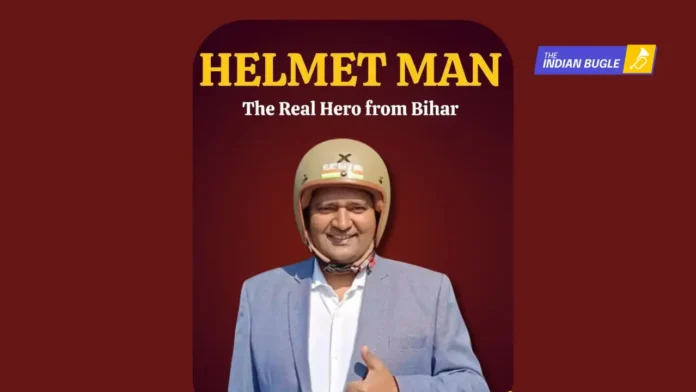
How Raghvendra Kumar Turned Personal Loss Into a Nationwide Road Safety Movement. Raghvendra Kumar, popularly known as the Helmet Man of India, is a road safety activist from Kaimur district in Bihar. A law graduate from Lloyd Law College, Greater Noida, he is widely respected for dedicating his life to promoting helmet use and safe riding habits across India. His work has saved lives, changed behaviour, and brought national attention to an often-ignored issue.
The Tragedy That Changed Everything
Raghvendra Kumar’s journey began in 2014 after he lost his close friend and roommate, Krishna Kumar Thakur, in a road accident on the Yamuna Expressway. Thakur, an engineering student, was not wearing a helmet at the time of the accident. The incident left a deep impact on Kumar, who resolved to ensure that no one else lost their life due to such a preventable cause.
From Grief to Action
Instead of allowing grief to overwhelm him, Kumar chose action. He began distributing helmets to two-wheeler riders using his personal savings. What started as a small effort soon turned into a structured mission focused on awareness, prevention, and education. His belief was simple and firm: road safety is a shared responsibility, not just a legal requirement.
Building a Nationwide Helmet Movement
Over the years, Raghvendra Kumar has distributed more than 60,000 free helmets across different states. His initiative expanded into the Helmet Man of India Foundation, which now runs helmet banks and conducts road safety drives in cities such as Delhi, Noida, Kanpur, Lucknow, Meerut, and surrounding regions. His work is supported by volunteers, local administrations, and even the Indian Army at various stages.
The Book-for-Helmet Initiative
One of Kumar’s most impactful ideas is the ‘Book for Helmet’ campaign. Under this initiative, students are encouraged to exchange books for helmets. This unique model promotes both education and safety. Through this effort, nearly 1,400 small libraries have been set up across 22 states, and over 70,000 books have been distributed to underprivileged children, creating a long-term social impact beyond road safety.
Personal Sacrifices Behind the Mission
Raghvendra Kumar’s commitment came at a high personal cost. He faced severe financial difficulties, including selling his flat in Greater Noida and depending on agricultural income. At times, his wife’s jewellery helped sustain the mission. Despite these challenges, his family stood firmly by him, providing emotional and moral support that kept the movement alive.
Recognition and National Respect
Kumar’s work has earned him widespread recognition. He has been praised by traffic officials, social organisations, and national platforms for his tireless service. His story has been highlighted as an example of how one individual’s determination can bring meaningful change at a national level.
Why His Work Matters Today
India continues to record a high number of road accident fatalities, many of which involve two-wheeler riders not wearing helmets. Raghvendra Kumar’s work directly addresses this issue by combining awareness, accessibility, and education. His efforts prove that safety campaigns can succeed when driven by empathy and consistency.
A Story of Responsibility and Hope
From a small village in Bihar to becoming a national symbol of road safety, Raghvendra Kumar’s journey reflects courage, compassion, and social responsibility. The Helmet Man of India is not just distributing helmets; he is changing mindsets and reminding society that small actions can save lives.
Conclusion
Raghvendra Kumar’s life-saving mission shows how personal loss can be transformed into collective good. His work stands as a powerful reminder that real change does not always come from policy alone but often from individuals who choose to act. Supporting and amplifying such grassroots efforts is essential for building safer roads and a more responsible society.

