


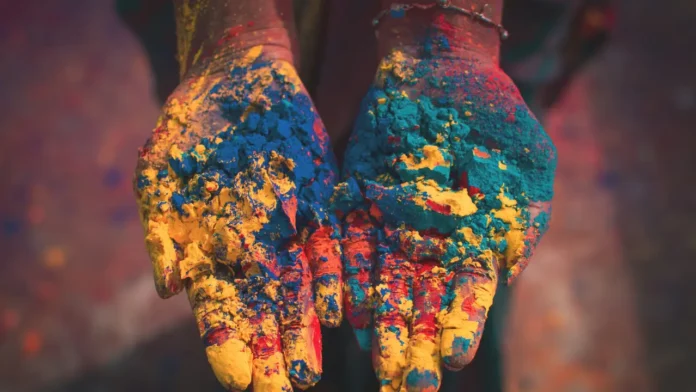
Holi brings color, joy, and togetherness across India. People celebrate the festival to welcome spring and to mark the victory of good over evil. Streets fill with music, laughter, and bright powders. Families gather, friends meet, and communities come alive with festive spirit.
However, Holi does not look the same everywhere. Each region adds its own traditions, rituals, and cultural expressions. These differences make the festival richer and more fascinating. Some places focus on devotion, while others highlight playful celebrations or cultural performances.
Holi in Uttar Pradesh: The Land of Krishna’s Celebrations
Uttar Pradesh hosts some of the most famous Holi celebrations in India. The region connects deeply with the stories of Lord Krishna and Radha. As a result, the celebrations feel both spiritual and playful.
Lathmar Holi in Barsana and Nandgaon
Barsana and Nandgaon celebrate Holi in a dramatic and joyful way known as Lathmar Holi. Women playfully strike men with sticks, while the men protect themselves with shields.
This tradition comes from the legend of Krishna visiting Radha’s village and teasing her friends. The women of Barsana respond by chasing the men away. Today the event attracts thousands of visitors who gather to watch the lively ritual. Songs, colors, and traditional music fill the air.
Phoolon Ki Holi in Vrindavan
Vrindavan offers a softer and more spiritual celebration called Phoolon Ki Holi. Instead of colored powder, people throw flower petals.
The celebration usually takes place inside temples dedicated to Lord Krishna. Priests shower petals over devotees while devotional songs echo through the temple halls. The atmosphere feels calm, joyful, and deeply devotional.
Holi in Rajasthan and Haryana: Royal and Traditional Celebrations
In Rajasthan and parts of Haryana, Holi blends tradition with grandeur. Communities celebrate with cultural events, folk music, and elaborate rituals.
Royal Holi in Rajasthan
Cities like Jaipur and Udaipur celebrate Holi with royal elegance. Local communities organize cultural programs, folk dances, and traditional performances.
Historic palaces and courtyards often host colorful gatherings. Residents and visitors play with gulal, enjoy traditional sweets, and take part in festive parades. The celebration highlights Rajasthan’s vibrant heritage.
Holi in Maharashtra: The Spirit of Rang Panchami
In Maharashtra, the festival continues beyond the main Holi day. People celebrate Rang Panchami five days later.
Communities gather in streets and public squares to throw colored powder and dance together. The celebration emphasizes joy and social bonding. Traditional sweets such as puran poli add a delicious touch to the festivities.
Holi in West Bengal: Dol Jatra and Cultural Celebrations
West Bengal celebrates Holi as Dol Jatra or Dol Purnima. The festival combines devotion, music, and artistic expression.
Devotees carry idols of Radha and Krishna in decorated palanquins. People apply colored powder known as abir and sing devotional songs. The celebration often includes classical music, dance performances, and cultural gatherings.
In many places, the festival also reflects the artistic traditions associated with spring and renewal.
Holi in Manipur: The Six-Day Festival of Yaosang
In Manipur, Holi transforms into a longer cultural festival called Yaosang. The celebration lasts for several days and blends religious rituals with community activities.
Children visit homes to collect small donations for community events. Young people perform a traditional dance known as Thabal Chongba during the evenings. Sports competitions, music performances, and social gatherings continue throughout the festival. The celebration brings the entire community together.
Holi in Punjab: Hola Mohalla
Punjab celebrates a powerful and energetic version of the festival called Hola Mohalla. Sikh communities observe the event with martial arts displays, mock battles, and horseback riding.
Warriors demonstrate traditional combat skills and physical strength. The festival reflects courage, discipline, and community pride. Large gatherings also include devotional singing and shared meals.
Holi in South India: Rituals and Spiritual Meaning
In many southern regions, Holi focuses more on mythology and religious symbolism. The celebrations remain simpler but deeply meaningful.
Kama Dahanam
In parts of Tamil Nadu and Karnataka, people observe Kama Dahanam during Holi. The ritual remembers the story of Lord Shiva burning Kamadeva, the god of desire.
Bonfires symbolize the destruction of negative desires and the triumph of spiritual discipline. Families gather around the fire and perform prayers.
Holi Celebrations in Hampi
Hampi in Karnataka has become a popular destination for Holi celebrations. Locals and travelers gather near the historic ruins to celebrate with colors and music.
The setting of ancient temples and stone structures creates a unique atmosphere. The celebration feels vibrant yet culturally rich.
Why Holi Traditions Differ Across India
India’s cultural diversity shapes the way festivals are celebrated. Different regions preserve their own customs, legends, and community traditions.
Climate, history, and local beliefs also influence how people celebrate Holi. Some regions emphasize devotion to Krishna, while others focus on social unity or cultural performance.
Yet the essence of Holi remains the same everywhere. The festival encourages people to forgive, reconnect, and celebrate life together.
Conclusion
Holi stands as one of India’s most joyful festivals. From the playful Lathmar Holi of Uttar Pradesh to the devotional Dol Jatra of Bengal and the energetic Hola Mohalla of Punjab, each region adds its own flavor.
These diverse celebrations show the richness of India’s cultural heritage. Despite different traditions, the message remains universal. Holi celebrates happiness, harmony, and the arrival of a colorful new season.

