


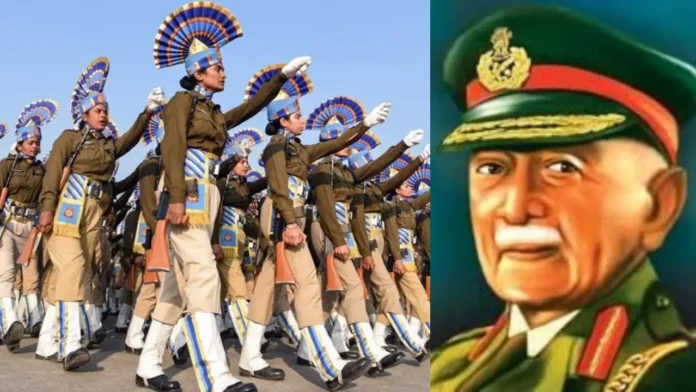
Indian Army Day is observed every year on 15 January. The date marks a defining moment in India’s post-Independence journey, when the command of the Indian Army passed fully into Indian hands. It is not just a ceremonial day. It represents authority, responsibility and trust placed in Indian military leadership.
The historical moment behind Army Day
On 15 January 1949, Lieutenant General K. M. Cariappa assumed charge as the first Indian Commander-in-Chief of the Indian Army. Until then, the army was led by British officers, even after Independence. This change was symbolic and practical. It confirmed that India was now capable of leading and defending itself with its own commanders.
Cariappa’s appointment came at a time when the country was still stabilising after Partition and facing serious security challenges. The decision showed confidence in Indian officers and set the foundation for a professional, nationally led army.
Who was K. M. Cariappa
General K. M. Cariappa was a distinguished career soldier with extensive military experience. He served in the British Indian Army and later played a key role in shaping the Indian Army after Independence. Known for discipline and integrity, he believed the army must remain apolitical and loyal to the Constitution. His leadership style helped define the values that the Indian Army still upholds today.
Later, he was honoured with the rank of Field Marshal, one of the highest military distinctions in India.
Why Indian Army Day matters
Indian Army Day is important for several reasons. First, it honours the soldiers who serve in difficult and often dangerous conditions. Second, it reminds the nation of the importance of military professionalism in a democracy. Third, it highlights the army’s role not only in war but also in peace, disaster relief and national emergencies.
The day also reinforces the idea that the armed forces serve the nation and its people, not individual leaders or political interests.
How Indian Army Day is observed
Army Day is marked by parades, military displays and ceremonial events across the country. Traditionally, the main parade has been held in New Delhi, though in recent years, celebrations have also been organised in other cities to take the event closer to the public.
Soldiers demonstrate drills, combat readiness and modern equipment. Tributes are paid to fallen soldiers. Senior officers address troops, and gallantry and service are quietly acknowledged within formations.
Unlike Republic Day, Army Day is more focused on the force itself. It is a moment of internal pride rather than a mass public spectacle.
Evolution of Army Day over the years
In the early years, Army Day focused on building confidence in a young nation’s military. Over time, its themes have evolved. Today, it reflects modern challenges such as border security, technology-driven warfare and joint operations with other forces.
The celebrations now often highlight innovation, humanitarian missions and the army’s role in supporting civilians during floods, earthquakes, and other crises.
Many soldiers see 15 January as a reaffirmation of their oath to protect the country, no matter the cost.
Indian Army Day and national identity
Indian Army Day stands as a quiet but powerful marker of India’s sovereignty. It reminds citizens that freedom is protected daily by disciplined men and women who operate far from the spotlight. The day connects history with the present, showing how one leadership decision in 1949 continues to shape the strength and character of the Indian Army today.
In simple terms
15 January is not just another date. It is the day India truly took command of its Army. It is a day of respect, reflection and pride—for soldiers in uniform and for the nation they serve.

