


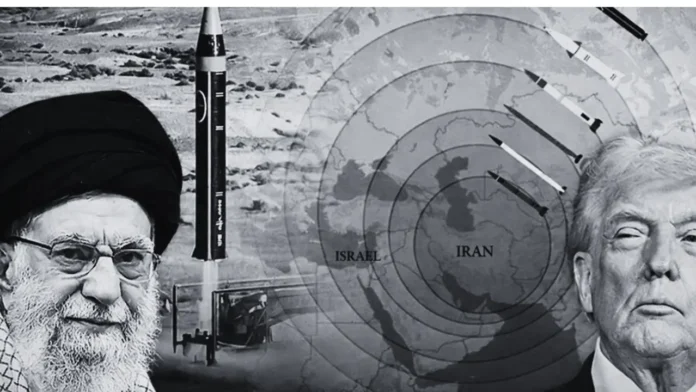
The conflict between Iran and Israel has become one of the most serious tensions in the world today. What started as political hostility has gradually turned into military confrontation. The United States plays a major role because it strongly supports Israel and considers Iran a security threat.
To understand the situation clearly, it is important to examine the history, the real causes, and the present situation.
Historical Background of Iran–Israel Conflict
Iran and Israel were not always enemies. Before 1979, both countries maintained normal relations and even cooperated in certain areas. However, the situation changed after the Islamic Revolution in Iran.
The new Iranian leadership adopted a strong anti-Israel policy. Since then, relations between the two countries have remained hostile.
For many years, the conflict remained indirect. Instead of fighting openly, both sides supported opposing groups and carried out secret operations. Iran supported armed groups hostile to Israel, while Israel targeted Iranian positions and networks across the region.
Gradually, this hidden conflict moved toward open confrontation.
Main Reasons Behind the War
1. Iran’s Nuclear Program
The biggest source of tension is Iran’s nuclear program.
Israel believes Iran is trying to develop nuclear weapons. Israeli leaders see this as a direct threat to their country’s existence.
Iran rejects these claims and says its nuclear activities are meant for peaceful purposes such as electricity production and scientific research.
This disagreement has created constant tension for many years.
2. Regional Power Competition
Iran and Israel both seek influence in the Middle East.
Iran has expanded its influence by supporting allied governments and armed groups. Israel sees this expansion as a security risk.
As Iran’s regional influence increased, Israel became more concerned about its long-term safety. This intensified the rivalry.
3. Ideological Differences
The conflict is also ideological.
Iran strongly opposes Israel’s policies and openly supports Palestinian causes. Israel views Iran as a hostile power that threatens its security.
Because both sides deeply distrust each other, tensions continue to grow.
From Secret Conflict to Direct Confrontation
For many years, Iran and Israel avoided direct war. Instead, they relied on covert actions such as intelligence operations, cyberattacks, and limited military strikes.
Over time, these operations became more aggressive. Military installations and strategic sites became frequent targets.
Eventually, the confrontation moved into open military action. Direct strikes and missile attacks increased tensions and raised the risk of a wider war.
Recent Escalation of the Conflict
The conflict reached a dangerous stage in recent years.
Israel carried out major strikes on Iranian military and strategic targets. These operations aimed to weaken Iran’s military capabilities and slow its nuclear development.
Iran responded with missile and drone attacks aimed at Israeli targets and military positions in the region.
These exchanges marked a shift from indirect conflict to open confrontation.
Many observers consider this the most serious crisis between Iran and Israel in decades.
America’s Role in the Conflict
The United States is deeply involved in this conflict. It supports Israel politically, economically, and militarily.
America’s involvement can be understood in three main ways.
1. Strong Support for Israel
Israel is one of the closest allies of the United States.
Because of this relationship, America provides:
- Military equipment
- Intelligence support
- Missile defence systems
- Strategic cooperation
When tensions rise, the United States increases its military presence in the Middle East.
America considers Israel’s security a key national interest.
2. Direct Confrontation with Iran
The United States is not only supporting Israel. It has also taken direct action against Iran.
Military operations have targeted Iranian military and strategic facilities. These actions aim to limit Iran’s military strength and prevent nuclear weapon development.
Iran has responded by threatening and targeting American military bases in the region.
As a result, the conflict now involves three main sides:
Iran versus Israel and the United States
3. Attempts at Diplomacy
Before tensions escalated, the United States tried diplomatic negotiations with Iran.
The goal was to create an agreement that would limit Iran’s nuclear activities and reduce tensions.
However, negotiations did not succeed.
After diplomatic efforts failed, the situation moved closer to military confrontation.
Why This War Matters to the World
The Iran–Israel conflict affects the entire world.
First, the conflict could expand into a wider regional war. Several countries in the Middle East may become involved.
Second, the region is important for global oil supply. Any disruption can increase fuel prices worldwide.
Third, major world powers have strategic interests in the region. This increases the risk of a larger international conflict.
Because of these reasons, the world is closely watching the situation.
Conclusion
The Iran–Israel conflict developed over many decades. It is driven by security concerns, political rivalry, and ideological differences.
Israel fears Iran’s growing military and nuclear capabilities. Iran strongly opposes Israel and seeks greater influence in the region.
The United States supports Israel and has become deeply involved in the confrontation.
Today the situation can be understood simply as:
Iran vs Israel and the United States
The conflict remains unstable, and future developments will decide whether tensions calm down or grow into a larger war.

