


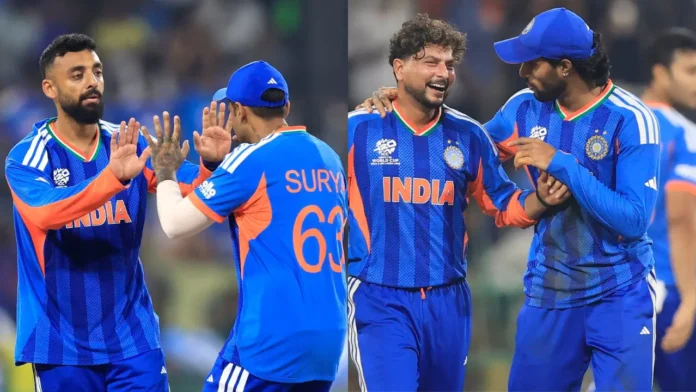
India and Pakistan met in a crucial Group-A match at the T20 World Cup 2026 in Colombo. While both teams had strong lineups, Ishan Kishan’s sensational batting turned the game. This article explains exactly how his innings unlocked India’s total and left Pakistan scrambling.
India batted first after losing an early wicket. Pakistan attacked with spin early, trying to slow the scoring. However, Kishan’s counter-attack set the tone. His knock was the backbone of India’s innings and ultimately influenced the match result.
India’s innings — two clear phases
India’s innings had a distinct split: before and after Kishan’s dismissal. During his time at the crease, India scored quickly and confidently. Once he left, Pakistan’s spin attack closed in, and India had to rebuild to reach a competitive total.
Early breakthrough for Pakistan
Pakistan captain Salman Ali Agha opened the bowling with spin, and it worked instantly. Abhishek Sharma misjudged a delivery in the first over and was out cheaply. That early success encouraged Pakistan and applied initial pressure on India.
Kishan’s aggressive response
Instead of consolidating, Kishan attacked. On the very first ball he faced, he hit Shaheen Shah Afridi’s delivery over square leg for a big hit. That shot signalled intent and put Pakistan back on the defensive. Kishan then found gaps and punished loose balls to keep the scoreboard ticking.
Battling spin with controlled aggression
Pakistan played multiple spinners to exploit the slow pitch. Yet, Kishan attacked them as well. He used his feet to get to the pitch of the ball and turned deliveries into boundaries. Against Abrar Ahmed, he hit three consecutive fours, racing to fifty in just 27 deliveries. Even Shadab Khan’s leg spin did not stop him; Kishan played powerful sweeps to continue scoring freely.
Partnership impact
Kishan combined well with Tilak Varma for a strong second-wicket stand. Their partnership produced 87 runs, giving India momentum in a phase where spin dominated. At eight overs, India sat firmly at 82 for 1, a position largely built on Kishan’s work.
Performance chart (IND vs PAK, T20 World Cup 2026)
Batting performance — India
| Player | Runs | Balls | Fours | Sixes | Strike Rate |
|---|---|---|---|---|---|
| Ishan Kishan | 77 | 40 | 10 | 3 | 192.50 |
| Tilak Varma | 25 | 23 | 2 | 0 | 108.69 |
| Suryakumar Yadav | 32 | 20 | 3 | 1 | 160.00 |
| Shivam Dube | 22 | 14 | 1 | 2 | 157.14 |
| Rinku Singh | 12* | 6 | 1 | 1 | 200.00 |
India total: 175/7 (20 overs)
Bowling performance — India
| Bowler | Overs | Runs | Wickets | Economy |
|---|---|---|---|---|
| Jasprit Bumrah | 4 | 18 | 2 | 4.50 |
| Hardik Pandya | 3 | 20 | 1 | 6.66 |
| Axar Patel | 4 | 21 | 1 | 5.25 |
| Kuldeep Yadav | 4 | 19 | 1 | 4.75 |
| Varun Chakravarthy | 3 | 17 | 2 | 5.66 |
Pakistan total: 114 all out (18 overs)
Batting performance — Pakistan (top contributors)
| Player | Runs | Balls |
|---|---|---|
| Usman Khan | 44 | 31 |
| Shadab Khan | 14 | 12 |
| Shaheen Shah Afridi | 16 | 10 |
Visual match timeline (quick learning section)
Phase 1: Pakistan strikes early
• Abhishek Sharmais out in the first over
• Pakistan opens with spin and gains early energy
Phase 2: Kishan takes control
• Ishan Kishan attacks pace and spin
• Fifty in 27 balls
• India race to 82/1 in 8 overs
Phase 3: Turning point
• Kishan cramps and departs on 77
• Pakistan regain some control through spin
Phase 4: India recover late
• Suryakumar stabilises
• Dube and Rinku finish strong
• India reach 175/7
Phase 5: Pakistan collapse
• Bumrah and Pandya strike early
• Pakistan fall to 13/3
• No sustained partnership
• All out for 114
Match-defining facts to remember
• Fastest Indian fifty vs Pakistan in T20Is after 2012
• 76 of 87 runs came from Kishan in the key partnership
• Pakistan used spin heavily but could not stop early damage
• India won by 61 runs and qualified for Super 8
This match was not won in the final overs. It was won in the first eight. Ishan Kishan changed the script before Pakistan could settle. Everything that followed flowed from that moment
Turning point — Kishan’s exit
Kishan began cramping toward the end of the eighth over. Despite fighting hard, he could not continue long. Shortly after returning, he misread a delivery and was dismissed, ending a vital 76-run contribution in the partnership. His departure shifted momentum slightly in Pakistan’s direction.
Post-Kishan phase — Pakistan’s pressure
After Kishan left, Pakistan’s finger spinners controlled parts of the innings. They bowled dot balls and slowed India’s scoring rate. Tilak Varma and skipper Suryakumar Yadav managed singles and twos, but boundaries were harder to come by. India needed a few big hits to maintain a strong total.
Lower order support and finishing touches
With the required momentum lost, India turned to Shivam Dube and Rinku Singh down the order. They delivered crucial boundaries that lifted India beyond 170. This late hitting ensured Pakistan would have a challenging chase ahead.
Why Kishan’s innings mattered most
Without Kishan’s aggressive start, India would have struggled to score freely against quality spin. His fast fifty broke early pressure and gave India confidence. After he left, Pakistan’s bowlers gained a foothold. Yet, the total India put on the board remained strong because of his impact.
India posted 175 for 7 in their 20 overs. Pakistan, facing a stiff target, never recovered after losing early wickets. India’s bowlers backed up the batting performance to restrict Pakistan and secure a big win in the T20 World Cup.
Cricket is more than numbers; it is momentum, confidence, and timing. On this day, Ishan Kishan found all three. His courage to take on bowlers in difficult conditions reminded fans why T20 cricket rewards fearlessness.

