


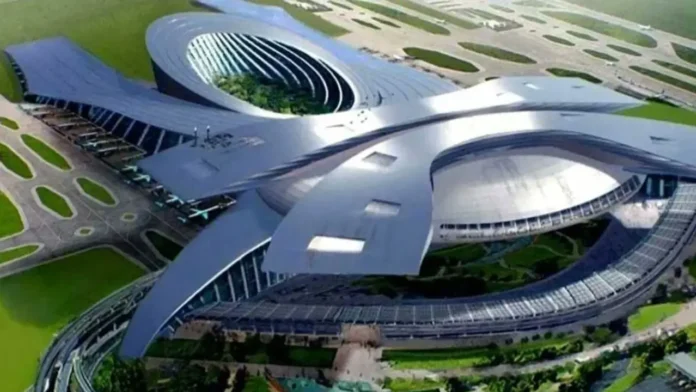
India has taken a major leap in aviation infrastructure with the inauguration of Noida International Airport. Located in Jewar, Uttar Pradesh, this airport is set to redefine air travel across North India. The project is not just about adding another airport. Instead, it signals a long-term vision to transform connectivity, reduce congestion, and drive regional growth.
Understanding Jewar Airport: More Than Just an Alternative
Jewar Airport stands as the second international gateway for the Delhi-NCR region after Indira Gandhi International Airport. However, calling it a backup would be inaccurate. The airport has been designed as a parallel aviation hub with its own scale and identity.
It sits strategically in Gautam Buddha Nagar district. Because of this location, it connects not only Delhi and Noida but also large parts of western Uttar Pradesh, Haryana, and even Rajasthan. As a result, passengers who once depended entirely on Delhi Airport now have a closer and faster option.
What Was Inaugurated in 2026
The inauguration marks the completion of Phase 1. This phase lays the foundation for a much larger vision. Authorities have made one runway operational and opened a modern passenger terminal. The airport can handle around 12 million passengers annually in this stage.
Although the inauguration has taken place, commercial flights will begin soon after final operational checks. This gap ensures safety, coordination, and smooth airline integration.
Key Features That Set It Apart
Jewar Airport focuses strongly on efficiency and sustainability. First, planners have designed the layout to reduce passenger movement time. Second, the airport integrates digital systems to streamline check-in, security, and boarding.
Another major highlight is its eco-friendly approach. The airport aims to run on renewable energy and reduce carbon emissions over time. Water conservation systems and green building practices further strengthen this vision.
Cargo infrastructure also plays a key role. The airport includes dedicated logistics zones. This will support faster movement of goods, especially for e-commerce and export industries.
Why Delhi-NCR Needed a Second Airport
Delhi’s aviation demand has grown rapidly over the years. Indira Gandhi International Airport has consistently operated near its capacity limits. As passenger numbers increased, delays and congestion became more common.
Jewar Airport addresses this issue directly. It distributes traffic across two major hubs. Consequently, passengers can expect shorter wait times and better flight availability.
Moreover, the new airport reduces travel distance for people living in Noida, Greater Noida, and nearby regions. This saves both time and cost.
Economic Impact: A Catalyst for Growth
The airport will influence the economy in multiple ways. First, it will generate thousands of direct and indirect jobs. From construction workers to airline staff, many sectors will benefit.
Second, it will boost real estate development. Areas around Jewar are already witnessing rising demand. Residential projects, commercial hubs, and logistics parks are expanding rapidly.
Third, businesses will gain better connectivity. Faster cargo movement will support industries like electronics, agriculture, and manufacturing. Over time, the region could evolve into a major export hub.
Connectivity and Infrastructure Development
Infrastructure development around the airport has already started. New expressways and road networks are improving access. Projects like the Yamuna Expressway play a critical role in linking the airport to major cities.
Rail connectivity is also part of the long-term plan. Authorities aim to integrate metro and high-speed rail systems. This multi-modal approach ensures that passengers can reach the airport easily from different regions.
Future Expansion: A Long-Term Vision
Jewar Airport is not limited to its current phase. It will expand in multiple stages over the next decade. Eventually, it aims to have up to five runways. Passenger capacity could reach 70 million annually.
This scale places it among the largest airports in Asia. More importantly, it prepares India for future aviation demand. Instead of reacting to congestion, the country is planning ahead.
Challenges Ahead
Despite its promise, the project faces challenges. Connectivity must improve quickly to ensure smooth passenger flow. Airlines also need time to shift operations and build routes.
Additionally, coordination between different agencies remains crucial. Any delay in supporting infrastructure could affect the airport’s early performance.
However, with proper execution, these challenges can be managed effectively.
The Bigger Picture
Jewar Airport represents a shift in how India approaches infrastructure. It combines long-term planning with modern design and sustainability. More importantly, it distributes growth beyond traditional urban centers.
As flights begin and expansion continues, the airport will reshape travel patterns in North India. It will not just serve passengers. It will drive economic transformation across the region.
Conclusion
The inauguration of Noida International Airport marks a turning point in India’s aviation journey. It brings relief to an overburdened system while opening new growth opportunities.
In the coming years, Jewar Airport will likely become more than a transit point. It will stand as a symbol of India’s ambition, planning, and future readiness.

