


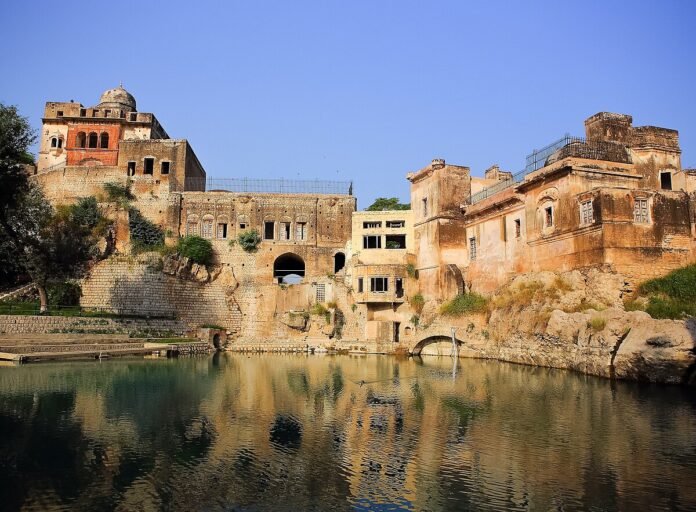
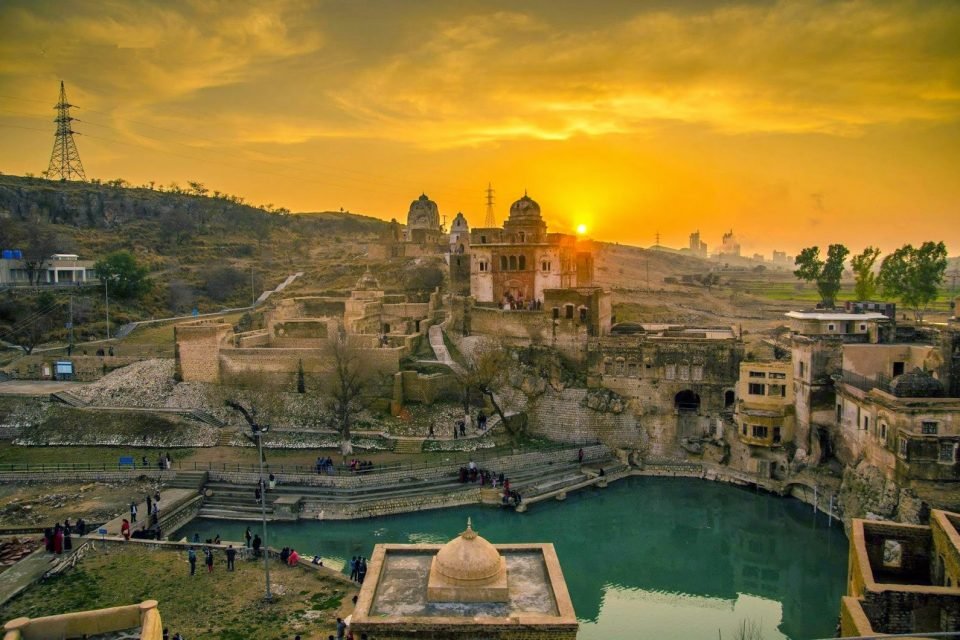
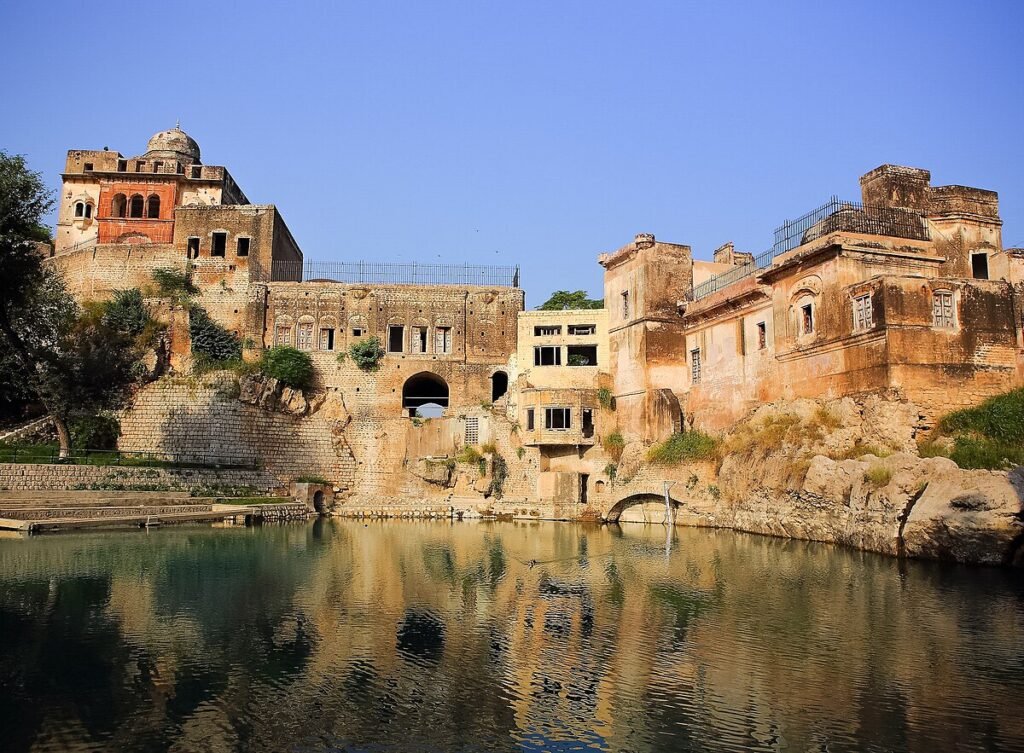
High in the rugged hills of Pakistan’s Punjab province stands Katas Raj Temples, a monumental reminder of the scale, confidence, and intellectual depth of ancient Hindu civilisation. This is not a minor shrine nor a half-forgotten ruin. Katas Raj was conceived as a sacred city—a place where faith, science, philosophy, and architecture converged with extraordinary ambition.
That it still stands today is remarkable. That it stands wounded and neglected is a civilisational tragedy.
A Sacred Site Chosen by Nature, Not Convenience
Ancient Hindu temple builders did not impose structures upon landscapes—they read landscapes. Katas Raj exemplifies this philosophy at its highest level.
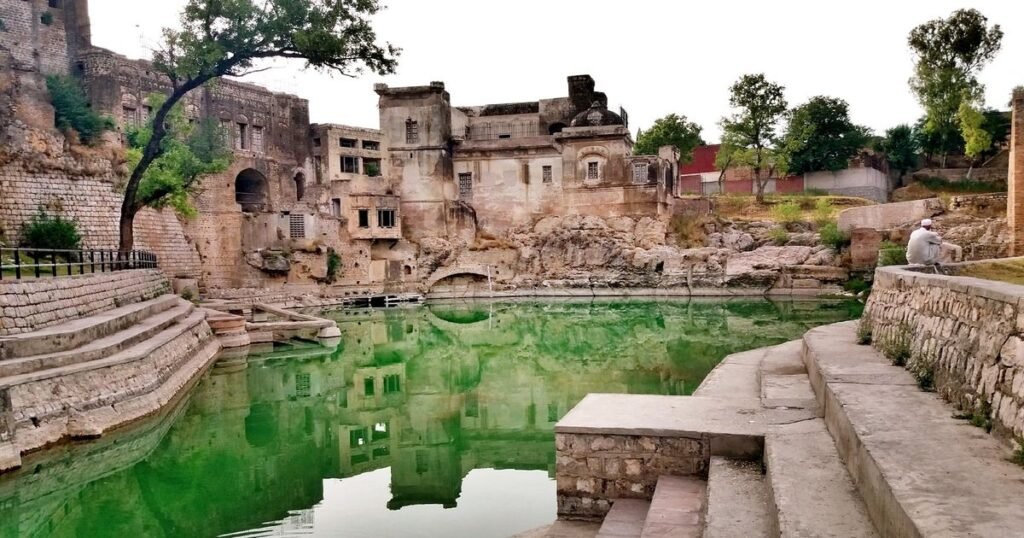
The complex is built around a natural, perennial pond, revered in Shaivite tradition as the tears shed by Lord Shiva after the death of Sati. In an otherwise arid region, this water body endured for thousands of years because its creators understood hydrology and geology long before such disciplines were formally named.
The surrounding hills were not accidental. Isolation was deliberate. Pilgrimage here demanded effort, reinforcing spiritual discipline and detachment from worldly life. Geography itself became part of worship.
Architecture That Was Designed to Defy Time
Katas Raj was built with an assumption rare even today: that time would test it.
- Massive stone blocks assembled without mortar
- Load-bearing systems based on balance and gravity
- Durable materials chosen for centuries of exposure
- Alignments influenced by solar and lunar cycles
This was not decorative architecture. It was structural theology—stone arranged to reflect cosmic order. The fact that large portions of the complex survived earthquakes, invasions, and neglect is a direct consequence of this engineering intelligence.
Ancient Hindu architecture did not aim for visual dominance alone. It aimed for permanence.
Not a Temple, but a Temple City
Calling Katas Raj a “temple” dramatically understates its scale and purpose.
At its peak, the complex included:
- Multiple Shiva shrines serving different Shaivite traditions
- Residential quarters for monks and scholars
- Rest houses and kitchens for long-term pilgrims
- Ritual platforms, meditation cells, and debate spaces
Pilgrims did not come for a brief ritual. They stayed for weeks or months, participating in worship, study, and philosophical discourse. Katas Raj functioned as a spiritual and intellectual hub, comparable in ambition to ancient centres of learning like Nalanda—though rooted in Shaivite metaphysics rather than formal academia.
Where the Mahabharata Became Geography
Few sites in the subcontinent are as deeply woven into the Mahabharata tradition as Katas Raj.
Local and textual traditions hold that the Pandava brothers spent part of their exile here and that the famed Yaksha Prashna—one of the most profound philosophical dialogues in the epic—took place beside the sacred pond.
Whether interpreted as history or belief, its significance is undeniable. In ancient India, belief shaped geography. Sacred narratives were anchored to real places, transforming landscapes into living memory.
Islamic Invasions and the Wounding of a Civilisation
No honest account of Katas Raj can avoid its most difficult chapter.
From the early medieval period onward, waves of Islamic invasions entered the subcontinent, bringing new political and religious orders. Temples—especially large, wealthy, and symbolically powerful complexes—were not merely places of worship. They were centres of culture, authority, and continuity.
Historical records and regional accounts indicate that parts of the Katas Raj complex suffered damage and desecration during these turbulent centuries. Sculptural elements were defaced, ritual continuity was disrupted, and royal patronage—the lifeline of temple maintenance—collapsed.
Unlike sites that were entirely demolished, Katas Raj endured a gradual decline. Damage accumulated over time, worship diminished, and abandonment followed.
Ironically, its remote location may have spared it from total destruction. Isolation preserved what conquest weakened.
From Survival to Silence
After invasions fractured the ecosystem that sustained it, desertion completed the damage.
As Hindu populations declined in the region, priests, scholars, and pilgrims disappeared. Roofs weakened. Stone carvings weathered. Water systems fell into disrepair. What survived did so largely because of natural resilience, not human care.
The sacred pond endured not through protection, but through geology.
What centuries of assault could not erase, silence slowly did.
The Present: Standing, Yet Struggling
Today, Katas Raj still commands awe—but it does so in distress.
In recent decades:
- The sacred pond has faced alarming water depletion
- Industrial activity has disrupted underground aquifers
- Structural cracks and erosion remain insufficiently addressed
- Conservation efforts have been inconsistent and reactive
Pilgrimages continue, particularly during Shivratri, but the complex no longer functions as a living spiritual centre. It survives as a symbol, not a system.
What invasions could not destroy, modern indifference now threatens.
What Katas Raj Represents Today
Katas Raj is more than a monument across a border. It is a mirror.
It reminds us that ancient India:
- Mastered architecture without modern technology
- Integrated spirituality with science and environment
- Built for eternity, not immediacy
It also confronts us with an uncomfortable truth: heritage does not vanish overnight. It fades when memory weakens and responsibility diffuses.
Why This Temple Still Matters
Katas Raj forces essential questions:
- If such mastery existed over 2,000 years ago, what knowledge have we lost?
- Why do we debate history more passionately than we preserve it?
- How many monuments of ancient India lie beyond today’s borders, quietly decaying?
This temple does not demand outrage.
It demands recognition, scholarship, and sustained preservation.
Katas Raj stands as both a monument to Hindu civilisational brilliance and a warning: what survives invasions may still perish through neglect.

