


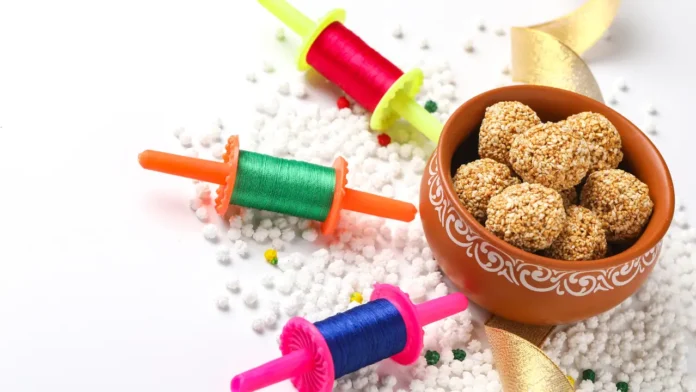
Makar Sankranti is not just a festival of kites and sunshine. It is also a festival of food. As winter begins to fade and the harvest comes home, kitchens across India fill with warmth, aroma and age-old recipes. Each dish reflects local crops, climate, and tradition. Together, they tell the story of gratitude and renewal.
1. Til–Gud Laddoo
Til (sesame seeds) and jaggery form the heart of Makar Sankranti celebrations in many parts of India. These laddoos provide warmth in winter and symbolise sweetness in relationships. Sharing til–gud and saying “til-gud ghya, god god bola” is a ritual of harmony and goodwill.
2. Til Chikki
Crunchy, simple, and deeply festive, til chikki is made by binding roasted sesame seeds with melted jaggery. It is especially popular in Maharashtra and Gujarat. The dish lasts long, travels well, and represents strength and energy during the seasonal shift.
3. Khichdi
In Uttar Pradesh, Bihar, and parts of North India, Makar Sankranti is even called the Khichdi festival. Made with rice, lentils, and ghee, this dish is nourishing and comforting. It celebrates new grains and reminds people of simplicity and balance in life.
4. Pongal
In Tamil Nadu, Sankranti is celebrated as Pongal. The dish of the same name is cooked with freshly harvested rice, milk and jaggery. When the pot overflows, it symbolises abundance and prosperity. Pongal is both food and ritual, prepared with prayer and joy.
5. Pithe
In West Bengal and Assam, Sankranti kitchens come alive with pithe. These rice flour delicacies are stuffed with jaggery, coconut or sesame. Soft or crispy, sweet or mildly savoury, pithe marks the joy of the harvest season.
6. Sakinalu
A festive snack from Telangana and Andhra Pradesh, sakinalu is made from rice flour and sesame seeds, deep-fried into delicate rings. Women often gather to prepare them together, turning cooking into a shared celebration.
7. Til Poli or Til Gulachi Poli
This flatbread is stuffed with a mixture of sesame seeds and jaggery. It is common in parts of Maharashtra and Karnataka. The dish combines nourishment with indulgence and reflects how festival food balances health and taste.
8. Payasam
In many South Indian homes, payasam is prepared on Makar Sankranti. Made with rice or lentils, milk, and jaggery, it adds sweetness to the festive meal. It is often offered first in prayer before being shared with family.
9. Groundnut Chikki
Peanuts and jaggery come together to create groundnut chikki, a winter favourite. Rich in energy, it celebrates local produce and rural traditions. Children and elders alike look forward to this simple yet satisfying treat.
10. Dahi–Chura
In Bihar and eastern Uttar Pradesh, flattened rice soaked in curd is eaten on Makar Sankranti. Often served with jaggery, it is light, nutritious and deeply rooted in agrarian culture. It reflects respect for the harvest and the farmer’s life.
Why food matters on Makar Sankranti
These dishes are not random. Sesame and jaggery warm the body. Rice and lentils honour the harvest. Milk and ghee symbolise purity. Every ingredient carries meaning. Through food, people thank nature, welcome longer days, and renew social bonds.
Makar Sankranti tastes different in every state, yet feels the same everywhere. It tastes of warmth, gratitude and shared happiness. These traditional dishes keep the festival alive, not just on plates, but in memory and tradition.

