


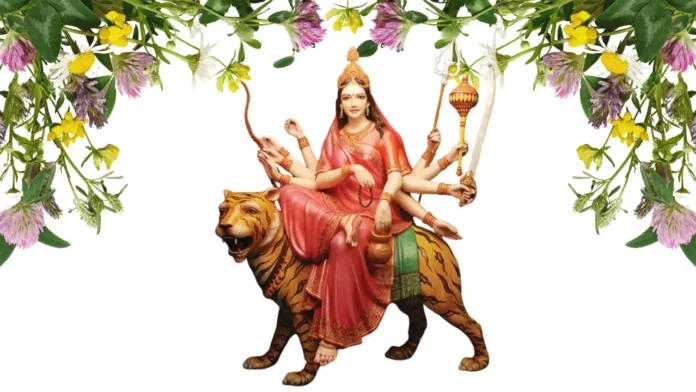
As Navratri progresses, the spiritual journey becomes more dynamic. The third day (Tritiya) is dedicated to Maa Chandraghanta, a fierce yet compassionate form of Goddess Durga.
This day marks a transition—from inner discipline (Day 2) to active courage and readiness to face challenges. Maa Chandraghanta teaches devotees how to balance strength with serenity.
Who is Maa Chandraghanta?
Maa Chandraghanta is named after the crescent moon (Chandra) shaped like a bell (Ghanta) on her forehead. This unique symbol represents alertness and divine sound energy that removes negativity.
Her form is powerful and protective:
- Rides a lion or tiger, symbolizing bravery
- Has ten arms, carrying weapons like a trident, mace, sword, and bow
- One hand remains in Abhaya Mudra, assuring protection
Unlike her calm earlier forms, she is ready for battle. Yet, her expression remains peaceful—showing control even in conflict.
She represents the perfect blend of valor and compassion.
Navratri Day 3 in 2026
- Date: 21 March 2026
- Tithi: Tritiya
- Goddess Worshipped: Maa Chandraghanta
- Auspicious Color: Grey (symbol of balance and neutrality)
Spiritual Significance of Day 3
Day 3 is about awakening the Manipura Chakra (solar plexus chakra), which governs:
- Confidence
- Energy
- Decision-making power
Worshipping Maa Chandraghanta is believed to:
- Remove fear and negativity
- Instill courage and clarity
- Protect devotees from harm
This day emphasizes:
Face life’s battles with calmness, not chaos.
Puja Vidhi
1. Morning Rituals
Begin the day early. Clean the worship area and wear fresh clothes, preferably grey or bright shades symbolizing strength.
2. Invocation
Light a diya and incense sticks. Focus on Maa Chandraghanta and invite her divine energy into your space.
3. Offerings (Bhog)
- Milk or milk-based sweets (like kheer)
- Fruits and flowers
Milk is considered auspicious as it symbolizes purity and calmness.
4. Mantra Chanting
Chant:
ॐ देवी चन्द्रघण्टायै नमः
This mantra is believed to:
- Remove fear
- Bring mental peace
- Strengthen inner power
5. Aarti
Perform aarti with devotion and pray for courage, protection, and clarity in life decisions.
Importance of Fasting (Vrat)
Fasting on Day 3 continues the discipline from earlier days but now supports energy activation.
Devotees:
- Eat sattvic food
- Avoid heavy, spicy, or tamasic items
Benefits include:
- Enhanced focus
- Emotional stability
- Better control over reactions
It prepares the body and mind to act with strength and awareness.
Symbolism and Deeper Meaning
Maa Chandraghanta represents:
- Courage in adversity
- Calmness in chaos
- Readiness to protect righteousness
Her bell (ghanta) signifies:
- The vibration that dispels evil forces
- Awakening of consciousness
Her lion symbolizes:
- Raw power under control
The message is clear:
True strength is not aggression—it is controlled power guided by wisdom.
Psychological and Practical Relevance
In modern life, Day 3 carries deep relevance. It encourages individuals to:
- Face fears directly
- Stay composed under pressure
- Take decisive action when needed
For those dealing with:
- Anxiety
- Self-doubt
- External challenges
this day acts as a reminder to develop inner courage with mental balance.
What to Avoid on Day 3
To stay aligned with the goddess’s energy:
- Avoid anger and impulsive decisions
- Avoid negativity and conflicts
- Avoid unhealthy or heavy food
Maintain a balanced mindset throughout the day.
Conclusion
Navratri Day 3 is a turning point in the spiritual journey. Maa Chandraghanta teaches that life’s battles are inevitable, but they can be faced with grace, courage, and clarity.
After building discipline on Day 2, this day empowers devotees to act with strength and confidence. It is about becoming fearless, yet grounded—powerful, yet peaceful.

