


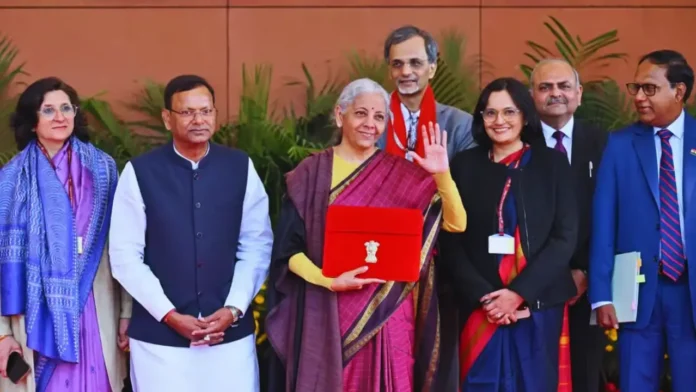
When Nirmala Sitharaman rises to present the Union Budget, attention naturally turns to numbers, policies, and priorities. Yet, over the years, another quiet tradition has taken shape. Her saree on Budget Day has become a cultural marker. It speaks softly, but clearly, about India’s handloom heritage, regional diversity, and continuity between tradition and governance. What began as a personal choice has grown into a visual narrative woven year after year.
Budget Day Sarees as a Cultural Statement
Each Budget Day saree reflects more than aesthetics. It highlights a region, a craft, or an artisan community. The fabrics, colours, and motifs act as a reminder that policymaking does not stand apart from culture. Instead, it is rooted in it. Through silk, cotton, zari, and handwoven patterns, India’s living textile heritage finds a place on one of the country’s most-watched days.
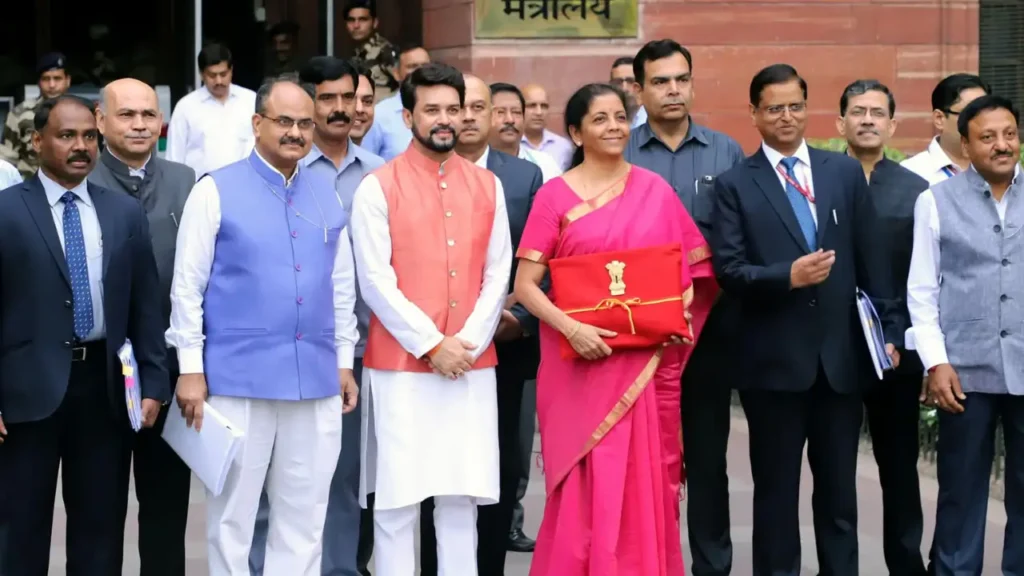
General Budget 2019–20: A New Beginning
In her first Union Budget, Sitharaman wore a bright pink Mangalagiri silk saree with a gold border. The weave, known for its strength and simplicity, represented Andhra Pradesh’s handloom tradition. Paired with the now-iconic red bahi-khata instead of a briefcase, the message was unmistakable. Modern governance could still carry the weight of Indian tradition.
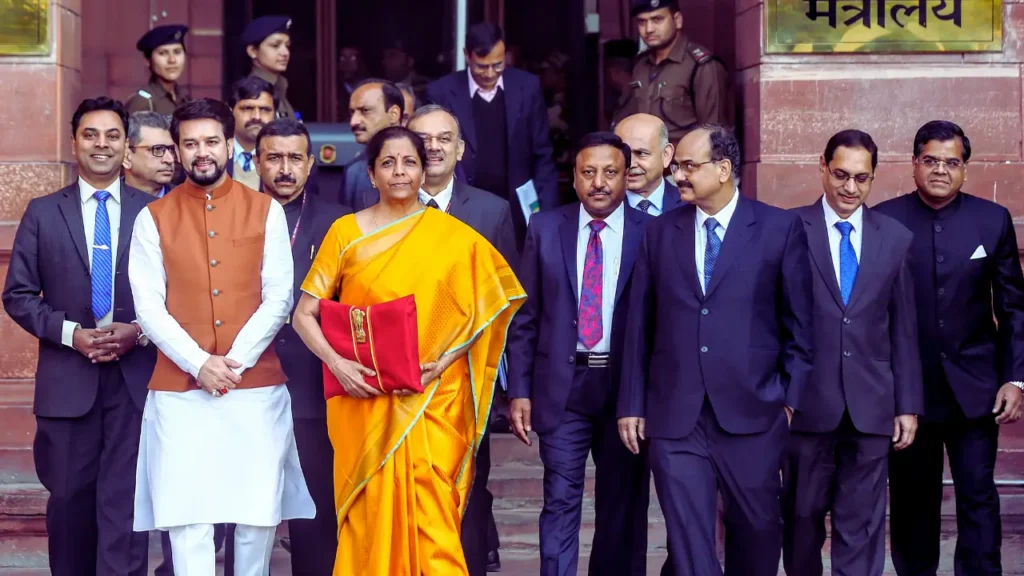
Union Budget 2020–21: Optimism in Colour
The following year, she chose a yellow silk saree with a contrasting green border. Yellow conveyed hope and positivity, while green hinted at stability and balance. At a time when economic concerns were beginning to surface, the colours projected reassurance and resilience.
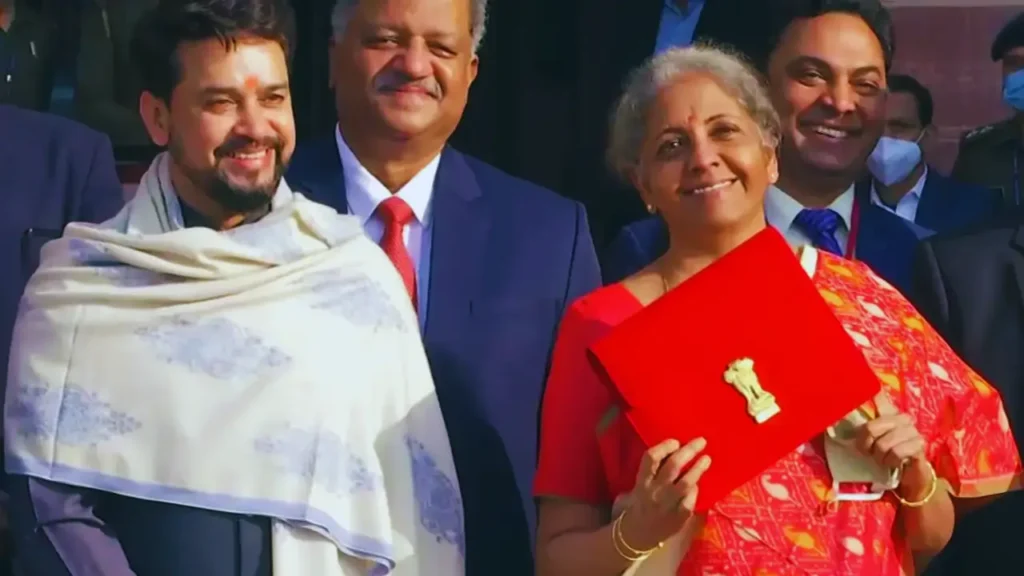
Union Budget 2021–22: Resilience During the Pandemic
For the pandemic-era Budget, Sitharaman appeared in a red and off-white Pochampally Ikat saree from Telangana. Known for its complex geometric patterns and labour-intensive weaving, the Ikat symbolised strength, recovery, and the endurance of domestic industries during uncertain times.
Union Budget 2022–23: Spotlight on Lesser-Known Crafts
In 2022, she wore a rust-toned Bomkai saree from Odisha’s Ganjam region. Accented with silver zari, the Bomkai weave blends tribal motifs with classical elements. The choice brought national attention to a craft that often remains outside mainstream fashion conversations.
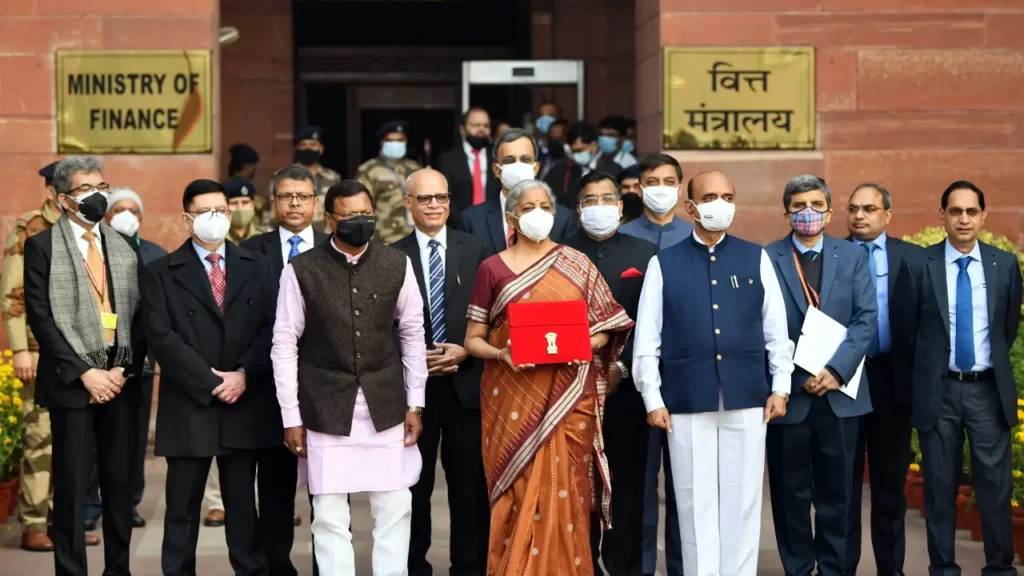
Union Budget 2023–24: Temple Borders and Tradition
The 2023 Budget saw Sitharaman in a red silk saree with a black temple border and gold zari. The design is associated with Karnataka’s Ilkal tradition. Temple borders carry deep cultural symbolism, representing continuity, faith, and rootedness.
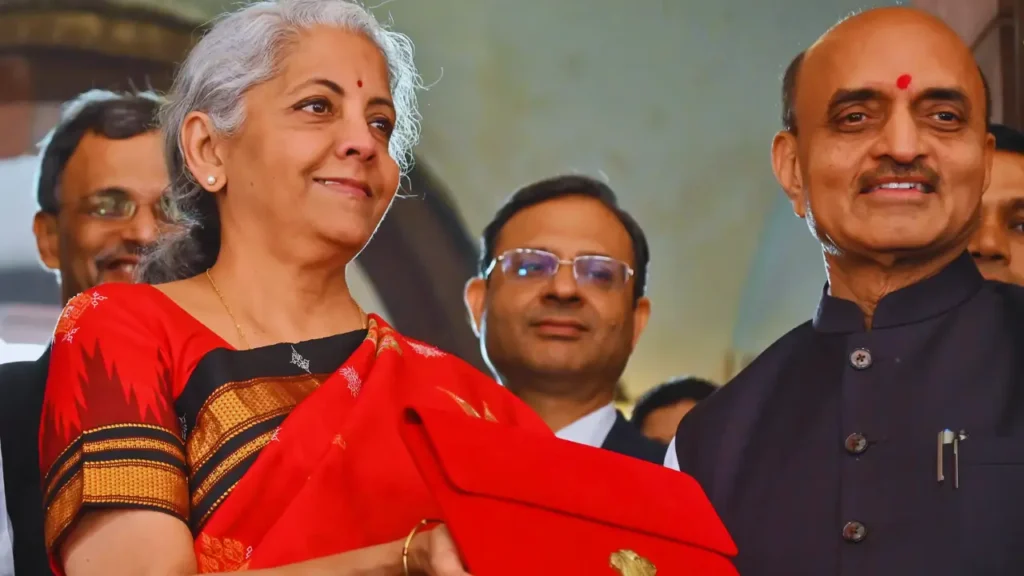
Interim Budget 2024–25: Eastern India in Focus
For the Interim Budget in 2024, she selected a blue Tussar silk saree with Kantha embroidery from West Bengal. Tussar silk’s natural texture, combined with Kantha’s storytelling stitches, highlighted the craftsmanship of eastern India and its rich artisanal legacy.
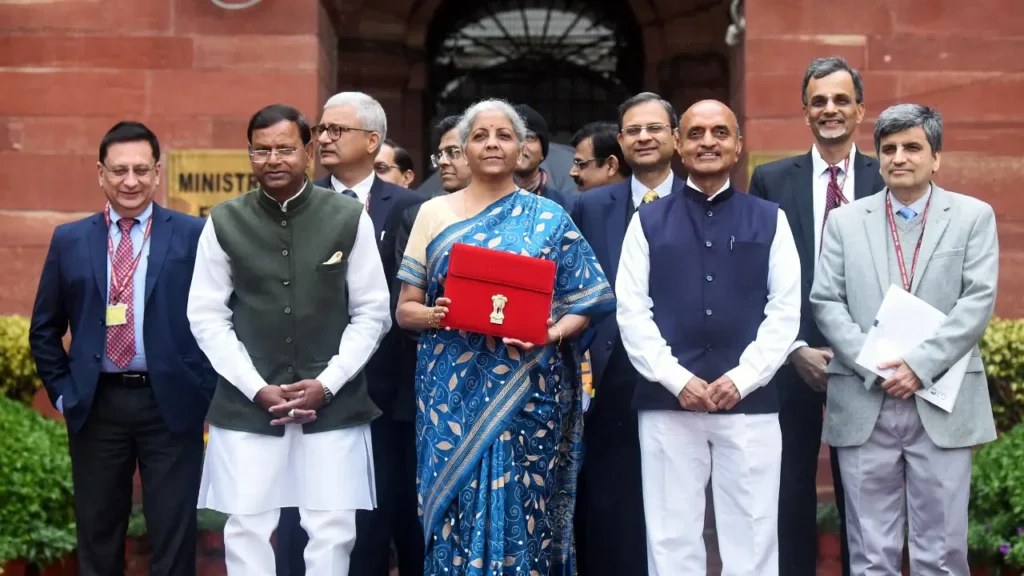
Union Budget 2024–25: Simplicity and Balance
Later in the same year, during the full Union Budget, Sitharaman wore an off-white Mangalagiri saree with magenta and gold borders. The understated base colour reflected restraint, while the border added quiet elegance. Together, the two 2024 sarees underscored India’s diverse textile traditions, especially from the eastern and southern regions.
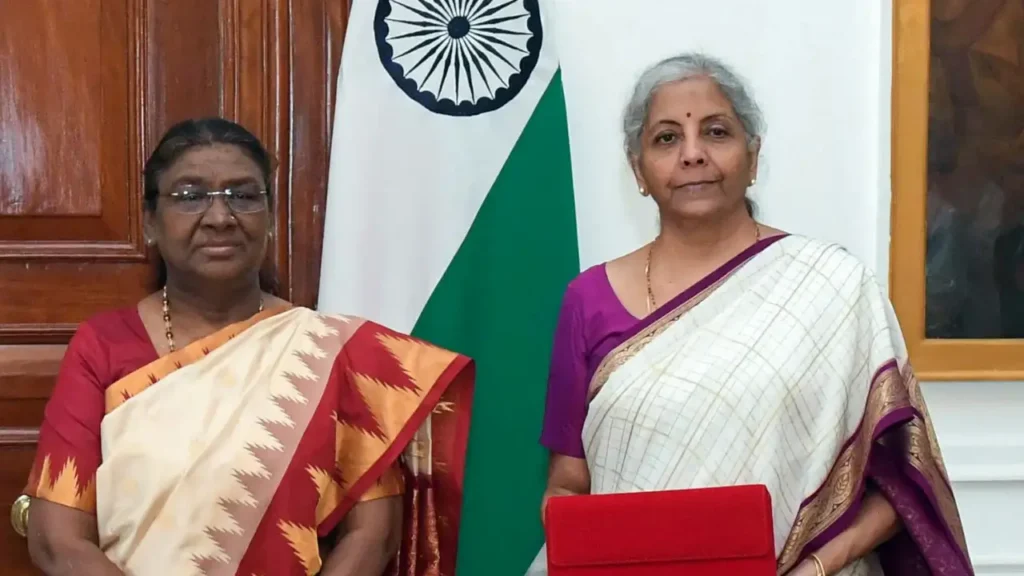
Union Budget 2025–26: Folk Art on a National Stage
In 2025, her saree carried a deeply personal and cultural story. She wore an off-white saree featuring Madhubani fish motifs from Bihar. The saree was gifted by Padma Shri awardee Dulari Devi. In Madhubani art, fish symbolise prosperity and good fortune. The choice elevated folk art from local walls to the national spotlight.
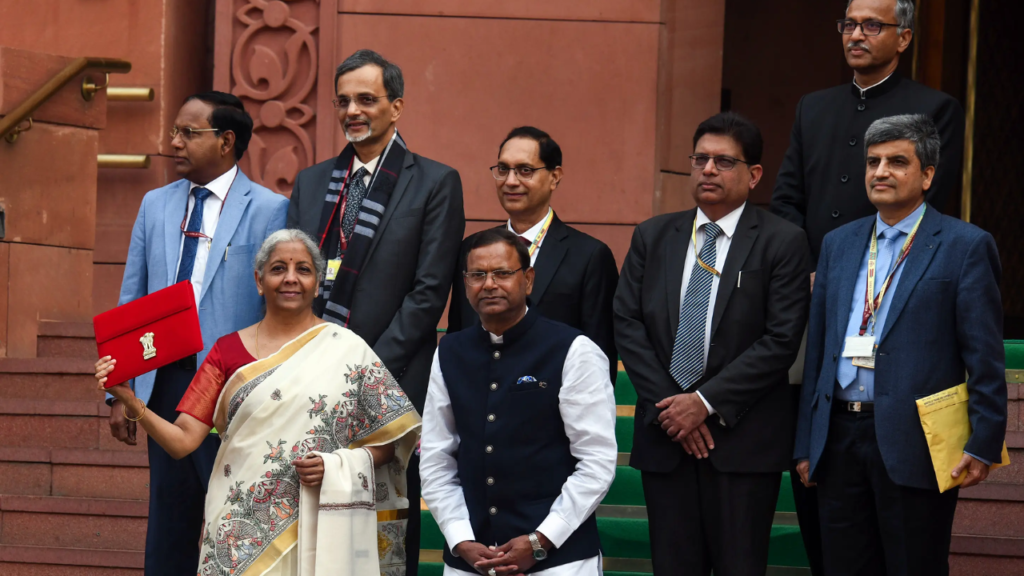
Union Budget 2026–27: A Return to Roots
For her ninth consecutive Budget, Sitharaman donned a purple-magenta Kanchipuram silk saree with a muted gold-brown checkered border. Originating from Kanchipuram in Tamil Nadu, her home state, the weave is known for its durability and grandeur. The saree subtly tied personal roots with national responsibility, closing the circle of tradition and leadership.
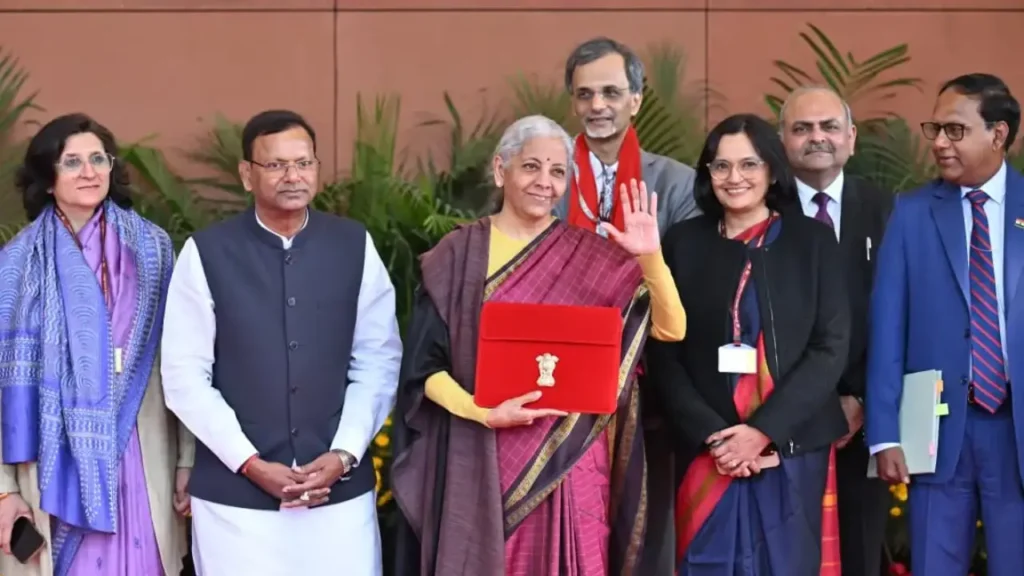
Why Her Sarees Matter
These sarees are not political statements in the loud sense. They do not demand attention. Instead, they invite reflection. They remind viewers that India’s economy is not only built on policies and numbers, but also on artisans, weavers, and centuries-old skills that continue to survive.
Conclusion
Over time, Nirmala Sitharaman’s Budget Day sarees have become a visual archive of India’s textile heritage. Each drape tells a story of a region, a craft, or a community. Together, they form a quiet tradition that runs parallel to fiscal announcements. On a day dominated by data, these sarees offer something equally powerful — a reminder of identity, continuity, and culture woven into governance itself.

