


On 20 January 1892, in a quiet gymnasium in Springfield, Massachusetts, a game was played that almost no one thought would matter beyond that winter. There were no spectators in the modern sense, no media coverage, and certainly no sense that history was being made. Yet that ordinary afternoon marked the birth of basketball, a sport that would go on to reshape global athletics, popular culture, and the very idea of indoor team sports.
The story of basketball’s first game is not dramatic because of spectacle, but because of how unexpectedly influential it became.
A Winter Crisis Inside a Gymnasium
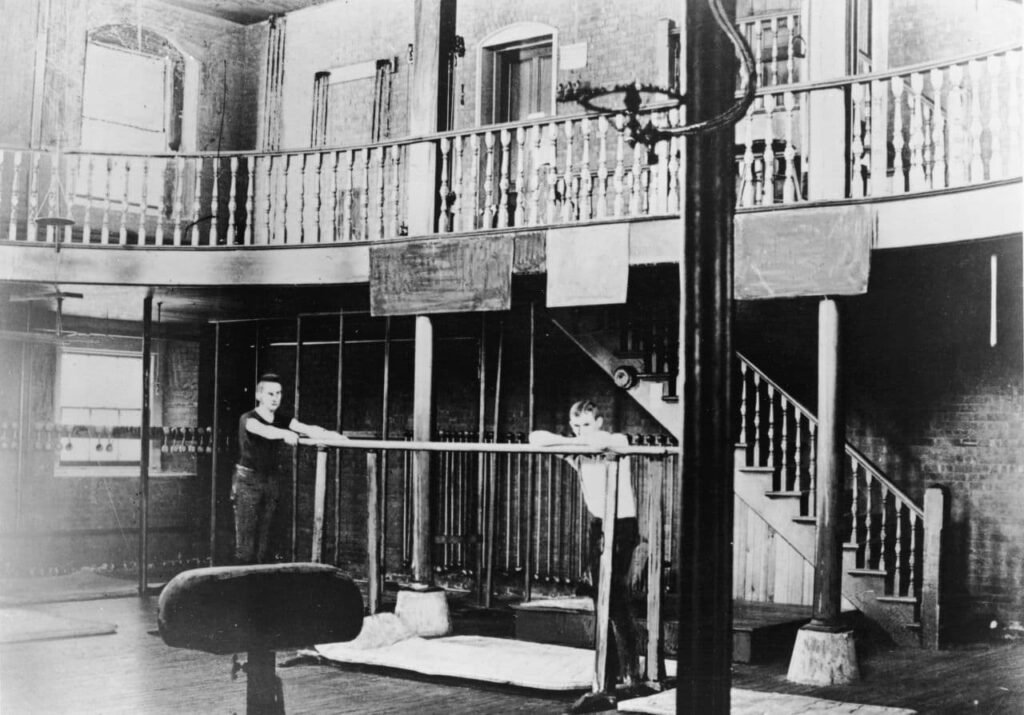
The origins of basketball lie in frustration. The students at the International YMCA Training School were restless. Winter had shut down outdoor sports, and indoor physical education had become dull, repetitive, and uninspiring. Traditional contact sports were too violent to be played indoors and often resulted in injuries and disciplinary issues.
Tasked with solving this problem was James Naismith, a 31-year-old physical education instructor. His assignment was deceptively simple: create a new indoor game that could keep students fit, engaged, and out of trouble during the long New England winter. He was given just two weeks to do it.
Naismith did not set out to invent a global sport. He was trying to solve a classroom problem.
A Simple Idea With Revolutionary Impact
Instead of designing a game based on speed or physical dominance, Naismith focused on skill and control. His most important decision was to elevate the target. By placing the goal above players’ heads, he eliminated much of the physical aggression common in other sports of the era.
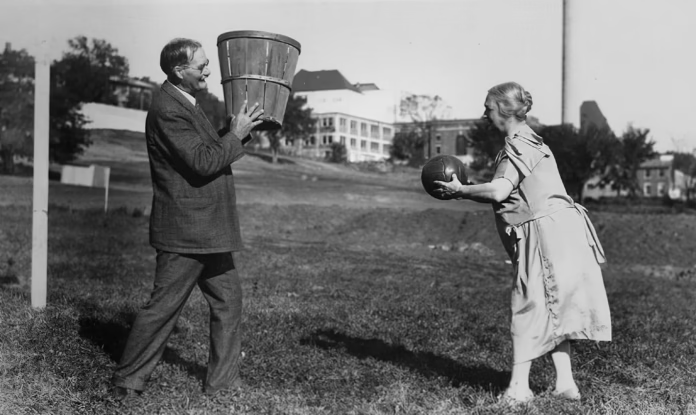
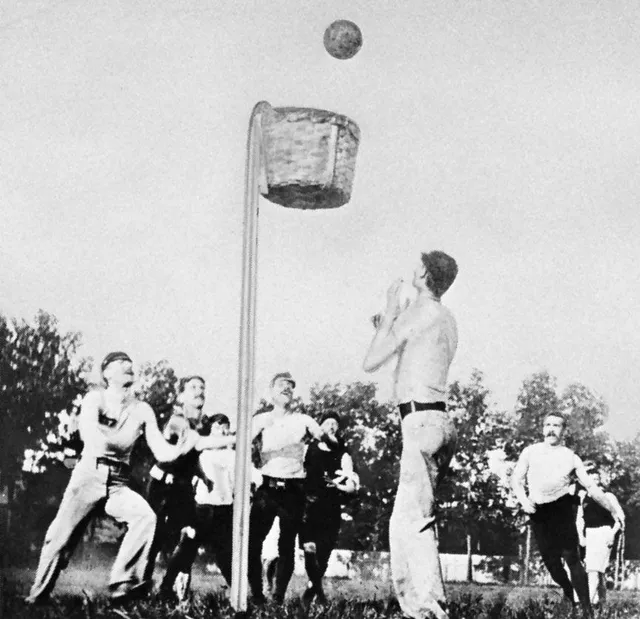
Two peach baskets were nailed to the balcony railings of the gym, roughly ten feet above the floor. A soccer ball was chosen because it was large, easy to pass, and less likely to cause injury. To ensure order, Naismith drafted 13 basic rules, emphasizing passing, positioning, and restraint.
What emerged was a game unlike anything that existed at the time.
20 January 1892: Basketball Is Played for the First Time
The first public basketball game was played on 20 January 1892 as a demonstration match. Eighteen players took the court, divided into two teams of nine. The game was slow and deliberate, almost unrecognizable compared to modern basketball.
There was no dribbling. Players were not allowed to run with the ball. Every pass had to be thrown cleanly, and physical contact was strictly discouraged. When a basket was finally scored, the ball stayed lodged inside the peach basket, forcing someone to climb a ladder to retrieve it.
The final score was 1–0.
By today’s standards, it may sound underwhelming. But for those watching, the game felt fresh, challenging, and engaging. It demanded teamwork, strategy, and precision—qualities that quickly set it apart from existing sports.
Why the Game Caught On So Quickly
What made basketball special was not just novelty, but balance. It was competitive without being violent, structured without being boring, and physically demanding without being reckless. Students who had grown tired of indoor drills found themselves eager to play again.
Word spread quickly. Within months, basketball was being played in other YMCA centers. Within a few years, it had reached colleges, schools, and military institutions across the United States. Its rules were easy to understand, its equipment minimal, and its appeal universal.
Basketball did not spread because it was marketed. It spread because people genuinely enjoyed playing it.
From Springfield to the World
By the mid-1890s, basketball had crossed international borders. Women’s versions of the game emerged early, reflecting its adaptability. The YMCA network carried it into Europe, Asia, and Latin America, embedding it into educational institutions and community centers.
In 1936—just 44 years after that first game—basketball was officially introduced as an Olympic sport, cementing its place on the global stage. What began as a winter solution in a small gym had become a worldwide phenomenon.
A Legacy Built on Humility
Perhaps the most remarkable aspect of basketball’s origin story is what its creator did not do. James Naismith never patented the game and never profited from its success. He believed sports existed to build character, encourage cooperation, and improve physical health—not to generate fame or fortune.
That philosophy still echoes through the sport today.
Why This Day Still Matters
20 January 1892 is more than a historical footnote. It is a reminder that some of the most influential ideas emerge quietly, driven by necessity rather than ambition. Basketball was not designed to dominate arenas, television screens, or global culture. It was designed to keep a group of students active during winter.
More than a century later, basketball is played by hundreds of millions of people worldwide, transcending language, geography, and culture. From schoolyards to sold-out stadiums, its journey began on this day in 1892—when a simple game changed sports forever.

