


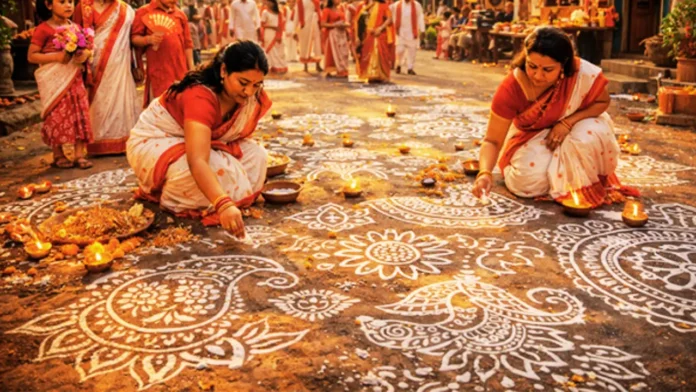
Poila Boishakh marks the first day of the Bengali calendar and brings a strong sense of renewal. In 2026, Bengalis will celebrate it on April 15. The day signals a fresh start filled with hope, prosperity, and cultural pride. People greet each other with “Shubho Noboborsho” and begin the year on a positive note. More importantly, the festival reflects a deep bond with nature, seasons, and tradition.
The Origin of Poila Boishakh: Where History Meets Daily Life
The story of Poila Boishakh connects closely with governance and agriculture. During the Mughal period, Emperor Akbar introduced a revised calendar to solve a practical problem. Farmers found it difficult to pay taxes based on a lunar system that did not match crop cycles.
To address this, a new calendar aligned with the solar year was introduced. This allowed tax collection to follow the harvest season. Over time, this system evolved into the Bengali calendar used today.
At the same time, some historical views suggest that regional rulers in eastern India had already developed similar systems earlier. This indicates that the Bengali calendar grew through layers of influence rather than a single origin.
As a result, Poila Boishakh stands at the intersection of history, administration, and rural life.
Understanding the Bengali Calendar
The Bengali calendar follows the solar cycle and begins with the month of Boishakh. It closely tracks seasonal changes, which makes it highly relevant for agriculture.
Unlike purely religious calendars, it connects everyday life with nature. Farmers, traders, and households all use it to plan activities. Therefore, the first day of the year naturally becomes a moment of celebration and renewal.
Cultural Significance: A Shared Identity
Poila Boishakh is more than a festival. It is a cultural statement. It brings people together across communities and backgrounds.
The day encourages a fresh beginning. People let go of past worries and look forward to new opportunities. Families gather, friends reconnect, and communities celebrate together.
In today’s fast-moving world, this festival helps preserve identity. It keeps traditions alive while allowing people to adapt to modern life.
Traditional Rituals That Shape the Celebration
Haal Khata: A Fresh Financial Start
Businesses begin the year by opening new account books. Shopkeepers invite customers and offer sweets. This practice strengthens relationships and marks a clean start in trade.
Morning Processions and Cultural Programs
The day often begins with music, songs, and cultural gatherings. These events create a joyful and energetic atmosphere. Traditional performances set the tone for the rest of the celebration.
Traditional Attire
Clothing plays an important role in expressing cultural identity. Women wear sarees, often in red and white. Men choose a kurta-pajama. These colors symbolize purity, celebration, and new beginnings.
Boishakhi Mela
Local fairs add vibrancy to the festival. They feature handicrafts, folk art, and live performances. These melas showcase the creative spirit of Bengal and bring communities together.
Festive Food: A Celebration on the Plate
Food forms the heart of Poila Boishakh celebrations. Families prepare traditional meals that reflect both heritage and joy.
A classic combination includes fermented rice served with hilsa fish. Many households also prepare elaborate dishes for the occasion.
Sweets remain essential. Items like rasgulla, sandesh, and payesh add a festive touch. These foods symbolize abundance, happiness, and good fortune for the year ahead.
Modern-Day Celebrations: Tradition Meets Contemporary Life
Today, Poila Boishakh continues to evolve. People share greetings through digital platforms and organize cultural events in schools and cities.
At the same time, Bengali communities around the world celebrate the festival with equal enthusiasm. Despite these modern influences, the core values remain unchanged. Tradition still guides the celebration.
Why Poila Boishakh Still Matters
This festival continues to hold deep relevance. It reminds people of their roots and strengthens cultural identity.
It also promotes unity and positivity. Every year, it offers a chance to begin again with hope and clarity.
That is why Poila Boishakh remains meaningful across generations.
Conclusion: Welcoming a Year of Hope and Joy
Poila Boishakh 2026 is not just the start of a new year. It is a celebration of life, culture, and continuity. It connects the past with the present and carries traditions forward.
From rituals to food, every element holds meaning. Together, they create a festival that feels both personal and collective.
As the new year begins, people embrace it with joy and optimism.
Shubho Noboborsho!

