


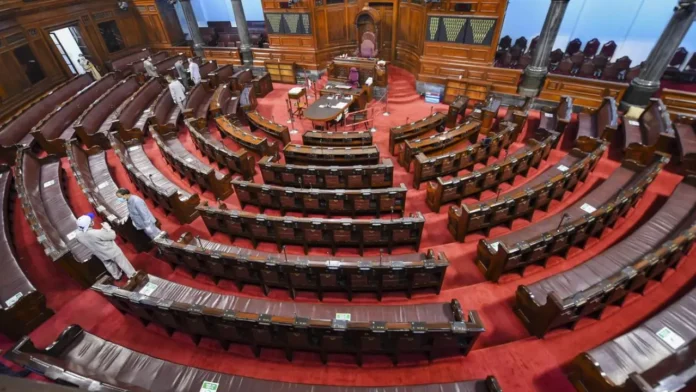
The Rajya Sabha elections of 2026 have emerged as a significant political event in India, reflecting the complex dynamics of alliances, rivalries and strategic calculations among political parties. While elections for several seats concluded smoothly, the contest in a few states has drawn intense national attention.
This year, 37 seats in the Rajya Sabha from 10 states fell vacant, triggering political maneuvering across the country. Interestingly, a large number of candidates secured their seats without a contest. However, the real political battle is taking place in Bihar, Odisha and Haryana, where the outcome depends on alliances, cross-voting possibilities and internal party discipline.
Majority of Candidates Elected Unopposed
A striking feature of the current Rajya Sabha elections is the number of candidates who entered the Upper House without facing any contest.
Out of the total 37 seats, 26 candidates from seven states were elected unopposed. These states include Maharashtra, West Bengal, Tamil Nadu, Telangana, Chhattisgarh, Assam and Himachal Pradesh.
Several prominent political leaders secured seats during this process. Among them are senior politician Sharad Pawar, Congress leader and legal expert Abhishek Singhvi, Union Minister Ramdas Athawale, and DMK leader Tiruchi Siva.
Other notable personalities who have already secured their seats include political leaders, cultural figures and professionals from different backgrounds. The presence of individuals from diverse fields highlights how the Rajya Sabha continues to serve as a platform for experienced public figures beyond electoral politics.
Since these seats were filled without voting, the focus of political observers quickly shifted to the remaining states where contests remain intense.
Why the Remaining Seats Matter
After the unopposed victories, only 11 seats across three states remain contested. These seats are in Bihar, Odisha, and Haryana.
In these states, the numbers in the legislative assemblies are finely balanced. This situation creates the possibility of political surprises, especially through cross-voting or unexpected alliances.
For opposition parties, these elections have turned into a test of unity and loyalty. Any cross-voting by legislators could reveal internal fractures within political alliances and weaken the opposition’s credibility.
The Bihar Contest: Numbers and Political Calculations
Bihar presents one of the most closely watched contests in the Rajya Sabha elections. This year, five seats from the state are up for election.
The Bihar Legislative Assembly has 243 members, and each candidate requires 41 votes to win a Rajya Sabha seat under the proportional representation system.
The ruling National Democratic Alliance (NDA) has a comfortable advantage in the assembly. As a result, two candidates from the Janata Dal (United) and two from the Bharatiya Janata Party are expected to win without difficulty.
However, the contest becomes interesting when it comes to the fifth seat.
The opposition alliance led by the Rashtriya Janata Dal does not have enough votes on its own. To bridge the gap, opposition leaders have been reaching out to smaller parties and independent legislators. One key development has been the attempt to secure support from the All India Majlis-e-Ittehadul Muslimeen (AIMIM), which holds a few seats in the assembly.
Political observers note that this outreach is significant because relations between these parties had previously been strained during earlier electoral negotiations.
At the same time, the NDA camp is also exploring ways to secure additional support for its candidate. If cross-voting occurs from opposition legislators, it could tilt the balance and secure victory for the ruling alliance’s nominee.
Odisha: A Strategic Contest for the Fourth Seat
Odisha is another state where the Rajya Sabha election has become politically sensitive. In this election cycle, four seats from the state are vacant.
According to the voting formula used in Rajya Sabha elections, each candidate must secure a specific number of votes based on the strength of the state assembly.
The ruling alliance led by the Bharatiya Janata Party has a significant presence in the assembly. This ensures comfortable victories for at least two candidates. Meanwhile, the regional party Biju Janata Dal is expected to secure one seat.
The real contest revolves around the fourth seat, where the numbers become complicated.
After securing two seats, the ruling alliance will still have surplus votes. These surplus votes can be transferred to support another candidate. However, the candidate would still need additional support from opposition legislators.
On the other side, the Biju Janata Dal could attempt to consolidate votes from Congress members, Left representatives and independent legislators to secure the final seat.
The situation makes Odisha a classic example of strategic coalition politics where every vote carries significant value.
Haryana: Cross-Voting Concerns Dominate the Race
Haryana is witnessing another intriguing contest. The state has two Rajya Sabha seats available this year.
The ruling Bharatiya Janata Party enjoys the support of several allied and independent legislators, giving it a comfortable majority in the assembly. This ensures an easy victory for one of its candidates.
However, the entry of an independent candidate supported by the ruling party has added an unexpected twist to the election.
For this candidate to win, additional votes would be required from outside the ruling alliance. This has raised concerns within the opposition camp about possible cross-voting.
In response, opposition leaders have taken preventive measures to maintain unity among their legislators. Some lawmakers have even been relocated temporarily to prevent any political pressure or defection attempts.
Such moves highlight the level of political tension surrounding the election.
The Role of Cross-Voting in Rajya Sabha Elections
Cross-voting often becomes a decisive factor in Rajya Sabha elections. Unlike general elections, these contests are decided by elected legislators through a proportional representation system.
If legislators vote against the official stance of their party, the entire electoral outcome can change dramatically.
Because of this possibility, political parties closely monitor their legislators during Rajya Sabha elections. They frequently conduct internal meetings, strategy sessions and sometimes even relocate lawmakers to ensure party discipline.
What the Elections Reveal About Indian Politics
The Rajya Sabha elections of 2026 highlight the increasingly complex nature of coalition politics in India.
Political rivals sometimes cooperate when their interests align, while traditional allies may face internal tensions over seat distribution and political strategy.
These elections also demonstrate the importance of legislative arithmetic. Even a handful of votes can determine whether a candidate secures a seat in the Upper House.
Conclusion
The Rajya Sabha elections this year are more than a routine parliamentary process. They have become a test of political strategy, party discipline and alliance management.
While most seats were decided without contest, the battles in Bihar, Odisha and Haryana remain politically significant. The outcome will not only determine who enters the Upper House but will also reveal the strength and cohesion of political alliances across the country.
As voting unfolds, these contests continue to attract national attention, offering valuable insight into the evolving landscape of Indian politics.

