


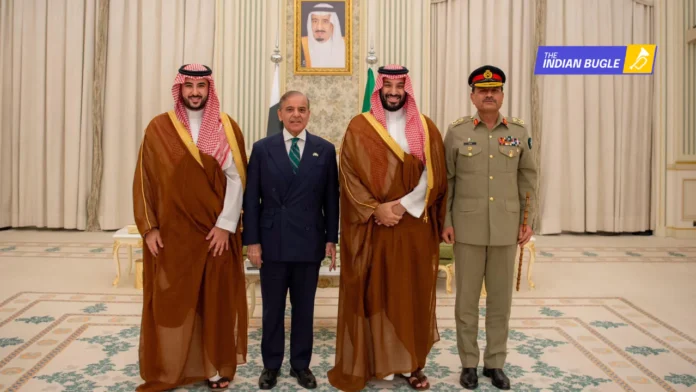
The Saudi-Pakistan Strategic Defence Agreement is not a routine diplomatic pact. It is a reshuffling of cards in the global security deck — one that places Pakistan’s nuclear capabilities under the spotlight of Middle Eastern geopolitics. For India, this pact is not merely about Riyadh and Islamabad. It is about energy security, diplomatic maneuvering, and the uneasy possibility of Pakistan drawing confidence from Saudi Arabia’s political and financial muscle.
The Pact in Perspective
Saudi Arabia and Pakistan have committed themselves to a mutual defence framework, pledging that an attack on one will be treated as an attack on both. While nuclear weapons are officially “not on the radar,” the pact is being widely interpreted as Saudi Arabia positioning itself under Pakistan’s nuclear umbrella.
Let’s call it what it is: Pakistan’s atomic deterrent, backed by Saudi Arabia’s oil wealth, is now formally part of the Middle Eastern security architecture.
Why Saudi Arabia Made This Move
The motivations are multilayered:
- Fading U.S. Security Blanket
For decades, Riyadh relied on Washington’s military guarantees. But as America pivots away from Middle Eastern entanglements, Saudi Arabia is hedging its bets. - The Israel Question
Israel’s undeclared but widely acknowledged nuclear arsenal looms large. Recent flare-ups in Gaza and regional instability have pushed Riyadh to seek a counterweight. - Iran Rivalry
If Tehran crosses the nuclear threshold, Saudi Arabia cannot afford to lag. Pakistan offers a shortcut — ready-made nuclear credibility without Riyadh having to build its own arsenal. - Strategic Autonomy
Crown Prince Mohammed bin Salman wants Riyadh to project power independently. This pact signals to the world that Saudi Arabia can redefine security on its own terms.
India’s Strategic Dilemma
India’s Ministry of External Affairs kept its words measured — urging Riyadh to keep “mutual interests” in mind. But make no mistake: behind the polite phrasing lies serious concern.
Here’s why this pact troubles India:
- Pakistan’s Morale Boost
Islamabad, struggling economically and politically, now enjoys the backing of the Arab world’s richest kingdom. This could embolden its military posture toward India. - Saudi Funding Pipeline
Riyadh’s financial muscle may indirectly fuel Pakistan’s military modernization, diluting India’s overwhelming budgetary advantage. - Energy Dependency
India imports nearly 20% of its crude oil from Saudi Arabia. Can New Delhi risk friction with Riyadh without destabilizing its energy lifeline? - Diplomatic Balancing Act
India has cultivated close ties with the Gulf — from defense partnerships with the UAE to diaspora-driven economic links. The Saudi-Pakistan pact tests India’s ability to walk the tightrope.
The Nuclear Shadow
Even if the pact avoids explicit nuclear language, its implications are nuclear in every sense.
- Pakistan’s missiles already cover India and Israel.
- Saudi Arabia has long been suspected of financing parts of Pakistan’s nuclear program.
- A Saudi official’s statement about “all military means” leaves the door open for nuclear ambiguity.
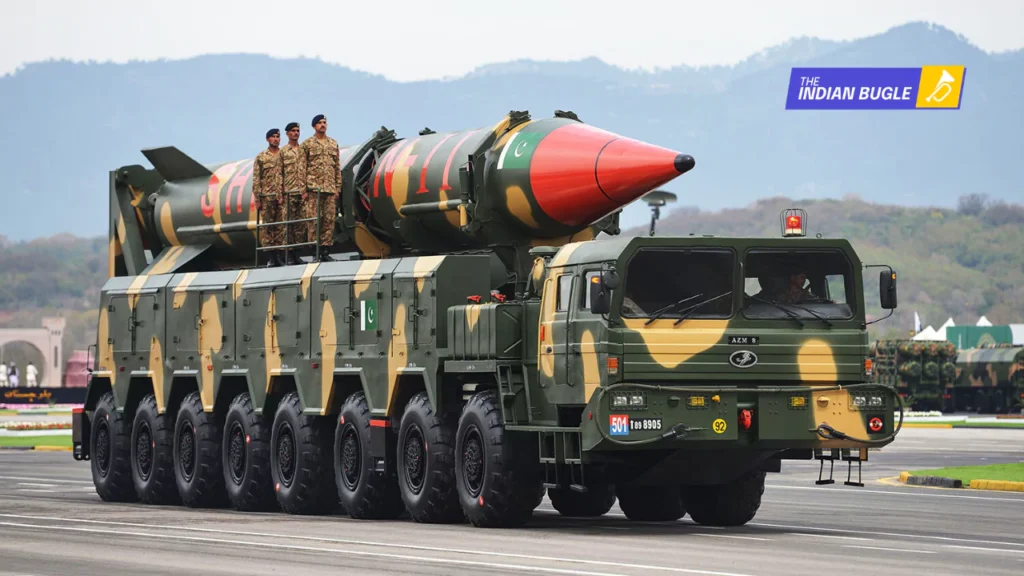
This effectively brings Pakistan’s nuclear arsenal into the Middle East theatre, introducing a new layer of complexity for global non-proliferation efforts.
The Middle Eastern Domino Effect
This pact could trigger cascading consequences:
- Israel: Already wary, Israel now faces a nuclear-backed rival bloc. Expect Tel Aviv to tighten security and lobby Washington even harder.
- Iran: Likely to accelerate its nuclear ambitions, justifying them as necessary for balance.
- United States: Washington’s influence in Riyadh weakens further, underlining the slow erosion of American hegemony in the region.
- China: Quietly benefits, as both Riyadh and Islamabad tilt further into Beijing’s orbit — economically and militarily.
What India Must Do Next
India cannot afford to sit on the sidelines. Three strategic shifts are urgent:
- Reinforce Energy Diplomacy
Deepen ties with other Gulf suppliers (UAE, Qatar, Iraq) to reduce reliance on Saudi barrels. Diversification is insurance. - Strengthen Regional Partnerships
Double down on strategic alignments with Israel and the U.S., while balancing relations with Gulf monarchies. A nuanced, multi-vector foreign policy is no longer optional. - Boost Defence Self-Reliance
The pact underscores why India’s Atmanirbhar Bharat in defence must accelerate. Reliance on imports in a changing security environment is a vulnerability.
The Final Word
This is not a routine defence pact. It is a strategic earthquake that has repositioned Pakistan’s nuclear assets within a Middle Eastern framework and handed Riyadh a deterrent it never had.
For India, the challenge is to maintain the balance — ensuring ties with Saudi Arabia remain intact, while keeping Pakistan’s newfound confidence in check.
The world may see this as a Middle Eastern story. For India, it is an immediate strategic reality.

