


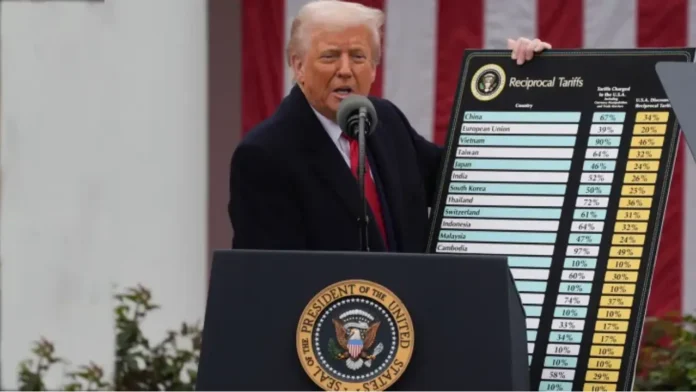
The U.S. Supreme Court made a major decision. It ruled that former President Trump could not use emergency authority to impose broad tariffs on foreign trade partners. The ruling has wide legal and economic impact. It also clarifies limits on presidential power.
What Happened?
Former President Trump used a law called the International Emergency Economic Powers Act (IEEPA). He argued that a national emergency gave him the right to set tariffs on many imports. The tariffs affected products from several countries and raised billions of dollars for the U.S. government.
Multiple companies and nations challenged this action in court. They said the president overstepped his legal authority. The case moved up to the Supreme Court, the highest court in the United States.
On February 20, 2026, the Supreme Court delivered its judgment. The justices ruled 6–3 against Trump’s use of emergency tariff powers.
Why the Court Ruled Against Trump
The Court set out two central reasons:
1. Tariffs Require Clear Congressional Authorization
The Constitution gives Congress the power to impose taxes and tariffs. The court found that the law Trump used did not clearly authorize tariffs. The president cannot assume broad tariff power just because an emergency law exists.
2. Limits on Emergency Powers
IEEPA allows the president to act in economic emergencies. But it does not explicitly allow tariffs. The justices made it clear that emergency powers must be specific. They cannot be used to rewrite major tax or trade policy.
The decision applied a legal principle known as the major questions doctrine. This means big policy changes need clear approval from Congress.
Vote Split on the Court
Six justices agreed the tariffs were unlawful. Three justices dissented. They said the president should have broader flexibility during emergencies. Still, the majority opinion defined a sharp legal boundary.
Immediate Effects of the Ruling
This ruling has strong real-world consequences:
Tariff Refunds
Importers and businesses that paid these tariffs may now demand refunds. The government collected billions of dollars in tariff revenue. Legal battles may follow over repayment.
Current Tariffs Still in Place
Some tariffs remain unaffected. Those imposed under other laws, such as national security statutes, are still valid.
Trade Policy Clarity
The decision clarifies that future presidents cannot impose wide tariffs using emergency powers alone. They must work with Congress for clear legal backing.
Broader Legal Impact
This ruling limits presidential authority in economic policymaking. It sends a strong message: even in emergencies, the president cannot act beyond explicit legal permission. Trade policy belongs to lawmakers, not the executive alone.
Economic Implications
Global markets reacted to the news. Countries that were hit by the tariffs see this as a reset. U.S. businesses that faced higher costs also welcome the ruling. The move could stabilize trade relations and reduce uncertainty.
The Supreme Court’s ruling marks a turning point for trade and executive power. It reinforces that major economic decisions need congressional approval. The decision brings clarity and sets an important legal precedent. It also reshapes expectations for future trade policy in the United States.

