


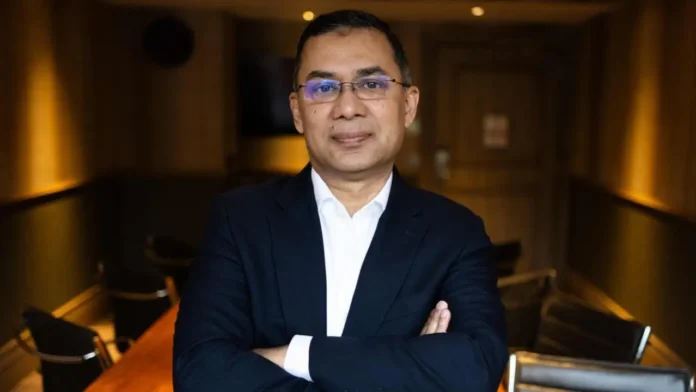
Tarique Rahman’s victory forces India to adjust its neighbourhood strategy. The BNP’s strong mandate gives Dhaka political stability after years of unrest. Therefore, New Delhi must move fast, stay pragmatic, and protect core interests without provoking public friction.
The political reset in Dhaka
Bangladesh has entered a new phase. A decisive election outcome reduced uncertainty and restored competitive politics. The BNP returned to power after two decades. This shift ends a long period of one-party dominance and resets institutional behaviour. For India, this means dealing with a leadership that seeks autonomy but values stability.
Why this matters for India
India shares deep economic, security, and cultural ties with Bangladesh. Any change in Dhaka directly affects India’s eastern states. Border security, trade routes, and regional connectivity depend on cooperation. A stable government in Bangladesh lowers risk. At the same time, a nationalist leadership may test diplomatic patience.
Security implications
Security sits at the top of India’s priorities. Border management, counter-terror cooperation, and action against organised crime remain non-negotiable. Any relaxation impacts India’s Northeast. Tarique Rahman’s government will face early scrutiny on how firmly it handles these issues. Cooperation must continue quietly and consistently.
Illegal migration and smuggling shape domestic politics in India. Dhaka’s approach to enforcement will influence trust levels. Joint patrols, intelligence sharing, and administrative coordination matter more than public statements. India will judge outcomes, not rhetoric.
Economic and trade impact
Trade relations remain a stabilising force. India is one of Bangladesh’s largest trading partners. Smooth logistics benefit both sides. A strong government in Dhaka can fast-track stalled projects. That helps exporters, border economies, and supply chains. Energy trade and transit agreements also gain momentum when political clarity exists.
Connectivity and infrastructure
Road, rail, river, and power connectivity form the backbone of regional integration. Political stability allows long-term planning. India should push implementation, not announcements. Visible progress on infrastructure builds goodwill faster than diplomatic messaging.
China factor and regional balance
Bangladesh may rebalance its external relationships. China’s economic presence will remain significant. India must respond with speed and quality, not pressure. Offer projects that deliver quickly. Focus on sectors where India holds practical advantages. Strategic competition should stay subtle and calibrated.
Diplomatic tone and early engagement
Early engagement sets the mood. India’s outreach signals readiness to work with the new leadership. However, sustained engagement matters more than symbolic gestures. Institutional dialogue should resume at all levels. Quiet diplomacy will prove more effective than public positioning.
Tarique Rahman’s political base values sovereignty. Occasional anti-India rhetoric may surface. India should avoid overreaction. Public diplomacy, cultural ties, and people-to-people engagement help dilute political noise. Economic interdependence remains the strongest stabiliser.
Risks India must manage
Three risks stand out. First, excessive centralisation of power could lead to sudden policy shifts. Second, prolonged nationalist rhetoric may harden public opinion. Third, increased dependence on external powers could alter strategic balance. India must respond with flexibility, not rigidity.
What India should do next
First, deepen working-level security cooperation. Second, accelerate trade facilitation and customs reforms. Third, deliver small but visible infrastructure projects. Fourth, expand visas for business, medical, and student travel. Finally, maintain regular political contact without public grandstanding.
Cabinet appointments will signal priorities. Early economic policies will test investor confidence. Border incident trends will reveal security intent. Foreign policy statements on major powers will clarify alignment. Handling of political dissent will indicate institutional direction.
Conclusion
Tarique Rahman’s win changes the equation, not the fundamentals. India faces neither hostility nor guaranteed alignment. The path forward lies in pragmatic engagement. If New Delhi focuses on security, trade, and steady diplomacy, it can protect its interests while supporting regional stability. The opportunity is real. The response must be measured and timely.

