


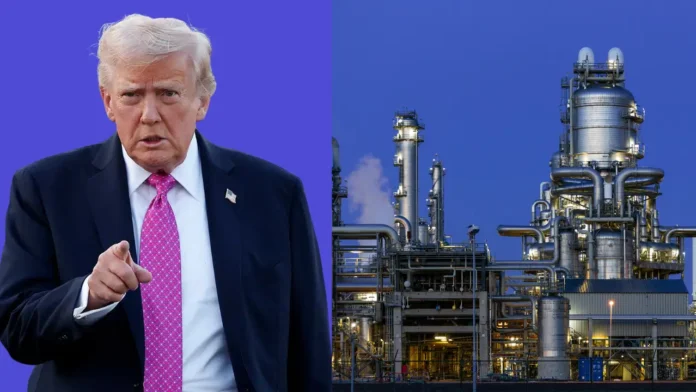
Donald Trump announced that Venezuela would “turn over” between 30 and 50 million barrels of crude oil to the United States. The oil will be sold at prevailing market prices, with proceeds handled under US oversight. The announcement immediately caught the attention of global markets. Oil prices dipped as traders began factoring in the possible return of Venezuelan barrels to international supply chains. The development blends energy economics with geopolitics, making it more than a routine oil trade.
What exactly was announced
Trump stated that Venezuela would provide a large volume of crude oil, estimated at 30–50 million barrels. The oil would not be discounted. Instead, it would be sold at standard global prices. The total value of the shipment could run into billions of dollars. The statement followed dramatic political changes in Venezuela and signals a sharp shift in how Washington plans to handle Venezuelan energy assets.
Oil markets move on expectations. Even before a single barrel changes hands, the idea of extra supply can pressure prices. Traders interpreted Trump’s statement as a signal that stored or blocked Venezuelan oil may soon reach global buyers. At a time when demand growth remains uneven, the prospect of additional supply pushed prices lower.
Why Venezuelan oil is important
Venezuela holds some of the world’s largest proven oil reserves. Yet years of sanctions, underinvestment, and operational failures reduced its exports. Large volumes of crude remained stranded or sold through complex channels. Any move that unlocks these barrels has an outsized impact on market sentiment, especially in the Atlantic basin.
Much of the oil mentioned may already exist in storage or be tied up in delayed shipments. Redirecting it does not immediately raise production but changes who receives it. Over time, if infrastructure improves and restrictions ease, production could rise further. That possibility adds to the market’s cautious tone.
The geopolitical layer
This oil transfer is closely linked to political change in Caracas. It reflects how energy resources often become tools in diplomatic and strategic negotiations. The move may strain relations with countries that previously relied on Venezuelan crude, while strengthening Washington’s leverage over energy flows in the region.
Who benefits and who faces pressure
US refiners could benefit from access to heavy crude that suits their configurations. Global traders may find new arbitrage opportunities. On the other hand, traditional buyers could lose supply or face higher competition. For Venezuela, the long-term benefit depends on how revenues get used and whether the oil sector sees real recovery.
Risks and unanswered questions
Several issues remain unclear. Legal challenges may arise over ownership and control of oil revenues. Logistical hurdles could delay shipments. Refinery compatibility may limit how quickly the oil gets absorbed. Political uncertainty in Venezuela also adds risk, keeping markets cautious rather than optimistic.
In the near term, oil prices may stay under pressure. Traders tend to sell first and reassess later. Any confirmation of shipments could deepen the slide. However, delays or disputes could quickly reverse sentiment and push prices back up.
If Venezuelan oil flows steadily, global supply could remain comfortable, keeping prices capped. If political or technical problems resurface, the impact may fade. A more disruptive scenario could emerge if geopolitical tensions widen, triggering fresh volatility.
What to watch going forward
Pay attention to shipping movements, refinery intake data, and official policy signals from Washington and Caracas. These indicators will reveal whether this announcement becomes a real supply shift or remains a headline-driven move.
This development shows how closely oil markets track politics. For consumers, it raises hopes of stable or lower fuel prices. For producers and traders, it introduces both opportunity and risk. Venezuela’s oil story is once again shaping global energy conversations, and markets will keep reacting to every concrete step that follows.

