


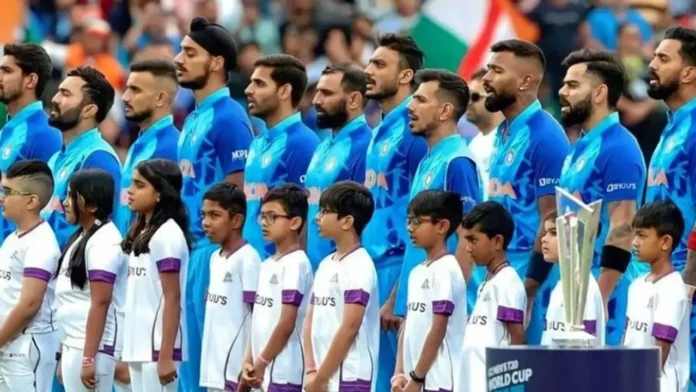
Cricketers walk onto the field holding children’s hands as part of a pre-match tradition known as the player escort or mascot walk. The practice combines symbolism, inclusion, and outreach. It shows that cricket values its future as much as its present.
The core idea behind the tradition
The children represent the next generation of the sport. When elite players walk with them, the game sends a simple message. Cricket belongs to everyone. It inspires dreams early. It encourages fair play and respect.
When and how this tradition began in cricket
Cricket adopted this practice in the 1990s, much later than football. As international cricket expanded its television footprint, boards began adding structured ceremonies. Global tournaments under the International Cricket Council formalised the walk-out with anthems and mascots. Events like the ICC Cricket World Cup helped standardise it across nations.
Why cricket borrowed the idea from football
Football introduced child mascots decades earlier. Cricket followed once the sport moved into packed stadiums and global broadcasts. Organisers wanted a calmer, more inclusive opening moment before high-pressure games. The walk-out delivered that instantly.
Who are the children in the field
The children usually come from local schools, grassroots academies, or community programmes. In many matches, boards include children from underprivileged backgrounds or those linked to social causes. Selection often happens through cricket associations, sponsors, or outreach partners.
Why do players hold hands specifically
Holding hands serves a practical and emotional purpose. It helps children feel safe in loud stadiums. It also symbolises guidance from one generation to the next. The image communicates care, continuity, and responsibility without words.
Is this only a ceremonial act
No. The walk-out supports broader goals. Cricket boards use it to promote junior participation. Sponsors support it to fund youth programmes. Together, it strengthens the sport’s grassroots pipeline. The moment lasts seconds, but its impact extends far longer.
When the tradition appears and when it does not
You usually see this practice in World Cups, ICC events, major bilateral series, and high-profile league matches. It appears less often in routine domestic games where ceremonies remain minimal.
Emotional impact on players and children
For children, the experience can be life-changing. Many recall it as the moment they decided to play cricket seriously. For players, the presence of kids often eases pressure. It reminds them why they first fell in love with the game.
How the tradition evolved over time
Earlier walk-outs focused on formality. Today, they emphasise inclusion and storytelling. Some boards link mascots to themes like education, equality, or health. The ritual has grown from a visual add-on into a meaningful statement.
Why the tradition still matters today
Modern sport moves fast and feels commercial. This moment slows everything down. It brings humanity onto the field. It connects legends with learners. It shows cricket as a shared journey, not just a contest.
Cricketers walk with kids to honour the future of the sport. The tradition began in the 1990s as cricket globalised. It blends symbolism, safety, and social purpose. Most importantly, it turns a match into a memory.
For viewers, it is a brief walk. For a child, it can be the first step toward a lifelong dream. Cricket understands that legacy does not start with trophies. It starts with inspiration.

