


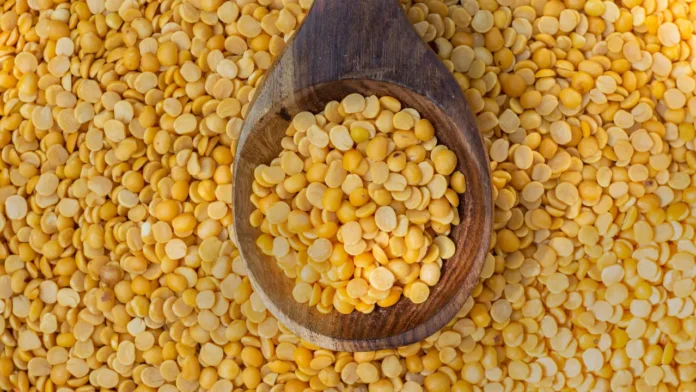
India’s decision to impose a 30% import duty on yellow peas has triggered concern in Washington. American lawmakers argue that the tariff puts U.S. pulse producers at a clear disadvantage in one of the world’s biggest markets. The move has now become part of a wider trade conversation between New Delhi and Washington, raising questions about whether agriculture could slow progress on a broader trade deal.
Why pulses matter so much
Pulses are not a niche product in India. They form the backbone of everyday meals across regions and income groups. India is also the world’s largest consumer of pulses, which makes access to its market crucial for exporting countries. When India changes import duties, the impact is felt far beyond its borders. Therefore, even a single tariff decision can reshape global trade flows.
What exactly did
On October 30, India announced a 30% tariff on imported yellow peas. The duty came into force on November 1, 2025. The decision followed a period of strained trade relations, during which both sides raised tariffs on several goods. From India’s point of view, the measure was a policy response shaped by domestic priorities and global trade pressures.
The American response
Two Republican senators from major pulse-producing states wrote to President Donald Trump, urging him to take up the issue with India. They argued that farmers in states like Montana and North Dakota rely heavily on export markets. According to them, the tariff reduces the competitiveness of American pulses and restricts market access at a time when farmers are already facing uncertainty.
Why India chose the tariff route
India’s tariff policy reflects more than trade retaliation. It also reflects internal economic and political considerations. Protecting domestic farmers remains a priority, especially when global prices fluctuate or when imports threaten to undercut local produce. At the same time, tariffs offer leverage in negotiations, allowing India to balance external pressure with internal stability.
For American pulse growers, the tariff directly affects pricing power. A higher duty means their produce becomes costlier in the Indian market. As a result, exporters may lose orders or be forced to cut margins. Over time, this can affect farm incomes, planting decisions, and rural economies in pulse-growing regions.
Impact on Indian consumers and producers
The tariff offers short-term protection to Indian farmers by limiting cheaper imports. This can stabilize local markets and support farm incomes. However, there is another side to the story. Higher import duties can push up prices for certain pulse varieties. In the short run, consumers and food processors may face higher costs, especially if domestic supply falls short of demand.
How does this affect the broader trade deal
Trade negotiations rarely hinge on a single product, yet symbolic issues often carry outsized weight. The pulse tariff now sits alongside other unresolved trade concerns. U.S. lawmakers see it as a test of fair access, while India views it as a legitimate policy tool. If neither side shows flexibility, the issue could slow progress or narrow the scope of a future agreement.
The senators have urged President Trump to raise the matter directly with Prime Minister Narendra Modi. High-level political engagement has helped unlock progress in the past. Direct talks could once again push negotiators to find a middle path that balances farmer interests with trade ambitions.
Possible ways forward
Several practical options exist. Both sides could agree to phased tariff reductions linked to broader concessions. They could also carve out agriculture-specific provisions in the trade deal. Another approach involves safeguard mechanisms that protect farmers while keeping trade channels open. Each option requires compromise, but none are out of reach.
The yellow pea tariff may look like a narrow dispute, yet it reflects deeper tensions in India–US trade relations. The outcome will depend on how both sides weigh domestic pressures against long-term strategic interests. If handled with care, the issue can be resolved without derailing talks. If handled rigidly, it risks becoming a stumbling block in an already complex negotiation.
Dal is more than food in India. It is economic security, political sensitivity, and cultural identity combined. That is why the pulse tariff debate matters. Whether it derails the trade deal or becomes a stepping stone toward a smarter agreement will depend on diplomacy, timing, and the willingness to see mutual benefit beyond short-term gains.

