


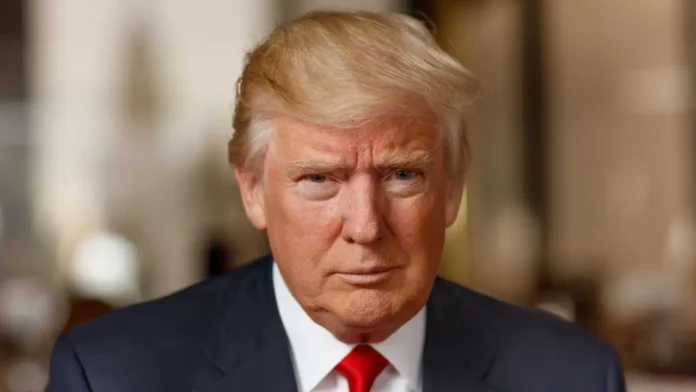
US President Donald Trump has invited Prime Minister Narendra Modi to join a new international initiative called the Board of Peace. The proposal aims to resolve the Gaza conflict and rebuild the region, with plans to later address other global conflicts. India has not yet issued an official response, which makes the invitation both diplomatically sensitive and strategically important.
What is the Board of Peace?
The Board of Peace is envisioned as a new international body that would oversee peace-building, governance support, and reconstruction in conflict zones. Gaza would be its first focus. According to Trump, the Board would combine political leadership, financial backing, and administrative authority in one structure. Unlike traditional multilateral institutions, this body would operate with fewer layers and faster decision-making.
How the Board is structured
The proposal outlines a central Board made up of invited countries, supported by an executive leadership group. Trump would chair the Board for life. Member countries would serve limited terms unless they make significant financial contributions, which could secure long-term or permanent membership. The initiative also plans to rely heavily on private-sector expertise and high-profile global figures to manage reconstruction and governance tasks.
Role of the United Nations
The United Nations has endorsed the Gaza-focused phase of the initiative for a limited period. However, this endorsement applies only to Gaza and only for a defined timeframe. It does not automatically extend to any future expansion of the Board’s mandate. This distinction matters, because it places clear legal and political limits on how far the Board can go without broader international approval.
Why the invitation matters for India
India’s decision carries weight for several reasons. First, India has consistently supported peace efforts rooted in multilateral legitimacy. Second, New Delhi values strategic autonomy and avoids aligning too closely with initiatives that bypass established global institutions. Third, the invitation arrives at a time when India–US relations face pressure due to unresolved trade and tariff disputes. Accepting or rejecting the proposal would send a strong signal about India’s diplomatic priorities.
Global reactions and concerns
Several countries have received similar invitations. While some governments have shown interest, others remain cautious. Critics argue that the Board risks creating a parallel power structure that could weaken the United Nations. Others worry about transparency, accountability, and the concentration of authority in a body led by one country and one individual. These concerns have fueled quiet resistance, especially in Europe and among smaller nations.
Risks built into the proposal
The first risk lies in governance. Without clear checks and balances, the Board could centralize power and sideline local voices, including Palestinian representation. The second risk involves funding. Linking permanent membership to large financial contributions could privilege wealthy states over broader international consensus. The third risk is legal. Any attempt to expand the Board’s role beyond Gaza without renewed global approval could face strong opposition from major powers.
What India should evaluate before deciding
Before taking a position, India would likely seek clarity on several points. These include the Board’s legal status, its relationship with the United Nations, guaranteed inclusion of regional and local stakeholders, transparent use of funds, and clearly defined limits on its mandate. India may also ask for exit clauses and review mechanisms to ensure the initiative remains accountable and time-bound.
Possible paths ahead
One option is conditional participation. India could agree in principle while insisting on safeguards, transparency, and UN coordination. Another option is strategic distance, where India declines and instead strengthens support for UN-led mechanisms. A third option is delay, allowing India to observe how the initiative develops before committing. Each choice carries diplomatic costs and benefits.
Can the Board actually work?
For the Board of Peace to succeed, it would need local legitimacy, transparent governance, and real coordination with existing international institutions. Quick, visible results in Gaza could build credibility. However, if the initiative appears to undermine established norms or concentrate power, resistance will likely grow and limit its effectiveness.
The Board of Peace represents an ambitious attempt to reshape how the world responds to conflict. It promises speed and scale, but it also challenges long-standing principles of multilateralism. For India, the decision is not just about Gaza. It is about how New Delhi balances influence with independence, and innovation with legitimacy. Whatever choice India makes will echo far beyond this single invitation.

