


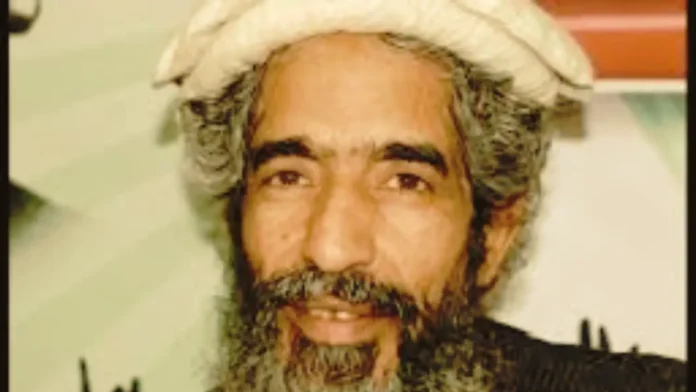
The shooting of Amir Hamza in Lahore has triggered serious concern across security circles. The incident was not just another act of violence. It targeted a man long associated with one of the most controversial militant organizations in South Asia.
The attack took place in a public setting. Unknown gunmen opened fire and fled. As of now, no group has claimed responsibility. However, the silence itself raises more questions than answers.
Who Is Amir Hamza? Understanding His Role
Amir Hamza is not an ordinary figure. He stands among the early architects of Lashkar-e-Taiba, a group that has shaped the trajectory of militancy in the region for decades.
He played multiple roles over the years:
- Ideologue and propagandist
- Operational supporter
- Close associate of top leadership
His influence extended beyond planning. He helped shape the organization’s narrative and recruitment strategy. That made him valuable, not just operationally but psychologically.
Moreover, he has been linked to several incidents connected to India, including attacks that targeted civilians and institutions. These links made him a figure of interest for multiple intelligence agencies.
The Lahore Shooting: What Exactly Happened
The attack followed a familiar pattern. Assailants on a motorcycle approached and fired at close range. They escaped before security forces could respond.
This method is not new. In fact, it mirrors several targeted killings seen in Pakistan in recent years. The precision suggests planning. The timing suggests intent.
Interestingly, this was not the first attempt on Hamza’s life. He reportedly survived a similar attack earlier. That detail adds another layer to the story. It hints at a sustained effort to eliminate him.
A Pattern of Targeted Killings
The incident does not stand alone. Over the past few years, several individuals linked to extremist networks have faced similar attacks.
This pattern points to three possible realities:
- Internal power struggles within groups
- Systematic targeting by intelligence networks
- Fragmentation of older militant structures
When such attacks repeat, they stop being random. They begin to look like part of a broader strategy.
Internal Conflict or External Operation?
At this stage, there is no official confirmation about who carried out the attack. However, analysts often examine three key angles.
1. Internal Rivalries
Militant organizations are not always unified. Leadership disputes, ideological differences, and control over funding can lead to violent outcomes. If Hamza held influence, he may have become a target within his own ecosystem.
2. Covert Intelligence Actions
Another possibility involves covert operations. High-value targets often face silent tracking. When action happens, it leaves little trace. The method used in this attack aligns with such operations, although no proof exists yet.
3. Localised Militancy Spillover
Pakistan has multiple armed groups operating with overlapping interests. Sometimes, local conflicts spill into targeted violence. In such cases, motives remain unclear for long periods.
Impact on Lashkar-e-Taiba’s Structure
If Hamza’s condition worsens or if he becomes inactive, the impact on Lashkar-e-Taiba could be significant.
He represents:
- Institutional memory
- Ideological continuity
- Strategic experience
Losing such a figure weakens internal cohesion. It also creates space for new leadership, which may not follow the same direction.
Transitions like these often lead to:
- Short-term instability
- Power struggles
- Shift in operational strategy
What This Means for India-Pakistan Security Dynamics
The implications go beyond one individual. Lashkar-e-Taiba has long been linked to cross-border tensions. Any disruption in its leadership affects regional security calculations.
For India, such developments may:
- Reduce immediate operational threats temporarily
- Create unpredictability in long-term strategy
For Pakistan, the situation raises questions about:
- Internal security control
- Presence of armed networks
- Ability to manage non-state actors
In short, instability within such groups rarely leads to peace immediately. Instead, it creates a phase of uncertainty.
The Bigger Picture: Changing Nature of Militancy
This incident reflects a broader shift. Traditional militant organizations are no longer as stable as they once were. Leadership is more vulnerable. Structures are more fragmented.
Several factors contribute to this change:
- Increased surveillance and intelligence sharing
- Financial tracking mechanisms
- Internal distrust within networks
As a result, even senior figures now face constant risk.
Conclusion: More Questions Than Answers
The shooting of Amir Hamza is not just a news event. It is a signal. It points to deeper shifts within militant ecosystems and regional security frameworks.
At present, key questions remain unanswered:
- Who carried out the attack?
- Was it internal or external?
- What happens next within Lashkar-e-Taiba?
Until these answers emerge, one thing is clear. The landscape of militancy in South Asia is evolving. And incidents like this are shaping its next phase in real time.

