


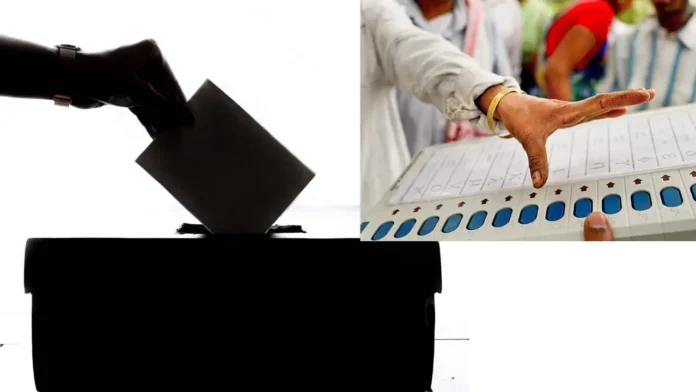
The Election Commission of India has ordered repolling at 15 polling stations in West Bengal. The decision follows reports of irregularities during voting held on April 29, 2026.
The affected constituencies are Magrahat Paschim and Diamond Harbour — both politically significant regions in the state.
Fresh polling will take place on May 2, with voting scheduled from 7 am to 6 pm.
Why Repolling Was Necessary
Repolling is not a routine step. It is ordered only when the integrity of the voting process comes into question.
In this case, reports submitted by Returning Officers and election observers pointed to irregularities at specific booths. After reviewing these inputs, the Commission declared the earlier polling at these stations invalid.
The decision was taken under Section 58(2) of the Representation of the People Act, 1951. This provision allows the Commission to cancel polling if it believes the process was compromised.
The move reflects a strict approach toward ensuring fair elections.
Where Repolling Will Take Place
Out of the 15 booths:
- 11 booths are in Magrahat Paschim
- 4 booths are in Diamond Harbour
These include polling stations located in local schools and madrashas across rural and semi-urban pockets.
Authorities have been instructed to widely inform voters. Local announcements, public notices, and direct communication with candidates are being used to ensure awareness.
Voting Process and Security Measures
Voting will follow the same schedule as regular polling — starting at 7 am and closing at 6 pm.
However, security arrangements are expected to be tighter this time.
The Election Commission has already placed the state machinery on alert. Additional forces are likely to be deployed to prevent disruptions. The aim is simple: ensure a smooth, transparent, and peaceful voting process.
High Voter Turnout Adds to Stakes
The repolling comes amid one of the most intense election cycles in West Bengal.
The state voted in two phases — April 23 and April 29. Together, these phases recorded a remarkable voter turnout of over 92%, one of the highest since Independence.
Such high participation reflects strong public engagement. At the same time, it raises the stakes for maintaining credibility in every polling booth.
Political Tensions and Allegations
The election atmosphere in West Bengal remains charged.
In recent days, political parties have raised concerns over the handling of voting materials and counting procedures. Protests have taken place, especially around strong rooms where voting machines are stored.
However, election authorities have rejected allegations of wrongdoing and reiterated that all protocols are being followed.
To prevent any escalation, restrictions have been imposed in certain areas, especially where counting will take place.
What Happens Next
Repolling on May 2 will play a crucial role in determining final outcomes in these constituencies.
Once voting concludes, all eyes will shift to May 4 — the official counting day.
The results will decide whether the fresh polling changes the electoral balance in these closely watched seats.
Why This Matters
Repolling is more than a procedural correction. It is a safeguard.
It ensures that every vote counts fairly and that the final result reflects the true will of the people.
In a high-stakes election like this, even a few booths can influence outcomes. That is why the Election Commission’s intervention is significant.
The Bottom Line
The decision to conduct repolling at 15 booths highlights both the challenges and the strength of India’s electoral system.
While irregularities can occur, corrective mechanisms exist to address them.
For voters in Magrahat Paschim and Diamond Harbour, May 2 is not just another voting day. It is a second chance to ensure their voice is heard clearly and fairly.

