


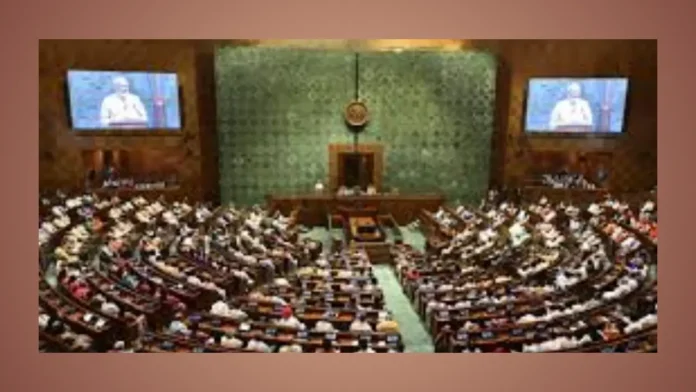
India witnessed a major political moment as the Women’s Reservation Bill failed to pass in the Lok Sabha. The development triggered sharp reactions across political circles. It also raised serious questions about the future of women’s representation in Indian politics.
The bill aimed to reserve 33% of seats for women in the Lok Sabha and state assemblies. However, it failed to secure the required two-thirds majority. Despite strong support from the ruling government, the opposition’s resistance proved decisive.
What Is the Women’s Reservation Bill?
The proposed constitutional amendment sought to bring a structural change in India’s political system. It aimed to ensure that one-third of all seats in Parliament and state assemblies are reserved for women.
The idea is not new. For decades, policymakers and activists have pushed for greater participation of women in governance. While local bodies already have reservation provisions, Parliament has lagged behind.
This bill was seen as a historic step toward gender equality in politics.
What Happened in the Lok Sabha Vote
The bill underwent intense debate in Parliament. Discussions stretched late into the night, reflecting both urgency and disagreement.
When the voting took place, the numbers fell short of expectations. The bill received support from 298 Members of Parliament. However, 230 MPs voted against it.
A constitutional amendment requires a two-thirds majority of those present and voting. The bill failed to meet that threshold. As a result, it could not pass.
PM Modi’s Reaction: Strong Words for the Opposition
Following the bill’s failure, Prime Minister Narendra Modi expressed strong disappointment.
During a cabinet meeting, he criticised opposition parties for not supporting the bill. He argued that their decision had let down women across the country.
He also emphasised that the issue should not have been viewed through a political lens. According to him, the bill represented a national commitment rather than a party agenda.
The message from the government was clear. The failure would not be forgotten easily in future political discourse.
Why Did the Opposition Resist the Bill?
Opposition parties did not reject the idea of women’s reservation outright. Instead, they raised concerns about the way the bill was introduced and structured.
One major issue was delimitation. Some parties feared that future redrawing of constituencies could reduce representation for certain regions, especially in southern India.
Another concern was political intent. Leaders like Rahul Gandhi argued that the government might use the bill to reshape electoral dynamics in its favour.
Meanwhile, Priyanka Gandhi Vadra described the outcome as a result of opposition unity.
These differences highlight a deeper political divide, not just over policy, but over trust.
Government’s Assurance on Regional Balance
To address concerns, the government tried to reassure Parliament.
Prime Minister Narendra Modi stated that no injustice would be done to any state. He assured that representation would remain balanced, even if the number of Lok Sabha seats increases in the future.
Union Home Minister Amit Shah also supported this view. He said that fears regarding regional imbalance were misplaced.
Despite these assurances, the opposition remained unconvinced.
Political Fallout: A Battle Beyond Parliament
The failure of the bill is likely to shape political narratives in the coming months.
The ruling party has already signalled that it will take this issue to the जनता. It plans to highlight the opposition’s stand as anti-women.
On the other hand, opposition parties are framing the outcome as a victory of collective resistance. They argue that the bill required deeper consultation and transparency.
Union Minister Kiren Rijiju went a step further. He termed the opposition’s stance a lasting political mistake.
Clearly, the issue has moved beyond legislation. It is now part of a larger political strategy on both sides.
Why This Bill Matters for Women in India
Women remain underrepresented in India’s Parliament. Despite progress in education and workforce participation, political participation has not kept pace.
A reservation law could have changed this landscape significantly. It would have ensured more voices, better representation, and stronger policy focus on women-centric issues.
The bill’s failure delays that possibility. It also highlights how complex structural reforms can become when politics intervenes.
What Happens Next?
The bill’s failure does not mean the idea is dead. However, it does mean that consensus remains elusive.
For any future attempt to succeed, the government will need broader political support. It may also need to address concerns related to implementation and fairness.
Until then, the question remains open. When will India take this long-pending step toward political gender equality?
The Real Takeaway
The failure of the Women’s Reservation Bill is more than a legislative setback. It reflects the challenges of balancing reform, representation, and political trust.
While the intent of empowering women found widespread agreement, the path to achieving it remains contested.
In the end, the debate is not over whether women deserve greater representation. It is about how and when the system is ready to deliver it.

