


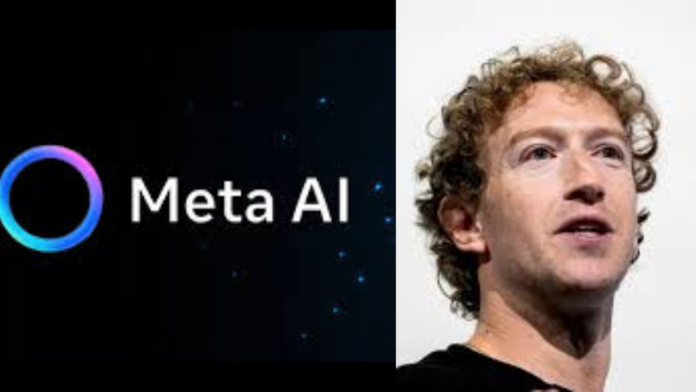
Meta is preparing for another major workforce reduction. Reports suggest the company will begin laying off nearly 8,000 employees on May 20, 2026. That number represents around 10% of its workforce.
The development has triggered concern across the global technology industry. Employees fear deeper restructuring ahead. Investors see it as a strong cost-control move. At the same time, analysts believe this could become a defining moment in the AI-driven transformation of Silicon Valley.
However, this story goes far beyond layoffs. It reflects how one of the world’s largest technology companies wants to rebuild itself for the artificial intelligence era.
Meta plans to spend massive amounts on AI infrastructure, advanced computing systems, data centers, and automation technology. Meanwhile, the company wants smaller teams, faster execution, and fewer management layers.
Why Meta Is Cutting Jobs
Meta says the layoffs are part of a broader restructuring strategy. CEO Mark Zuckerberg reportedly wants leaner teams that can move quickly with AI-powered workflows.
The company has significantly increased its AI-related spending plans for 2026. A large share of its investment will go toward:
- AI data centers
- Advanced computing hardware
- Proprietary AI chips
- Generative AI systems
- Automation software
- AI coding tools
- Internal productivity platforms
Meta believes these investments will shape the next phase of the internet economy.
The company no longer wants traditional large-scale corporate structures. Instead, leadership appears focused on smaller technical teams supported heavily by artificial intelligence systems.
The Shift From Hiring More People to Building More AI
For years, Big Tech companies measured growth through hiring. More employees meant larger operations and faster expansion.
That approach is changing rapidly.
Today, companies increasingly measure strength through computing power, AI capability, and operational efficiency. Meta’s restructuring clearly reflects this shift.
Industry experts describe it as a move from “headcount growth” to “compute growth.”
In simple terms, many companies now believe AI tools can help smaller teams deliver the same output that once required much larger departments.
This trend is spreading across Silicon Valley. Several major technology companies are reducing workforce size while increasing AI investments.
Is AI Replacing Employees at Meta?
Meta publicly says AI is not directly replacing workers. The company presents the layoffs as a restructuring and efficiency initiative.
Still, many employees and analysts remain skeptical.
Several reports suggest Meta is reorganizing around AI-first operations. Teams that handle repetitive or highly standardized work appear more vulnerable.
These roles may include:
- Recruiting
- Administrative operations
- Middle management
- Certain sales functions
- Workflow coordination
- Content operations
At the same time, Meta continues hiring aggressively for advanced AI engineering and infrastructure roles.
This creates a sharp divide inside the company. Some positions are disappearing while others suddenly become highly valuable.
The broader message across the technology sector is becoming clearer: professionals who can work alongside AI systems may stay in demand, while repetitive workflows face growing automation pressure.
The Growing Anxiety Inside Meta
The layoffs come during a tense period for employee morale.
Recent reports highlighted internal concerns over workplace monitoring systems introduced in some offices. Employees reportedly objected to tracking technologies designed to monitor productivity and workflow activity.
Many workers fear these systems could eventually help train AI agents capable of replicating human tasks.
As a result, concerns around surveillance, automation, and long-term job security continue to grow.
For many employees, the layoffs feel connected to a much larger cultural shift happening inside Meta.
The company that once promoted rapid expansion and open collaboration now appears focused on aggressive efficiency and AI-centered execution.
Why Meta Is Spending So Much on AI
The AI race has become extremely expensive.
Training advanced AI models requires enormous computing power, specialized chips, large-scale infrastructure, and high energy consumption. Technology companies are competing aggressively to build stronger AI ecosystems before rivals dominate the market.
Meta wants to remain competitive against the biggest names in artificial intelligence.
The company has already integrated AI deeply into:
- Facebook recommendations
- Instagram algorithms
- Advertising systems
- WhatsApp tools
- Smart devices
- AI assistants
- Creator platforms
Meta also sees AI as central to its future business model after its metaverse ambitions failed to produce the expected commercial success.
Now, artificial intelligence has become the company’s biggest strategic priority.
What Happens to Employees?
Reports suggest affected employees in the United States may receive severance compensation, additional pay based on years of service, and extended healthcare support for families.
However, financial compensation rarely reduces the emotional impact of layoffs.
Thousands of workers now face uncertainty in a technology job market that has become far more competitive than it was a few years ago.
Even experienced professionals are finding hiring slower across many companies.
The Bigger Picture: Big Tech Is Changing Fast
Meta’s layoffs are not an isolated event.
The entire technology sector is restructuring around AI economics.
Companies are now spending billions on:
- AI chips
- Cloud infrastructure
- GPU clusters
- Automation platforms
- AI research talent
To balance those costs, many firms are reducing payroll expenses elsewhere.
That explains why layoffs continue even while some technology companies report strong revenues and profits.
The industry is entering a phase where productivity matters more than workforce size.
As a result, workers across technology, marketing, operations, and digital media increasingly need AI literacy to remain competitive.
Could More Layoffs Follow?
Reports indicate this may only be the first stage of Meta’s restructuring strategy. Additional workforce reductions later in 2026 remain possible.
That uncertainty continues to worry employees and investors alike.
If AI-driven productivity improves rapidly, more companies may adopt similar workforce strategies.
For now, Meta appears determined to move aggressively toward an AI-first organizational structure, even if the transition creates significant disruption in the short term.
Final Thoughts
Meta’s upcoming layoffs reveal something much bigger than a corporate restructuring plan.
They show how artificial intelligence is beginning to reshape the economics of modern work.
The company is not shrinking because it lacks money. Meta remains financially strong. Instead, it is redirecting resources toward AI infrastructure, automation, and smaller technical teams.
That shift could redefine how large technology companies operate over the next decade.
For employees, the message is becoming increasingly clear: adapting to AI may no longer be optional.

