


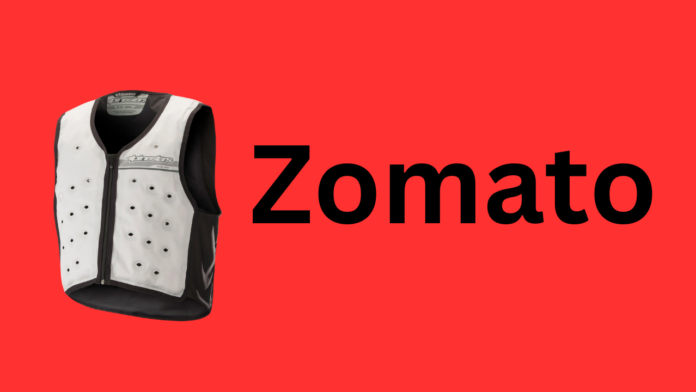
As temperatures breach 40°C across the subcontinent, the food-delivery giant has begun piloting PVA-based evaporative cooling gear across 14 cities — but what exactly is a cooling vest, and does it actually work?
2,500+Agents covered
14 Cities in the pilot
4 hrs Cooling duration
40°C+Temps across India
India’s summer of 2026 is unforgiving. With temperatures surging past 40°C across dozens of cities, millions of gig workers — who have no paid leave, no health coverage, and no right to simply stop working — continue to ride through scorching afternoons delivering food to customers. Zomato, one of India’s largest food-delivery platforms, has responded with an unusual but promising gesture: cooling vests for its delivery partners, now being piloted across more than 2,500 workers in 14 cities.
Zomato founder Deepinder Goyal announced the initiative via a LinkedIn post, with the company rolling it out in partnership with Shell Foundation and Trane Technologies’ SPACES programme, with implementation support from Intellecap. The vests are built using evaporative PVA (polyvinyl alcohol) technology and are described as lightweight, anti-microbial, and durable enough to survive two full summer seasons. Each vest is designed to provide up to four hours of cooling relief per soak — with no electricity, ice, or refrigeration required.
So, what exactly is a cooling vest?
How it works — step by step
- 1. Soak in water for 1–3 minutes. The PVA fabric rapidly absorbs and locks in moisture. No ice, freezer, or electricity needed — just tap water.
- 2. Wring it out and put it on. The vest is worn over a t-shirt, close to the body’s core. Mesh side panels keep it breathable and lightweight.
- 3. Evaporation does the work. As body heat causes the water to slowly evaporate, it draws heat away from the skin — amplifying the body’s own cooling mechanism, just like sweat, but sustained over hours.
- 4. Up to 4 hours of relief. The vest keeps the wearer feeling cooler than ambient air, reducing perceived body temperature by up to 10–15°F. Re-soak and repeat as needed.
The science behind these vests is elegantly simple. PVA is a synthetic polymer with exceptionally high water-absorption properties — it soaks up moisture faster than most fabrics, holds it, and releases it at a controlled rate. The evaporation process isn’t just surface cooling; it actively draws thermal energy away from the body, making the immediate microclimate around the skin feel significantly cooler. Think of it as a wearable, water-powered air conditioner that weighs almost nothing.
“Evaporative vests cool your body the same way your body cools itself — through evaporation. PVA just supercharges this natural process.”
Does humidity limit how well it works?
Here is where it gets nuanced — and where Indian geography matters. Evaporative cooling works best in dry conditions. In arid environments, water evaporates fast, and the cooling effect is maximised. But India is not uniformly dry. Cities like Mumbai, Chennai, and Kolkata see high humidity through summer, which slows evaporation and reduces the vest’s effectiveness.
Cooling performance vs humidity
Below 60% Excellent
60–75% Moderate
Above 80% Reduced
For highly humid coastal cities, some cooling benefit remains — but it’s less dramatic than in dry-climate metros like Delhi or Jaipur.
A step forward, but gig workers want more
The cooling vest initiative is part of a broader push by Indian platforms to protect their gig workforce. This isn’t Zomato’s first welfare move — in 2023, the company launched ‘Rest Points’ under The Shelter Project, platform-agnostic spaces where delivery partners from Zomato, Swiggy, and Blinkit could take breaks, access drinking water, washrooms, charging stations, Wi-Fi, and first-aid kits. By mid-2024, around 450 such rest points had been established across India.
But worker unions say gear and shelters aren’t enough. The Indian Federation of App-Based Transport Workers (IFAT) and the Telangana Gig and Platform Workers Union have written to the Ministry of Labour and Employment demanding mandatory heatwave protections — including compulsory cooling breaks during IMD orange and red alerts, free access to drinking water, and exemption from penalties for halting work during extreme heat. Delivery workers, many of whom earn only when actively delivering, face a brutal trade-off: endure the heat to maintain income, or rest and lose earnings.
India is projected to lose the equivalent of 35 million full-time jobs by 2030 due to heat stress, according to climate analysts. With the gig workforce alone expected to grow from 7.7 million to 23 million by 2029-30, the question of who protects these workers — and how — is not a niche concern. It is urgent, national, and overdue.

