


A grave public health crisis has unfolded in Indore, where contamination of municipal drinking water with sewage has led to multiple deaths and left thousands ill. The incident, centred in the densely populated Bhagirathpura area, has exposed serious lapses in urban water safety and governance, prompting suspensions of officials, emergency interventions, and national-level scrutiny.
What Happened in Indore
The crisis came to light after residents reported foul-smelling and visibly discoloured tap water, followed by a sudden spike in cases of severe diarrhoea, vomiting, dehydration, and fever. Hospitals in and around the affected locality were quickly overwhelmed as entire families, including children and elderly residents, sought treatment.
Subsequent testing of water samples confirmed the presence of bacteria associated with human sewage. Preliminary findings indicate that sewage leaked into a drinking-water pipeline, most likely due to damaged or poorly constructed sanitation infrastructure located dangerously close to potable water lines.
Death Toll and Scale of the Outbreak
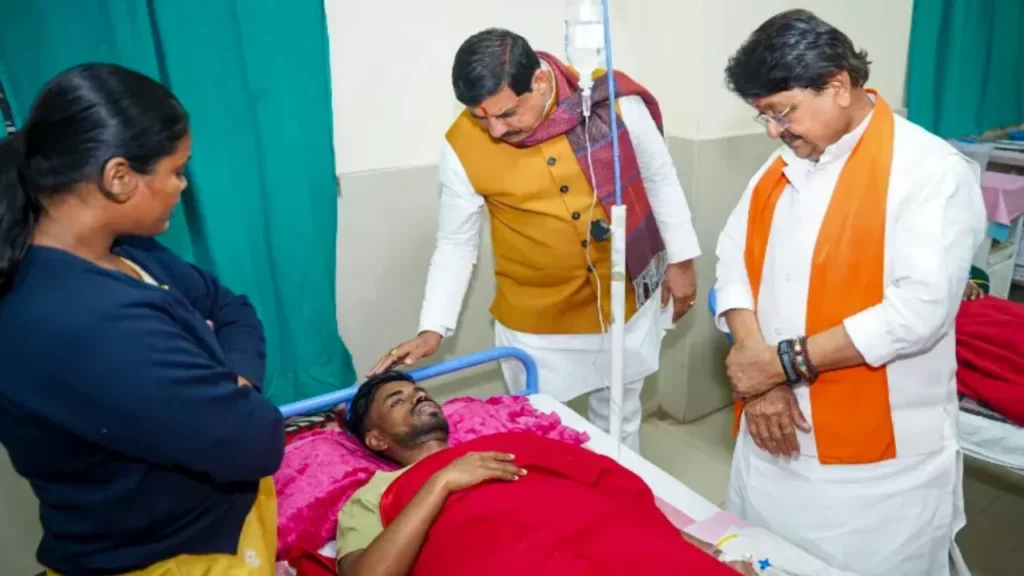
As of the latest official update, at least ten deaths have been linked to the outbreak, while more than 1,400 residents have reported illness. Several patients required intensive care, and health officials acknowledge that the true number of affected individuals may be higher, given that many mild cases go unreported.
Medical teams describe the outbreak as one of the most serious waterborne disease incidents the city has seen in recent years.
Government Response and Administrative Action
The Madhya Pradesh government has initiated a series of emergency and corrective measures:
- Senior municipal officials responsible for water supply and public health have been suspended or removed from their posts.
- The affected water supply lines have been shut down, with tankers and packaged drinking water deployed to the locality.
- State-run hospitals have been instructed to provide free treatment to all affected residents.
- Ex-gratia compensation has been announced for the families of those who died.
In addition, the National Human Rights Commission has taken suo motu cognisance of the incident, seeking a detailed report from the state government on the causes of the tragedy and the steps taken to prevent such failures.
Political and Public Fallout
The incident has sparked sharp political reactions, with opposition leaders accusing the authorities of negligence and ignoring repeated complaints from residents about water quality. Locals claim they had raised concerns weeks earlier but received no meaningful response, a charge that has intensified public anger.
The tragedy has also dented Indore’s reputation as a model urban centre, frequently showcased for cleanliness and civic management. Critics argue that the episode reveals a deeper problem: a focus on surface-level metrics while critical infrastructure such as water pipelines and sewage systems remains fragile.
Medical Findings and Health Advisory
Doctors treating patients say the clinical pattern is consistent with acute waterborne infection. Symptoms reported include:
- Profuse diarrhoea and vomiting
- Rapid dehydration
- High fever and weakness
Health authorities have advised residents in affected areas to completely avoid tap water for drinking or cooking, use only boiled or bottled water, and seek immediate medical attention if symptoms persist beyond a few hours.
How Did This Happen?
Early investigations point to systemic failures rather than an isolated accident. These include aging pipelines, inadequate separation between sewage and drinking-water systems, and poor inspection and maintenance protocols. Experts note that informal or poorly regulated sanitation structures in densely populated localities significantly increase the risk of cross-contamination.
What Happens Next
Authorities are now under pressure to move beyond temporary fixes. Investigators are expected to determine:
- The exact point where sewage entered the drinking-water supply
- Whether negligence or regulatory violations were involved
- What long-term infrastructure upgrades are required to prevent recurrence
For many residents of Bhagirathpura, trust in the city’s water supply has been severely shaken. The Indore water tragedy stands as a stark reminder that access to safe drinking water is not merely a civic service, but a fundamental public health obligation—one whose failure can prove fatal.

