


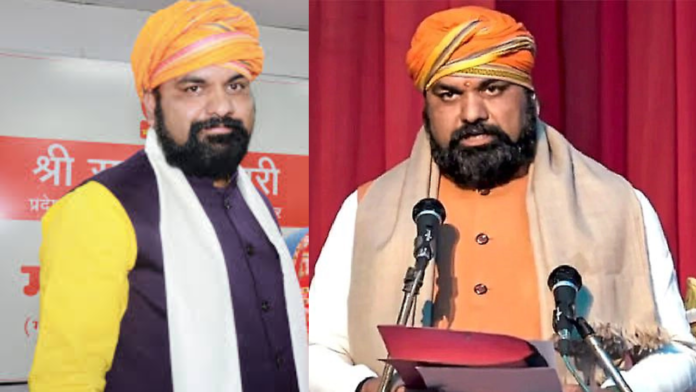
A major political shift has taken place in Bihar. Samrat Choudhary, a senior leader of the Bharatiya Janata Party (BJP), has taken oath as the Chief Minister of Bihar. This marks the first time the BJP has secured the top post in the state, making it a historic moment in Indian politics.
His elevation comes after the resignation of veteran leader Nitish Kumar, who dominated Bihar’s political landscape for nearly two decades.
Why This Moment Is Historically Significant
Bihar has long been a complex political battleground. Despite being a strong national force, the BJP had never independently produced a Chief Minister in the state.
Now, with Samrat Choudhary at the helm, the party has crossed a symbolic and strategic milestone.
This shift signals three key developments. First, the BJP is expanding its influence in eastern India. Second, it reflects changing caste and voter dynamics. Third, it highlights a transition away from personality-driven politics centered around Nitish Kumar.
Political Background of Samrat Choudhary
Samrat Choudhary’s political journey spans over three decades. He comes from a deeply rooted political family. His father, Shakuni Choudhary, was a long-time legislator, while his mother, Parvati Devi, also served in public life.
Over the years, Choudhary has been part of multiple political formations. He began his career with the Rashtriya Janata Dal (RJD), later moved to the Janata Dal (United), and eventually joined the BJP in 2017.
This diverse political exposure has shaped his understanding of Bihar’s social fabric and electoral realities.
Rise Within the BJP
After joining the BJP, Choudhary quickly rose through the ranks. He served as the party’s Bihar state president and played a crucial role in election strategy and organizational strengthening.
He later became Deputy Chief Minister under Nitish Kumar and also handled the Home Ministry, one of the most powerful portfolios in the state government.
His administrative experience and strong political networking made him a natural contender for the top post.
Caste Dynamics and Electoral Strategy
Caste remains central to Bihar’s politics. Samrat Choudhary belongs to the Other Backward Classes (OBC), a group that holds significant electoral influence.
His appointment reflects a calculated move by the BJP to consolidate OBC support. It also signals the party’s intent to broaden its traditional voter base beyond upper-caste dominance.
This strategy could reshape electoral alignments in upcoming elections.
The Exit of Nitish Kumar and Power Transition
Nitish Kumar’s stepping down marked the end of an era. Known for frequently shifting alliances, Kumar managed to stay politically relevant for years.
However, age, health concerns, and evolving political equations contributed to his decision to step aside.
His resignation opened the door for the BJP to assert stronger leadership within the alliance framework.
Challenges Ahead for Samrat Choudhary
Despite the historic achievement, the road ahead is far from easy.
Bihar faces multiple structural challenges. It remains one of India’s poorest states, with high unemployment and large-scale migration.
Choudhary must address issues such as:
- Job creation and industrial growth
- Infrastructure development
- Law and order improvements
- Education and healthcare gaps
Moreover, he will constantly be compared to Nitish Kumar, whose governance model shaped Bihar for years.
Support and Criticism Within Political Circles
Choudhary’s appointment has received mixed reactions.
Supporters believe his leadership will strengthen the BJP’s grassroots presence and bring fresh energy to governance.
Critics, however, argue that he lacks deep roots in the BJP’s traditional ideological framework, raising questions about his long-term leadership stability.
This divide reflects broader tensions within coalition politics.
What This Means for Bihar and National Politics
Samrat Choudhary’s rise is not just a state-level event. It has national implications.
For the BJP, it represents strategic expansion into a politically crucial state with a massive voter base.
For Bihar, it marks the beginning of a new leadership phase that could redefine governance priorities and political narratives.
Conclusion: A Turning Point in Bihar’s Political Landscape
Samrat Choudhary’s appointment as Chief Minister is a defining moment. It ends decades of leadership dominated by Nitish Kumar and ushers in a new political chapter.
However, symbolism alone is not enough. The real test lies in governance, delivery, and public trust.
If Choudhary succeeds in addressing Bihar’s long-standing challenges, he could emerge as one of the most influential leaders in the state’s modern political history.
If not, this historic opportunity may quickly turn into a missed one.

